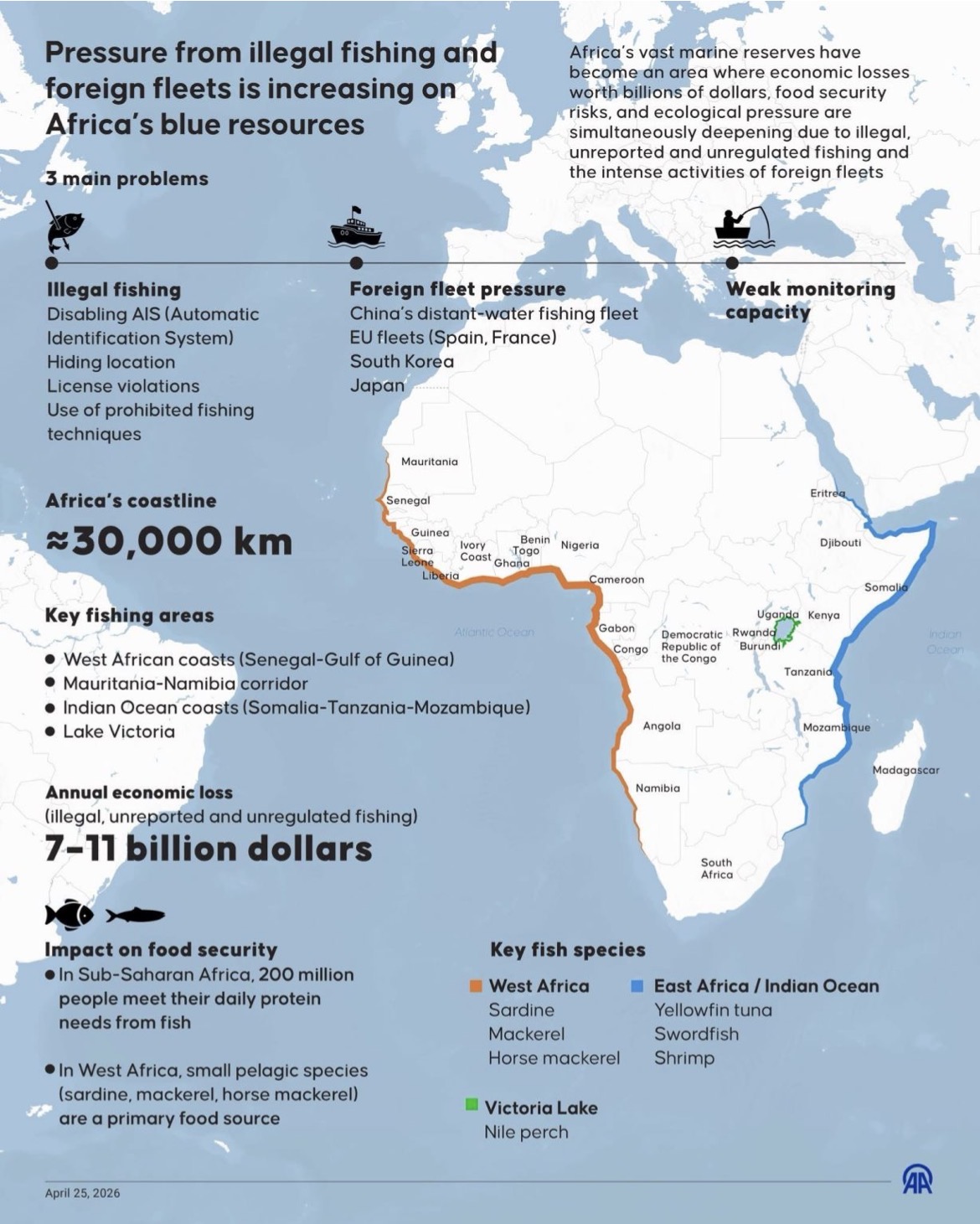
Across Africa’s coastlines, from the Canary Current to the Mozambique Channel, a quiet extraction continues largely out of sight but deeply felt in coastal communities. Illegal, unreported and unregulated fishing is not only eroding marine ecosystems but steadily transferring wealth out of the continent, with estimated annual losses ranging between 7 billion and 11 billion US dollars.
This is not an abstract environmental issue. It is a material question of food systems, labour, and sovereignty. More than 200 million Africans depend directly or indirectly on fisheries. In many coastal regions, fish remains the primary source of affordable protein. The depletion of these resources therefore reverberates far beyond the shoreline, shaping livelihoods, nutrition, and economic stability.
Evidence from multiple studies points to the significant role of distant water industrial fleets operating in African waters. China’s distant water fishing fleet, the largest globally, is frequently cited in analyses of high risk fishing activity, particularly in West Africa. Research available through the International Law Studies and the Stimson Center notes repeated concerns regarding vessel identity changes, opaque ownership structures, and the use of practices such as AIS manipulation to obscure fishing activity.



At the same time, the literature does not isolate responsibility to a single country. Systematic reviews, including those published in Fish and Fisheries, indicate that unlicensed or poorly regulated fleets linked to parts of Europe and Asia also operate within African exclusive economic zones. These fleets often exploit regulatory gaps, weak enforcement capacity, and complex licensing arrangements that blur the line between legal access and illicit activity.
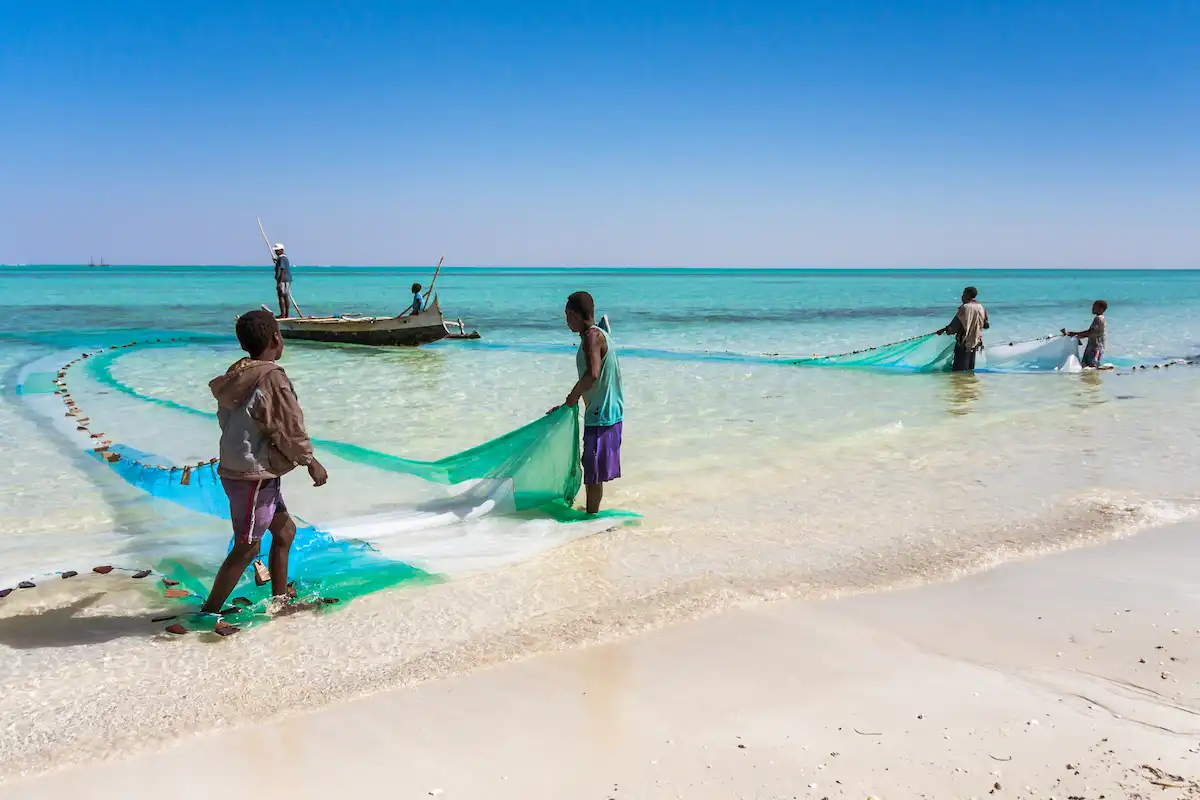
Nowhere is this dynamic more visible than in West Africa, widely regarded as one of the world’s most heavily impacted regions. Countries in this region lose billions annually, with some estimates placing losses at up to 2.3 billion US dollars each year. In Ghana, the practice known as saiko has become emblematic of the crisis. Industrial trawlers transfer fish at sea to smaller vessels for local sale, bypassing regulation and distorting markets. Analysis hosted by the United Nations suggests that such practices accelerate depletion and undermine artisanal fisheries that have sustained communities for generations.
Technological evasion has further complicated enforcement. Studies examining maritime monitoring systems highlight that vessels engaged in illicit activity frequently disable or manipulate their Automatic Identification Systems, creating so called dark fleets. Research in Applied Sciences identifies West African waters as a hotspot for such activity, reflecting both the intensity of fishing pressure and the limitations of surveillance infrastructure.
In the South West Indian Ocean, similar patterns are emerging. Coastal states including Mozambique, Tanzania, and Madagascar face significant economic losses linked to illegal fishing, while small island developing states confront disproportionate risks given their reliance on marine resources. Comparative analyses available via Theseus highlight how distant water fleets, operating far from their home jurisdictions, can outcompete domestic fisheries and strain already fragile governance systems.
Yet the persistence of this crisis cannot be understood solely through the actions of foreign fleets. Scholars consistently point to structural conditions that enable illegal fishing to flourish. These include limited monitoring capacity, fragmented regional cooperation, and global seafood markets that prioritise volume and cost over traceability and sustainability. As noted in broader governance research such as Marine Policy, the challenge is as much about systems of accountability as it is about individual actors.
What emerges is a complex but urgent picture. Africa’s marine resources are embedded within a global economy, yet the costs of extraction are disproportionately borne locally. The question is no longer whether illegal fishing is occurring, but how it is allowed to persist at scale.

There are, however, signs of a shifting response. Across the continent, governments and regional bodies are strengthening monitoring frameworks, investing in satellite tracking technologies, and pursuing greater transparency in fishing agreements. The African Union’s blue economy agenda has also placed renewed emphasis on sustainable resource governance and regional cooperation.
The urgency of the moment lies in translating these commitments into sustained action. This includes enforcing existing regulations, closing loopholes in licensing systems, and ensuring that benefits from marine resources are retained within African economies. It also requires engagement with global partners, not only to address illicit practices but to reshape the terms under which access to African waters is granted.
The stakes are high. Africa’s blue economy represents both a present livelihood and a future opportunity. Allowing it to be eroded through unchecked exploitation risks entrenching economic losses and social vulnerability. Reclaiming it, by contrast, offers the possibility of a more equitable and sustainable trajectory.
The waters surrounding the continent are not empty spaces. They are sites of history, livelihood, and potential. The question now facing policymakers, industry, and communities alike is whether these waters will continue to serve external interests, or whether they will be governed in ways that reflect and sustain African priorities.