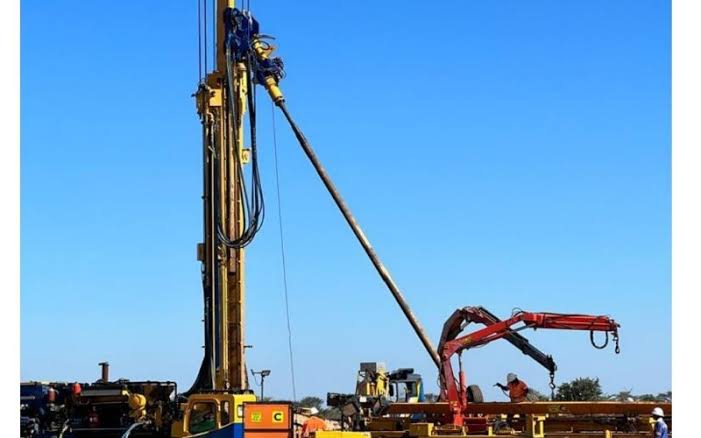
Tlou Energy, a Botswana focused coal bed methane developer, has reported its first revenue from the Lesedi gas project, marking a modest but symbolically important transition from exploration to early stage commercial activity within the country’s evolving energy landscape.
The company confirmed that initial income was generated during the quarter ending 31 March 2026 following the commissioning of its Kala data centre, a facility designed to monetise gas production while supporting digital infrastructure. According to company disclosures, this development forms part of an integrated gas to power model aimed at addressing electricity shortages through decentralised and grid connected supply. Botswana has historically faced structural power deficits and has relied on electricity imports alongside domestic coal generation, prompting policy interest in diversified energy sources including coal bed methane and solar power as explored in energy policy research.
The Lesedi project is situated in a region with identified coal bed methane potential, which has been the subject of both academic and commercial attention over the past decade. Research has highlighted the role such resources could play in complementing southern Africa’s broader energy mix, particularly in contexts where grid expansion and reliability remain uneven, as outlined in a company research report. Botswana’s energy planning discourse has increasingly incorporated these alternatives alongside renewable energy pathways, reflecting a pragmatic approach to energy security and transition.



Financially, Tlou Energy remains in a development phase. The company reported cash holdings of approximately AUD117,000 at the end of the quarter, alongside total available funding of AUD4.51 million, including undrawn facilities. Operating and investing cash outflows during the period were AUD267,000 and AUD501,000 respectively, reflecting ongoing expenditure on exploration, evaluation and infrastructure. Financing inflows of AUD565,000, largely through borrowings, supported these activities. The firm’s unsecured loan facility, extended to AUD10 million and carrying a ten percent annual interest rate, remains a central component of its near term funding structure.
Operational progress continues in parallel with financial constraints. The grid connection substation linked to the Lesedi project is reported to be approximately ninety percent complete, although further capital will be required to finalise construction and enable full integration into Botswana’s electricity network. The company has also indicated that sustained commercial gas flow rates and the conclusion of power purchase agreements will be critical to establishing long term revenue stability.
Tlou’s strategy reflects a hybrid energy model combining gas and solar generation. Plans for an initial five megawatt solar installation, with potential expansion to twenty megawatts, are under consideration, alongside the possible addition of battery storage systems to support continuous power supply. Such hybridisation aligns with broader regional trends where countries are seeking to balance baseload capacity with renewable integration in ways that reflect local resource endowments and infrastructure realities.
Across southern Africa, the development of coal bed methane has been viewed as one component of a wider energy diversification strategy. While it does not displace the environmental concerns associated with fossil fuels, it is sometimes positioned within national contexts as a transitional resource that can support industrial growth, reduce import dependence and stabilise power systems. Botswana’s experience illustrates the complexities of this pathway, where resource potential, infrastructure readiness and financing conditions intersect.

Tlou Energy’s initial revenue milestone therefore represents an incremental step rather than a definitive shift. The company’s ability to scale operations will depend on its capacity to secure further investment, complete infrastructure and anchor its output within the domestic power market. At the same time, the project contributes to an ongoing regional conversation about how African energy systems can evolve in ways that are both contextually grounded and responsive to developmental priorities.
From a continental perspective, initiatives such as Lesedi underscore the diversity of energy strategies emerging across Africa. Rather than a singular trajectory, countries are navigating distinct combinations of hydrocarbons, renewables and technological innovation, shaped by local conditions and policy choices. In this sense, Botswana’s approach reflects a broader pattern of adaptive energy development that resists simplified narratives and highlights the agency of African states in defining their own energy futures.