Saturday, April 25, 2026
  • Login
The Southern African Times
  • Home
  • Southern Africa
  • Business
    • African Start ups
    • African Continental Free Trade Area
  • Technology
    • Lifestyle
      • Health
      • Culture
      • Food and Drink
      • Entertainment
  • Opinion
  • Sports
  • SAT Jobs
    • Events
  • About Us
    • Advertise with Us
    • Contact Us
No Result
View All Result
  • Home
  • Southern Africa
  • Business
    • African Start ups
    • African Continental Free Trade Area
  • Technology
    • Lifestyle
      • Health
      • Culture
      • Food and Drink
      • Entertainment
  • Opinion
  • Sports
  • SAT Jobs
    • Events
  • About Us
    • Advertise with Us
    • Contact Us
No Result
View All Result
The Southern African Times
No Result
View All Result
Home Food and Drink

Africa’s emerging caviar industry signals a shift in global luxury food production

by SAT Reporter
April 25, 2026
in Food and Drink
0
Africa’s emerging caviar industry signals a shift in global luxury food production

In the highland region of Madagascar, far from the traditional centres of caviar production around the Caspian Sea, a quiet transformation is underway. A company operating near Antananarivo has established what is widely regarded as Africa’s first commercial caviar production, signalling both a diversification of the continent’s aquaculture sector and a reconfiguration of global luxury food supply chains.

Caviar, defined as salted roe from sturgeon species, has historically been associated with Eurasian production systems, particularly in Russia and Iran. Its status as a luxury commodity is rooted not only in cultural history but also in biological constraints, as sturgeon typically require between eight and 20 years to reach maturity. This extended lifecycle contributes to high market prices and limited supply. Global demand has increasingly shifted towards farmed caviar as wild sturgeon populations have declined due to overfishing and habitat degradation, prompting tighter international regulation.

Against this backdrop, the establishment of sturgeon farming in Madagascar represents a notable departure from established geographies. Research into global aquaculture trends indicates that sturgeon farming has expanded beyond its traditional range in recent decades, with new producers entering the market in regions previously considered unsuitable due to climatic variability and technical barriers. However, Madagascar’s highland ecosystems provide relatively stable thermal conditions compared with other tropical environments, supporting year round fish growth within temperature ranges broadly consistent with sturgeon development requirements.


ADVERTISEMENT

The production site at Lake Mantasoa, situated at approximately 1400 metres above sea level, benefits from water temperatures that remain moderate throughout the year. Studies on sturgeon aquaculture highlight that stable temperatures are critical for growth rates and reproductive cycles, and deviations can significantly affect yield and quality. In this context, the Madagascan highlands offer conditions that differ from both colder northern systems, where growth may slow during winter, and warmer lowland tropical waters, where excessive heat can be detrimental.
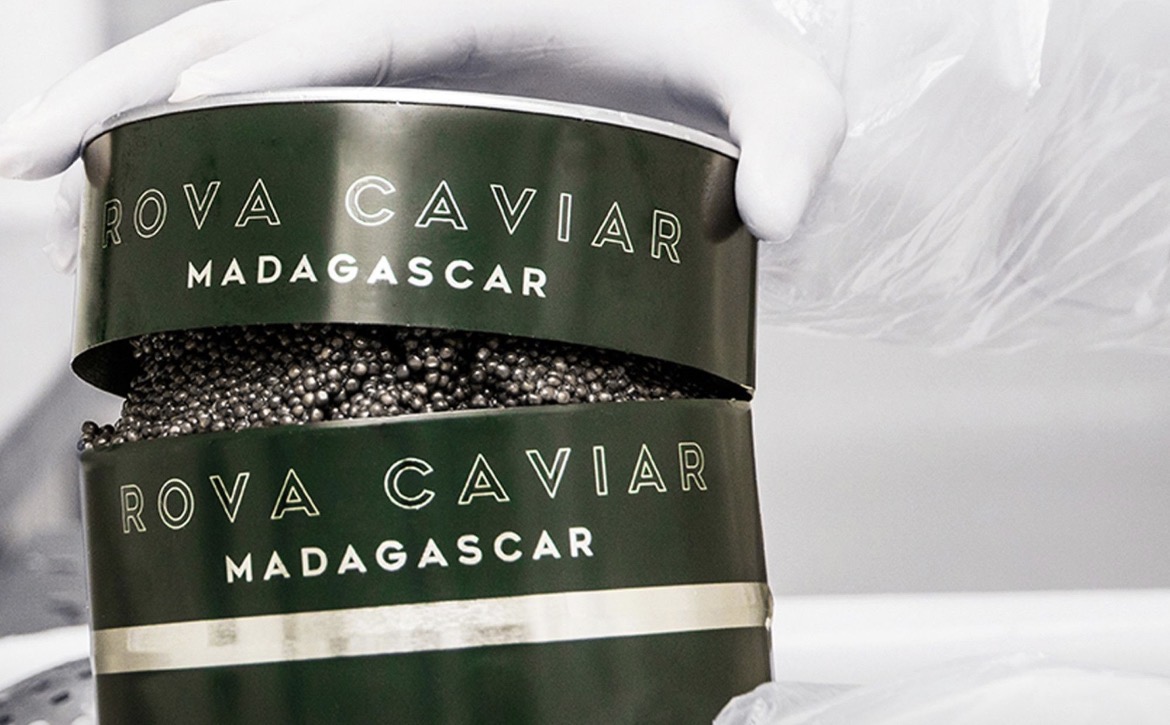
The company behind the initiative has reportedly developed both land based and lacustrine farming systems and is cultivating multiple sturgeon species. Its products, marketed under premium brands, have entered international markets, including high end hospitality sectors in Europe and island economies in the Indian Ocean. This expansion reflects broader shifts in culinary sourcing, where provenance and novelty increasingly influence consumer preferences alongside quality.

From an economic perspective, the development illustrates how niche, high value agricultural products can integrate into African economies. Aquaculture has been identified in regional assessments as one of the fastest growing food production sectors on the continent, contributing to employment, food security and export diversification. While caviar remains a specialised product with limited direct relevance to domestic consumption, its production generates employment and technical skills in rural areas. The Madagascan operation is reported to employ several hundred workers and to provide training in aquaculture techniques, which may have spillover effects into other fisheries activities.

Environmental considerations remain central to the sustainability of such ventures. Global literature on sturgeon farming emphasises the importance of water quality management, ecosystem protection and responsible breeding practices. In Madagascar, efforts linked to reforestation, water monitoring and lake management have been associated with the project, reflecting an awareness of ecological constraints in a country recognised for its biodiversity. According to regional aquaculture reviews, balancing commercial production with environmental stewardship is essential to ensuring long term viability, particularly in sensitive freshwater systems.

The emergence of African produced caviar also raises questions about representation within global value chains. Historically, luxury food narratives have been dominated by European and Asian producers, often overlooking contributions from other regions. The Madagascan example suggests a more pluralistic landscape, where expertise, investment and local conditions intersect to create new centres of production. This development aligns with broader continental trends in which African producers are engaging more directly with global markets, not only as suppliers of raw commodities but also as participants in specialised, high value sectors.

At the same time, the sector faces structural challenges. Entry barriers remain high due to the capital intensive nature of sturgeon farming, long production cycles and stringent quality standards required for international certification. Market access is also shaped by established brand recognition and regulatory frameworks governing trade in endangered species, which continue to influence the caviar industry.

Nevertheless, the presence of caviar production in Madagascar illustrates a shift in how African aquaculture is perceived and practised. Rather than conforming to a single narrative centred on subsistence or low value output, the sector increasingly encompasses a range of models, from small scale fisheries to specialised export oriented enterprises. This diversity reflects the continent’s varied ecological zones and economic strategies, as well as the agency of local and regional actors in shaping development pathways.

As global demand for sustainably sourced luxury foods evolves, Africa’s role in meeting that demand may expand further. The Madagascan experience suggests that with appropriate environmental conditions, technical knowledge and investment, industries once considered geographically fixed can take root in new contexts, contributing to both local livelihoods and the redefinition of global production landscapes.

Tags: African economiesaquaculture Africacaviar industryfood production Africaglobal gastronomyLake Mantasoaluxury food marketsMadagascarsturgeon farmingsustainable fisheries
Previous Post

Tlou Energy Records First Revenue from Botswana’s Lesedi Gas Project

Next Post

Munch and Sip Expands Into Culinary Culture With Launch of The Pantry

SAT Reporter

Related Posts

Munch and Sip Expands Into Culinary Culture With Launch of The Pantry
Food and Drink

Munch and Sip Expands Into Culinary Culture With Launch of The Pantry

by Leo Muzivoreva
April 25, 2026
US Tariffs Raise Cost of South African Wine in America
Food and Drink

US Tariffs Raise Cost of South African Wine in America

by SAT Reporter
February 19, 2026
Experts Convene in Nairobi to Catalyse Private Sector Investment in Africa’s Agrifood Systems
Food and Drink

Experts Convene in Nairobi to Catalyse Private Sector Investment in Africa’s Agrifood Systems

by SAT Reporter
February 10, 2026
Africa’s Ice Cream Sector Booms as Consumers Embrace Indigenous Flavours
Food and Drink

Africa’s Ice Cream Sector Booms as Consumers Embrace Indigenous Flavours

by SAT Reporter
November 11, 2025
Southern Africa Embraces Antimicrobial Packaging in New Zoono-Mpact Deal
Food and Drink

Southern Africa Embraces Antimicrobial Packaging in New Zoono-Mpact Deal

by Times Reporter
November 7, 2025
Next Post
Munch and Sip Expands Into Culinary Culture With Launch of The Pantry

Munch and Sip Expands Into Culinary Culture With Launch of The Pantry

Browse by Category

  • Africa AI
  • African Continental Free Trade Area
  • African Debt
  • African Start ups
  • Agriculture
  • AI Africa
  • Algeria
  • All News
  • Analysis
  • Angola
  • Arts / Culture
  • Asia
  • Botswana
  • BOTSWANA
  • BREAKING NEWS
  • BRICS
  • Burkina Faso
  • Burundi
  • Business
  • Business
  • Business Wire
  • Cameroon
  • Central Africa
  • Chad
  • China
  • Climate Change
  • Climate Changev
  • Community
  • Congo Republic
  • Conservation
  • Côte d’Ivoire
  • COVID 19
  • CRYPTOCURRENCY
  • Culture
  • Democratic Republic of Congo
  • Diplomacy
  • Eastern Africa
  • Economic Development
  • Economy
  • Education
  • Egypt
  • Elections 2024
  • Energy
  • Entertainment
  • Environment
  • Eritrea
  • Ethiopia
  • Europe
  • Fashion
  • Feature
  • Finance
  • Financial Inclusion
  • Food
  • Food and Drink
  • Foods
  • GABON
  • Ghana
  • Global
  • Global Africa
  • Guinea
  • Health
  • Immigration
  • in Southern Africa
  • International news
  • International Relations
  • Investment
  • Ivory Coast
  • Just In
  • Kenya
  • Lesotho
  • Libya
  • Life Style
  • Lifestyle
  • Literature
  • Malawi
  • Malawi
  • Mali
  • Markets
  • Mauritius
  • Middle East
  • Mining in Africa
  • Morocco
  • Mozambique
  • Namibia
  • niger
  • Niger
  • Nigeria
  • North Africa
  • North-Eastern Africa
  • Obituaries
  • Obituary
  • Opinion
  • PARTNER CONTENT
  • Politics
  • Property
  • Racism
  • Rwanda
  • Rwanda
  • SADC
  • SAT Interviews
  • SAT Investigation
  • SAT Jobs
  • Saudi Arabia
  • Senegal
  • Seychelles
  • Somaliland
  • South Africa
  • South Sudan
  • Sports
  • Startup Africa
  • STOCK EXCHANGE
  • Sudan
  • Sustainability
  • Sustainablity
  • Tanzania
  • Technology
  • Telecommunications
  • The Editorial Board
  • The Power Of She
  • Togo
  • Trade
  • Travel
  • Travel
  • Tunisia
  • Uganda
  • Uncategorized
  • Wealth
  • West Africa
  • World
  • World
  • ZAMBIA
  • Zambia
  • ZIMBABWE
  • Zimbabwe

Browse by Tags

#NewsUpdate #SouthAfrica #SouthernAfricanTimes #TheSouthernAfricanTimes AfCFTA africa African Continental Free Trade Area African development African Development Bank African economies African economy African Union Agriculture Angola Botswana Business China Climate change Cyril Ramaphosa Economic Development economic growth energy transition fiscal policy industrialisation Inflation Infrastructure Infrastructure Development International relations Investment Kenya Mozambique Namibia news Nigeria Regional Integration renewable energy Rwanda SADC South Africa Southern Africa sustainable development Tanzania United States Zambia Zimbabwe
ADVERTISEMENT

WHO WE ARE

The Southern African Times is a regional bloc digital newspaper that covers Southern African and world news. The paper also gives a nuanced analysis on news and covers a wide range of reporting which include sports, entertainment, foreign affairs, arts and culture.

Welcome Back!

Login to your account below

Forgotten Password?

Retrieve your password

Please enter your username or email address to reset your password.

Log In

  • Home
  • Southern Africa
  • Business
    • African Start ups
    • African Continental Free Trade Area
  • Technology
    • Lifestyle
      • Health
      • Culture
      • Food and Drink
      • Entertainment
  • Opinion
  • Sports
  • SAT Jobs
    • Events
  • About Us
    • Advertise with Us
    • Contact Us
Are you sure want to unlock this post?
Unlock left : 0
Are you sure want to cancel subscription?