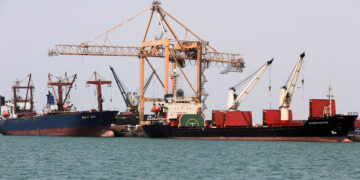
Bilateral trade between Nigeria and South Africa reached approximately 2.16 billion United States dollars in 2025, reinforcing the significance of the relationship between two of Africa’s largest economies. Official figures presented during South Africa Week in Lagos indicate that South Africa exported goods and services valued at 468.48 million dollars to Nigeria, while imports from Nigeria stood at 1.69 billion dollars. This resulted in a trade deficit of about 1.22 billion dollars for South Africa.
Although the figures point to an imbalance, policymakers and analysts increasingly interpret the relationship as one of strategic interdependence. South Africa’s reliance on Nigerian crude oil remains a defining feature of the trade structure, situating energy security at the centre of bilateral engagement. In this context, shifts in global energy markets, including geopolitical tensions in the Middle East, have prompted South Africa to diversify its supply sources, with Nigeria emerging as a key partner.
Statements from South African officials suggest that this reorientation is already visible in both crude and refined petroleum flows. The operationalisation of the Dangote Refinery in Nigeria has contributed to increased availability of refined products within the region, positioning Nigeria not only as a supplier of crude but also as a growing hub for downstream petroleum exports. This development reflects a broader continental ambition to retain more value within African economies by strengthening domestic processing capacity.



Trade dynamics between the two countries have also been influenced by the gradual implementation of the African Continental Free Trade Area. Since Nigeria gazetted its provisional tariff concessions in April 2025, there has been a measurable increase in trade volumes. South African exports to Nigeria rose by approximately 24 percent between 2023 and 2025, driven by sectors such as automotive products, agricultural goods and chemicals. At the same time, imports from Nigeria declined by around 33 percent over the same period, largely due to fluctuations in Nigeria’s crude oil output.
The composition of trade illustrates the structural characteristics of both economies. South Africa’s exports are dominated by manufactured and semi processed goods, including vehicles, industrial inputs and food products, reflecting its relatively diversified industrial base. Nigeria’s exports to South Africa remain concentrated in primary commodities, particularly crude oil, alongside smaller volumes of products such as urea and natural rubber. This pattern highlights ongoing challenges in achieving value addition and industrial diversification within the continent.
Beyond merchandise trade, the relationship is sustained by significant investment flows in both directions. South African firms, including MTN Group, Shoprite and Standard Bank, have established a substantial presence in Nigeria across telecommunications, retail and financial services. Conversely, Nigerian companies such as Access Bank and Paystack are expanding into the South African market, signalling the emergence of a more reciprocal economic corridor that extends into digital finance and services.

Macroeconomic indicators further contextualise the partnership. According to projections referenced by multilateral institutions such as the International Monetary Fund, South Africa’s economy is valued at over 440 billion dollars, while Nigeria’s stands at above 330 billion dollars in nominal terms. Together, their combined economic weight exerts considerable influence on the direction of continental integration and the success of frameworks such as the AfCFTA.
Energy cooperation remains a central pillar of future engagement. Policymakers from both countries have emphasised the need for coordinated investment in infrastructure, including refining capacity, transport networks and electricity systems. At the same time, there is growing recognition of the importance of transitioning towards more sustainable energy sources. Nigeria’s solar potential and South Africa’s advances in wind and solar energy present opportunities for collaboration in renewable energy development, which could complement existing hydrocarbon based ties.
Despite these opportunities, structural constraints persist. Infrastructure deficits, regulatory complexities and energy supply instability continue to limit the full realisation of trade and investment potential. Addressing these challenges will require sustained policy coordination, investment in regional value chains and a commitment to inclusive growth that extends beyond extractive sectors.
Within a broader African context, the Nigeria South Africa relationship illustrates both the possibilities and tensions inherent in continental integration. While disparities in trade balances and industrial capacity remain evident, the evolving partnership reflects a shift towards more interconnected and mutually dependent economic systems. As AfCFTA continues to take shape, the trajectory of this bilateral relationship is likely to play a significant role in shaping Africa’s collective economic future.