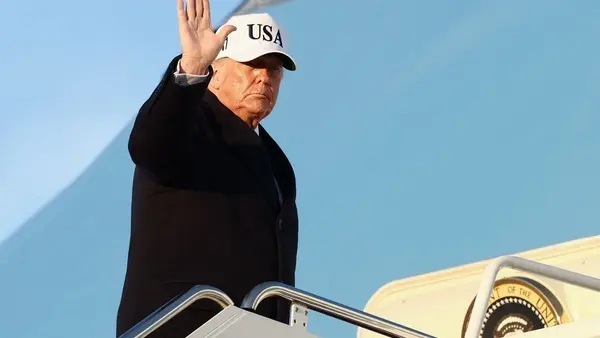
Adirective attributed to United States President Donald Trump to impose a naval blockade in the Strait of Hormuz has introduced fresh uncertainty into an already fragile geopolitical environment, following inconclusive high level talks between Washington and Tehran. The discussions, held in Islamabad and facilitated by Pakistan, marked the most senior direct engagement between the two states in decades but concluded without agreement on key issues, particularly those related to Iran’s nuclear programme.
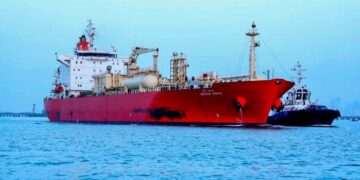
According to public statements, the United States has instructed its naval forces to interdict vessels in international waters that are alleged to have engaged in financial transactions with Iran. While details of the operational scope remain limited, such measures would represent a significant escalation in maritime enforcement in one of the world’s most strategically important waterways. The Strait of Hormuz, which connects the Persian Gulf to global shipping lanes, is a critical artery through which a substantial share of internationally traded crude oil passes. Estimates from organisations such as the US Energy Information Administration indicate that roughly one fifth of global petroleum liquids consumption transits this narrow passage.
The immediate market response has been mixed, with benchmark crude prices showing short term declines despite heightened geopolitical risk. Analysts have suggested that this may reflect uncertainty over enforcement feasibility, as well as expectations of diplomatic recalibration. Nonetheless, shipping data indicates that vessel movement in the Gulf remains constrained, with numerous tankers delayed and only limited traffic resuming following a recently agreed ceasefire.




From Tehran’s perspective, officials have acknowledged partial convergence on certain negotiation points while emphasising persistent disagreements on core issues. Iranian representatives have reiterated that diplomacy remains open, framing the outcome as part of a longer process shaped by deep mutual mistrust. The absence of a comprehensive agreement underscores the structural complexity of the dispute, which extends beyond nuclear policy to encompass sanctions, regional security dynamics and questions of sovereignty.
The legal and geopolitical implications of a blockade in the Strait of Hormuz are significant. Under international law, including provisions outlined by the United Nations Convention on the Law of the Sea, the strait is generally recognised as an international transit route where freedom of navigation is protected. Any attempt to restrict passage could therefore raise questions regarding compliance with established maritime norms and the potential for broader international response.
For African economies, the situation carries layered consequences. Many countries across the continent remain net importers of refined petroleum products and are therefore sensitive to disruptions in global supply chains. While some oil producing states may experience short term fiscal gains from price volatility, the broader continental picture is more complex. Increased transport costs, currency pressures and inflationary risks could disproportionately affect lower income households, particularly in states already navigating structural economic challenges.
At the same time, the episode highlights Africa’s evolving role within global energy and diplomatic systems. Several African states have in recent years sought to diversify energy partnerships and expand refining capacity, partly in response to external supply shocks. Institutions such as the African Development Bank have emphasised the importance of regional energy resilience, while continental frameworks continue to advocate for greater intra African trade in energy resources.
Pakistan’s role as host and intermediary reflects a broader pattern of non Western states facilitating dialogue in complex conflicts. Its foreign ministry has urged both parties to maintain a recently established truce and to continue engagement, positioning itself as a bridge in a process that remains unresolved. This aligns with a wider shift in diplomatic geography, where emerging and middle powers increasingly shape negotiation spaces outside traditional centres.
As developments continue to unfold, the situation in the Strait of Hormuz will likely remain a focal point for both geopolitical analysis and economic forecasting. For African stakeholders, the emphasis may rest not only on monitoring external events but also on advancing strategies that mitigate vulnerability to distant conflicts while strengthening regional agency in global decision making.