Wednesday, April 29, 2026
  • Login
The Southern African Times
  • Home
  • Southern Africa
  • Business
    • African Start ups
    • African Continental Free Trade Area
  • Technology
    • Lifestyle
      • Health
      • Culture
      • Food and Drink
      • Entertainment
  • Opinion
  • Sports
  • SAT Jobs
    • Events
  • About Us
    • Advertise with Us
    • Contact Us
No Result
View All Result
  • Home
  • Southern Africa
  • Business
    • African Start ups
    • African Continental Free Trade Area
  • Technology
    • Lifestyle
      • Health
      • Culture
      • Food and Drink
      • Entertainment
  • Opinion
  • Sports
  • SAT Jobs
    • Events
  • About Us
    • Advertise with Us
    • Contact Us
No Result
View All Result
The Southern African Times
No Result
View All Result
Home Politics

Is JD Vance’s Hungary Visit About More Than Bilateral Diplomacy

by SAT Reporter
April 6, 2026
in Politics
0
Is JD Vance’s Hungary Visit About More Than Bilateral Diplomacy

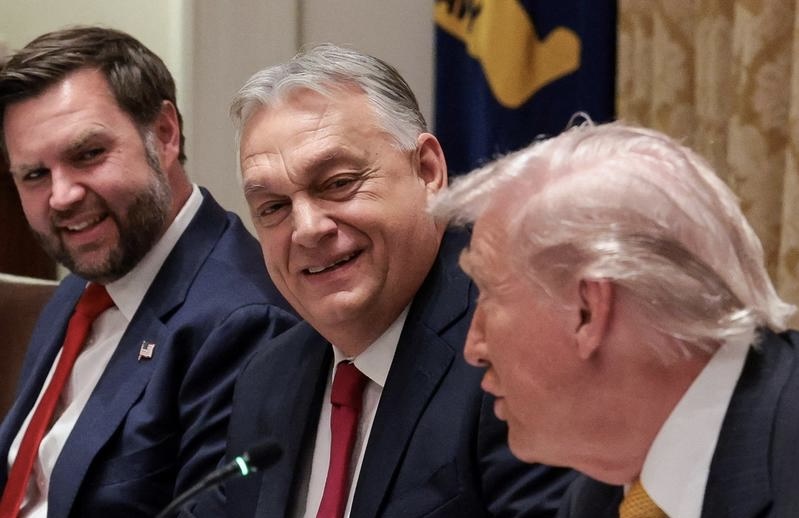
US Vice President JD Vance is expected to visit Hungary in early April 2026, just days before the country’s parliamentary election on 12 April. While formally framed as a diplomatic engagement between Washington and Budapest, the timing and political context of the այց have prompted broader interpretations about its significance within evolving global political alignments.

Vance is scheduled to meet Prime Minister Viktor Orbán and deliver public remarks during the visit. Orbán, who has led Hungary for more than a decade, has cultivated relationships across geopolitical divides, maintaining ties with both the United States under President Donald Trump and Russia under President Vladimir Putin. His government has positioned Hungary as an advocate of national sovereignty, cultural conservatism, and resistance to aspects of European Union integration.

The visit follows a February 2026 trip by US Secretary of State Marco Rubio, during which the United States and Hungary concluded a civilian nuclear cooperation agreement. According to the US Department of State, the agreement forms part of a broader framework to expand energy collaboration. Hungarian officials, through the government portal, have emphasised its relevance for long term energy security and technological development.


ADVERTISEMENT

Beyond formal policy discussions, Vance’s presence in Hungary has drawn attention in light of his prior public statements on Europe and the West. At the Munich Security Conference in 2025, he criticised European political leadership, arguing that internal political and cultural dynamics posed a significant challenge to the region’s future. His remarks focused on issues such as migration, democratic accountability, and freedom of expression, and were widely interpreted as a departure from traditional transatlantic consensus.

Within this framework, references to “Western values” by figures aligned with the current US administration often diverge from the liberal democratic language typically associated with European institutions. Instead, they tend to emphasise national sovereignty, border control, religious heritage, and socially conservative norms. Hungary under Orbán has frequently been presented by supporters as an example of such an approach, while critics within Europe have raised concerns regarding governance, media independence, and institutional checks and balances.

Analysts have suggested that the convergence of these narratives reflects a broader pattern of ideological affinity between segments of the American political right and nationalist conservative movements in Europe. Reporting by Reuters and other international outlets indicates that Hungary’s upcoming election is more competitive than in previous cycles, adding further attention to external engagements in the lead up to the vote.

For observers across Africa, the significance of these developments lies less in the personalities involved and more in what they reveal about shifting global political currents. The growing visibility of sovereignty centred governance models, alongside renewed debates about cultural identity and political authority, resonates with discussions taking place across African states navigating their own democratic trajectories and development priorities.

At the same time, the visit raises enduring questions about the role of external actors in domestic political contexts. While international partnerships remain a central feature of diplomacy, their intersection with electoral processes often invites scrutiny, particularly in an era marked by heightened sensitivity to influence and legitimacy.

Rather than representing a singular event, Vance’s visit may be understood as part of a wider reconfiguration of international relationships in which ideological alignment, strategic interest, and political messaging intersect. For African audiences, such moments provide an opportunity to engage global developments from perspectives that prioritise agency, plurality, and contextual understanding, rather than adopting externally defined narratives.

Tags: Africa perspectiveelectionsforeign policyGeopoliticsHungaryInternational relationsJD VancenationalismUnited StatesViktor Orbán
Previous Post

AI Platform Aims to Reshape African Led Artefact Restitution Efforts

Next Post

OPINION | Africa Isn’t Failing Democracy — The Narrative Is

SAT Reporter

Related Posts

Hungary Halts ICC Exit as Global Justice Debate Shifts
Politics

Hungary Halts ICC Exit as Global Justice Debate Shifts

by SAT Reporter
April 21, 2026
Global Progressives Meet in Barcelona as African Voices Shape Reform Debate
Politics

Global Progressives Meet in Barcelona as African Voices Shape Reform Debate

by SAT Reporter
April 20, 2026
Hungary election marks political turning point as Orbán concedes defeat
Politics

Hungary election marks political turning point as Orbán concedes defeat

by SAT Reporter
April 12, 2026
Djibouti’s Guelleh Secures Sixth Term Following Presidential Election Results
Politics

Djibouti’s Guelleh Secures Sixth Term Following Presidential Election Results

by SAT Reporter
April 12, 2026
Ramaphosa Distances Himself as IPID Report Lifts Lid on Phala Phala Cover Up Claims
Politics

Ramaphosa Distances Himself as IPID Report Lifts Lid on Phala Phala Cover Up Claims

by SAT Reporter
April 11, 2026
Next Post
OPINION | Africa Isn’t Failing Democracy — The Narrative Is

OPINION | Africa Isn’t Failing Democracy — The Narrative Is

Browse by Category

  • Africa AI
  • African Continental Free Trade Area
  • African Debt
  • African Start ups
  • Agriculture
  • AI Africa
  • Algeria
  • All News
  • Analysis
  • Angola
  • Arts / Culture
  • Asia
  • Botswana
  • BOTSWANA
  • BREAKING NEWS
  • BRICS
  • Burkina Faso
  • Burundi
  • Business
  • Business
  • Business Wire
  • Cameroon
  • Central Africa
  • Chad
  • China
  • Climate Change
  • Climate Changev
  • Community
  • Congo Republic
  • Conservation
  • Côte d’Ivoire
  • COVID 19
  • CRYPTOCURRENCY
  • Culture
  • Democratic Republic of Congo
  • Diplomacy
  • Eastern Africa
  • Economic Development
  • Economy
  • Education
  • Egypt
  • Elections 2024
  • Energy
  • Entertainment
  • Environment
  • Eritrea
  • Ethiopia
  • Europe
  • Fashion
  • Feature
  • Finance
  • Financial Inclusion
  • Food
  • Food and Drink
  • Foods
  • GABON
  • Ghana
  • Global
  • Global Africa
  • Guinea
  • Health
  • Immigration
  • in Southern Africa
  • International news
  • International Relations
  • Investment
  • Ivory Coast
  • Just In
  • Kenya
  • Lesotho
  • Libya
  • Life Style
  • Lifestyle
  • Literature
  • Malawi
  • Malawi
  • Mali
  • Markets
  • Mauritius
  • Middle East
  • Mining in Africa
  • Morocco
  • Mozambique
  • Namibia
  • niger
  • Niger
  • Nigeria
  • North Africa
  • North-Eastern Africa
  • Obituaries
  • Obituary
  • Opinion
  • PARTNER CONTENT
  • Politics
  • Property
  • Racism
  • Rwanda
  • Rwanda
  • SADC
  • SAT Interviews
  • SAT Investigation
  • SAT Jobs
  • Saudi Arabia
  • Senegal
  • Seychelles
  • Somaliland
  • South Africa
  • South Sudan
  • Sports
  • Startup Africa
  • STOCK EXCHANGE
  • Sudan
  • Sustainability
  • Sustainablity
  • Tanzania
  • Technology
  • Telecommunications
  • The Editorial Board
  • The Power Of She
  • Togo
  • Trade
  • Travel
  • Travel
  • Tunisia
  • Uganda
  • Uncategorized
  • Wealth
  • West Africa
  • World
  • World
  • ZAMBIA
  • Zambia
  • ZIMBABWE
  • Zimbabwe

Browse by Tags

#NewsUpdate #SouthAfrica #SouthernAfricanTimes #TheSouthernAfricanTimes AfCFTA africa African Continental Free Trade Area African development African Development Bank African economies African economy African Union Agriculture Angola Botswana Business China Climate change Cyril Ramaphosa Economic Development economic growth energy transition fiscal policy industrialisation Inflation Infrastructure Infrastructure Development International relations Investment Kenya Mozambique Namibia news Nigeria Regional Integration renewable energy Rwanda SADC South Africa Southern Africa sustainable development Tanzania United States Zambia Zimbabwe
ADVERTISEMENT

WHO WE ARE

The Southern African Times is a regional bloc digital newspaper that covers Southern African and world news. The paper also gives a nuanced analysis on news and covers a wide range of reporting which include sports, entertainment, foreign affairs, arts and culture.

Welcome Back!

Login to your account below

Forgotten Password?

Retrieve your password

Please enter your username or email address to reset your password.

Log In

  • Home
  • Southern Africa
  • Business
    • African Start ups
    • African Continental Free Trade Area
  • Technology
    • Lifestyle
      • Health
      • Culture
      • Food and Drink
      • Entertainment
  • Opinion
  • Sports
  • SAT Jobs
    • Events
  • About Us
    • Advertise with Us
    • Contact Us
Are you sure want to unlock this post?
Unlock left : 0
Are you sure want to cancel subscription?