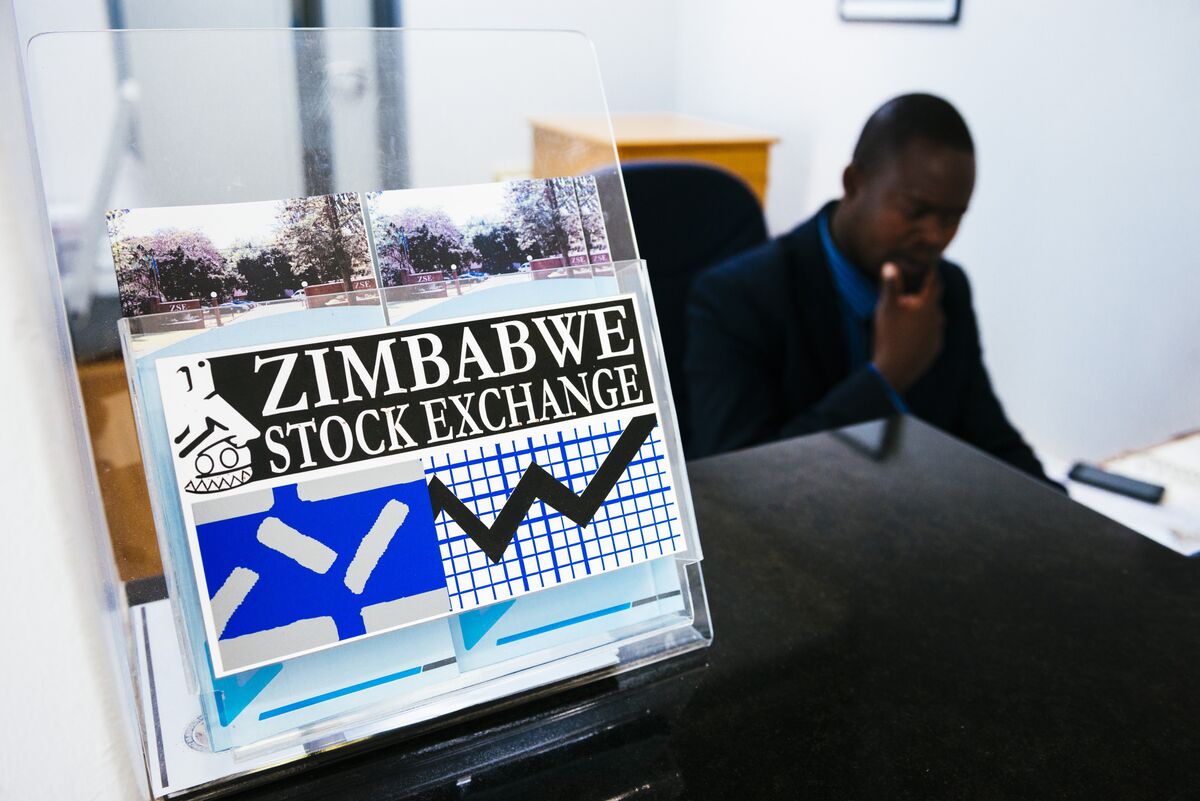
Zimbabwe’s dual stock exchanges are estimated to hold a combined market valuation of approximately 5.3 billion United States dollars, reflecting a modest but evolving capital market landscape within the region. Data attributed to the Securities and Exchange Commission of Zimbabwe indicate that funds under management stand at around 3.78 billion dollars, while assets under custody are estimated at 2.97 billion dollars. Real estate investment trusts constitute a relatively small segment of this ecosystem, accounting for roughly 100 million dollars.
The country’s market capitalisation to gross domestic product ratio is reported at 12.74 percent. This measure, often used to gauge whether equity markets are overvalued or undervalued, places Zimbabwe below commonly referenced benchmarks. By comparison, South Africa’s ratio exceeds 300 percent, while Kenya and Botswana record approximately 45 percent and 42 percent respectively. Analysts generally interpret Zimbabwe’s lower ratio as indicative of an undercapitalised market, though structural economic factors, currency dynamics and liquidity constraints also shape this outcome.
Zimbabwe’s capital market operates through two distinct exchanges. The Zimbabwe Stock Exchange, established over a century ago, lists 61 counters and trades in the Zimbabwe Gold currency. Alongside it, the Victoria Falls Stock Exchange, launched in 2020, provides a United States dollar denominated platform and has grown to include 19 listings, the majority of which are equities. The Victoria Falls platform is estimated to account for approximately 2.8 billion dollars of total market capitalisation and has reported more than 7,800 active retail investor accounts.



Market participants have pointed to increasing issuer interest and gradual deepening of investor participation, particularly on the Victoria Falls exchange, which positions itself as a regional capital raising hub. Its dollar based structure has been viewed as offering a degree of insulation from local currency volatility, although broader macroeconomic conditions continue to influence investor confidence and capital flows.
Regulatory authorities have indicated that technological innovation is being integrated into oversight mechanisms. The Securities and Exchange Commission of Zimbabwe has stated its intention to deploy artificial intelligence tools to enhance market surveillance, identify potential misconduct and support regulatory decision making. Such developments align with wider continental trends, as African capital markets explore digital tools to strengthen governance and investor protection.
Across the continent, stock exchanges remain unevenly developed, with varying degrees of depth, liquidity and integration into domestic economies. Zimbabwe’s relatively low capitalisation ratio underscores both the constraints and potential within its financial system. While comparisons with larger markets highlight gaps in scale, they also point to opportunities for expansion, regional linkages and more inclusive participation in capital markets.

In this context, Zimbabwe’s exchanges illustrate a broader African narrative in which financial systems are evolving within complex economic environments, shaped by local priorities as much as global influences. Their trajectory reflects ongoing efforts to balance stability, innovation and access, while contributing to wider debates on how African capital markets can better serve domestic development goals and regional integration.
Meta description: Zimbabwe’s two stock exchanges are valued at 5.3 billion dollars, reflecting an evolving capital market shaped by local dynamics, regional comparisons and growing investor participation.