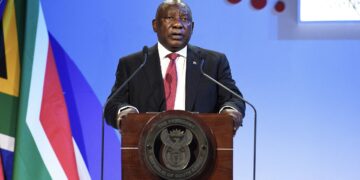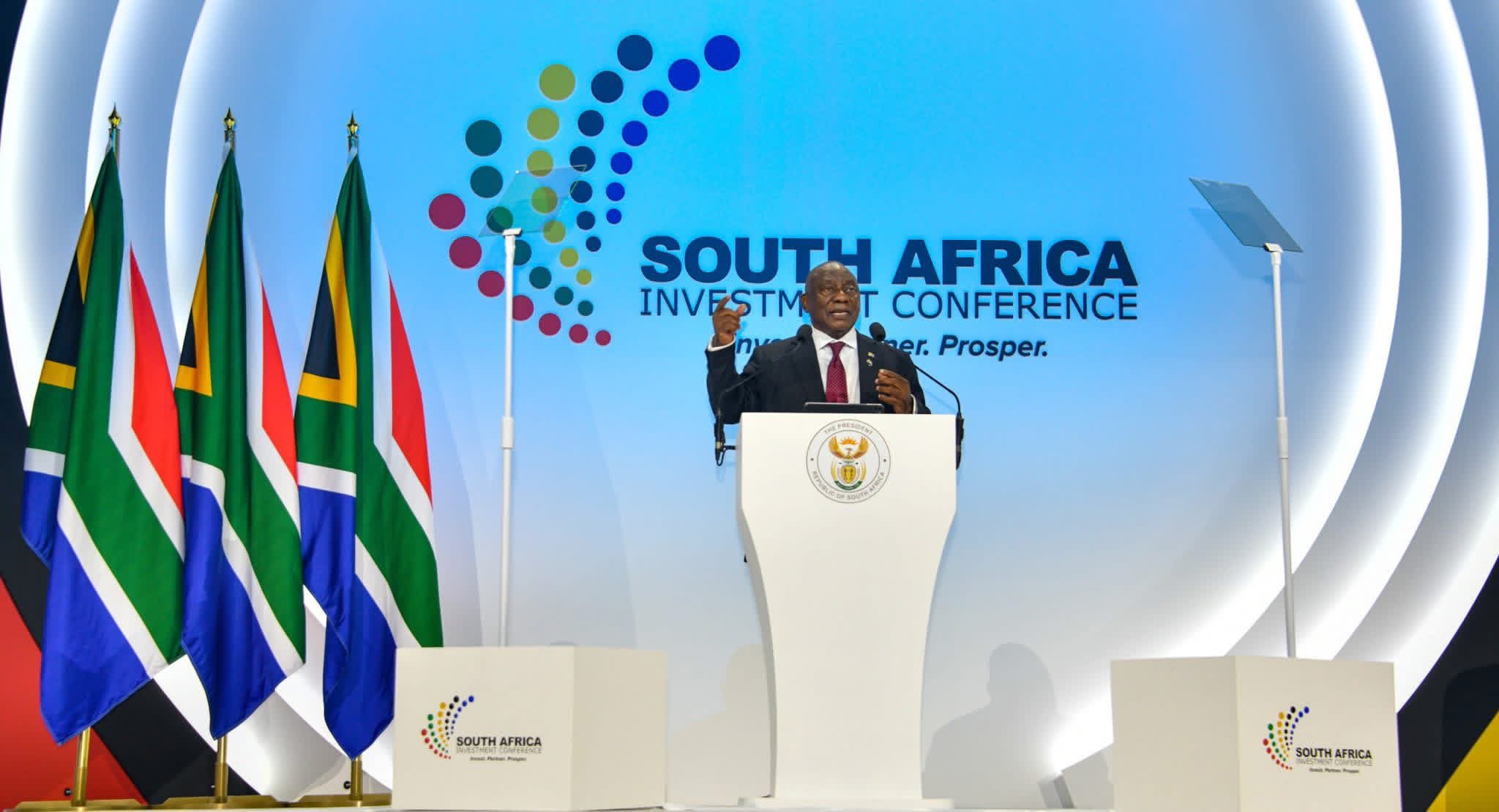
President Cyril Ramaphosa’s address to the South Africa Investment Conference was meant to do more than solicit capital. It was designed to settle an argument. For several years, global investors have viewed South Africa through a dispiritingly familiar prism: a country of deep institutional sophistication and substantial industrial heft, yet one that too often burdens itself with policy ambiguity, logistical failure and ideological mistrust of markets. The loudest recent criticism, sharpened by Elon Musk and amplified abroad, has centred on black economic empowerment. Is South Africa serious about investment, the critics ask, if it remains committed to ownership rules and redistributive mandates that foreign capital often regards as cumbersome or exclusionary?
Ramaphosa’s answer, delivered with unusual directness, is no. South Africa will not choose between reform and inclusion. It intends to pursue both.
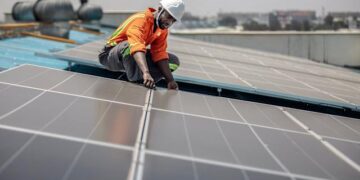
That is the true significance of the speech. On one side, the President offered the market-friendly lexicon investors have long wanted to hear: fiscal discipline, policy certainty, structural reform, private participation, competitive network industries and measurable implementation. He spoke of four consecutive quarters of growth into early 2026, inflation converging towards 3 per cent, an improved sovereign rating and removal from the FATF grey list. He outlined more than R1tn in public infrastructure investment over three years, up to R250bn for ports and logistics modernisation, R300bn to R400bn for national roads, and a combined R420bn for passenger and freight rail rebuilding. He pointed to more than 220GW of renewable projects in development, 36GW already in the grid-connection process, and an R29bn renewable investment pipeline announced at the conference itself. On the day, the government claimed an opening tally of R889.8bn — rounded, with the President’s characteristic flourish, to R900bn — across 81 projects, 22 source markets and more than 230,000 permanent jobs.



This was not accidental. Ramaphosa is trying to persuade investors that South Africa has moved from the era of grand declaration to one of administrative repair. Operation Vulindlela, he stressed, exists not for speechmaking but for execution: to reduce the cost and risk of investing through reforms to visas, electricity, logistics and water. In an economy wearied by state incapacity, this insistence on implementation is perhaps the speech’s most commercially literate note. Investors can tolerate political complexity; what they cannot tolerate is bureaucratic inertia.
Yet the most consequential passage came later, when the President turned to Broad-Based Black Economic Empowerment. Here the speech deserves close attention. Ramaphosa did not retreat from empowerment. He did not hint at repeal, dilution by stealth or ideological embarrassment. Instead, he argued that the B-BBEE framework is being reviewed “to refine, to realign and strengthen” it so that it advances transformation while enabling investment and growth. He explicitly rejected the idea that empowerment is an impediment to capital formation. On the contrary, he said, it is one of the ingredients of durable investment because it broadens participation and therefore expands the economic base.

This is a shrewd repositioning. South Africa’s investment case has always foundered on a false binary. The country is urged, particularly from abroad, to prove its seriousness by stripping out redistributive commitments and embracing a purer version of market orthodoxy. But South Africa is not simply a middle-income investment destination with regulatory eccentricities. It is a post-apartheid polity whose social contract rests on the proposition that growth must not merely enrich incumbents but widen access. To imagine that the state could jettison empowerment and retain political legitimacy is to misunderstand the market as well as the country. Political exclusion is not pro-business. It is merely another form of risk.
Ramaphosa’s more interesting move was not rhetorical defence but practical accommodation. He highlighted the Equity Equivalent Investment Programme, which allows multinational corporations whose global structures prevent local equity dilution to comply through socio-economic, skills and enterprise-development investment instead of selling stakes in local subsidiaries. This is an important point, and one directly relevant to foreign investors who argue that South Africa’s ownership regime is unworkable. The government’s reply is now clear: the system already contains flexibility, and more may come through the current review. The burden on Pretoria is to make that flexibility legible, predictable and administratively efficient. The burden on investors is to stop pretending that inclusion, in a country with South Africa’s history, can simply be wished away.
None of this means the President has resolved the contradiction between aspiration and implementation. South Africa still carries the scars of power shortages, port dysfunction, municipal decline and weak state execution. Water insecurity remains acute enough for the government to flag more than R50bn in projects in development and to establish a Water Partnerships Office to draw in private capital. Freight reform is promising, but only if the promised private rail access and port concessions materially reduce costs. The end of load-shedding, if durable, would be transformational; if temporary, it will be judged as yet another cyclical reprieve. Investors, quite sensibly, will reserve judgement until reforms produce visible operating improvements.
Still, it would be a mistake to dismiss the speech as another ceremonial inventory of ambitions. Ramaphosa is attempting something more subtle. He is constructing a new South African investment grammar in which the state is not the monopolist but the enabler; private capital is not the adversary but the growth engine; and inclusion is not an afterthought but part of the architecture of legitimacy. The President’s message to the market is that South Africa can liberalise without repudiating the post-1994 settlement. His message to domestic constituencies is that transformation need not be purchased at the price of stagnation.
Whether that wager succeeds will depend less on conference applause than on execution. The numbers in the speech are large, the pipeline broad and the tone notably more market-attuned than much ANC rhetoric of the past decade. But investors will want to see projects break ground, permits processed on time, rails run competitively, ports clear faster, and power remain abundant. They will also want clarity that the review of B-BBEE produces a regime that is not only morally intelligible but commercially navigable.
For now, though, Ramaphosa has done something politically difficult and economically necessary. He has refused the lazy proposition that South Africa must choose between being open for business and faithful to inclusion. The harder task begins now: proving that the two can, in practice rather than prose, reinforce each other.