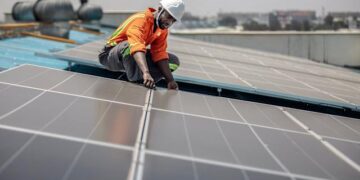
Africa faces a defining moment in its energy trajectory, as structural constraints in electricity access intersect with rapid demographic change and rising development ambitions. Across the continent, an estimated 600 million people remain without access to electricity, a figure that has remained persistently high despite incremental progress in recent decades. Evidence from energy research and multilateral assessments indicates that the majority of those without access are concentrated in sub Saharan Africa, where electrification rates continue to lag behind global averages.
The implications of this deficit extend beyond household access. Limited and unreliable electricity supply continues to shape industrial productivity, healthcare delivery, education systems and broader economic participation. In several countries, constrained grid capacity and ageing infrastructure have contributed to persistent supply shortfalls, reinforcing patterns of energy poverty that are both rural and urban in character.
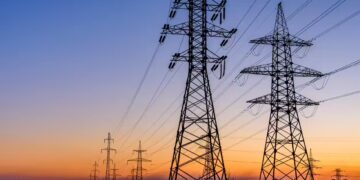
Demographic trends add further complexity. Population growth across Africa is projected to accelerate significantly in the coming decades, with sub Saharan Africa expected to account for a substantial share of global population increase by mid century. This growth is expected to drive a corresponding rise in energy demand, placing additional pressure on already constrained systems. Analysts widely agree that meeting future demand will require a substantial expansion in generation capacity alongside significant investment in transmission and distribution networks.



Yet the challenge is not solely one of generation. Research on African energy systems consistently identifies infrastructure financing as a central bottleneck. Many projects do not progress beyond feasibility stages due to perceived investment risks, regulatory uncertainty or limited access to long term capital. This has resulted in a narrow pipeline of bankable projects, even in contexts where underlying demand and economic viability are evident. As a result, energy deficits persist not only because of resource limitations, but also because of structural constraints within financial and institutional ecosystems.
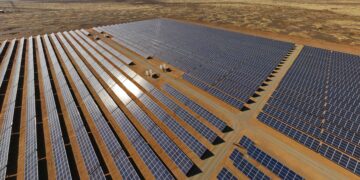
At the same time, the continent’s renewable energy potential remains considerable. Africa is widely recognised as having some of the highest solar irradiation levels globally, alongside significant wind, hydro and geothermal resources. Despite this, deployment remains comparatively limited. Current estimates suggest that Africa accounts for a small fraction of global installed solar capacity, underscoring a gap between resource availability and actual utilisation. This disparity reflects a combination of factors, including financing challenges, grid integration constraints, and the need for supportive policy environments.
International climate finance has been positioned as one avenue to support the expansion of clean energy systems. Commitments by higher income countries to mobilise funding for developing economies have included provisions aimed at supporting energy transitions. However, delivery of such finance has been uneven, and questions remain regarding accessibility, scale and alignment with national development priorities. This has led to a growing emphasis on blended finance models, regional development banks and domestic capital mobilisation as complementary pathways.

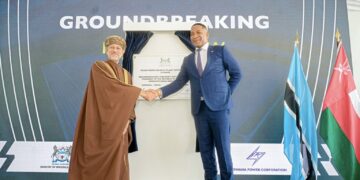
External partnerships continue to play a significant role in shaping infrastructure development across the continent. In recent years, Chinese public and private sector actors have been involved in a number of large scale energy projects, contributing to generation capacity and associated infrastructure. These partnerships have supported project delivery in contexts where alternative financing has been limited. At the same time, they have prompted ongoing debate within African policy circles regarding debt sustainability, local value creation, and long term energy sovereignty.
Across the continent, governments are navigating these dynamics in different ways. Some have sought to retain greater value from natural resources through local processing and industrial policy measures, while others have prioritised rapid capacity expansion through external investment. These approaches reflect varying national circumstances and policy priorities, as well as the broader challenge of balancing immediate energy needs with long term economic positioning.
What emerges from current analysis is a picture that resists singular narratives. Africa’s energy future is neither defined solely by scarcity nor by untapped abundance, but by the interplay between resources, institutions, finance and governance. Addressing the energy gap will require coordinated efforts across these domains, including strengthening regulatory frameworks, expanding regional power pools, improving project preparation capacity, and fostering inclusive investment environments.

Ultimately, the pace and direction of energy development across Africa will shape not only access to electricity, but also broader trajectories of industrialisation, regional integration and social development. As countries across the continent continue to engage with these questions, the emphasis is increasingly on approaches that are grounded in local realities while engaging with global systems, reflecting the diversity and agency of African energy pathways.