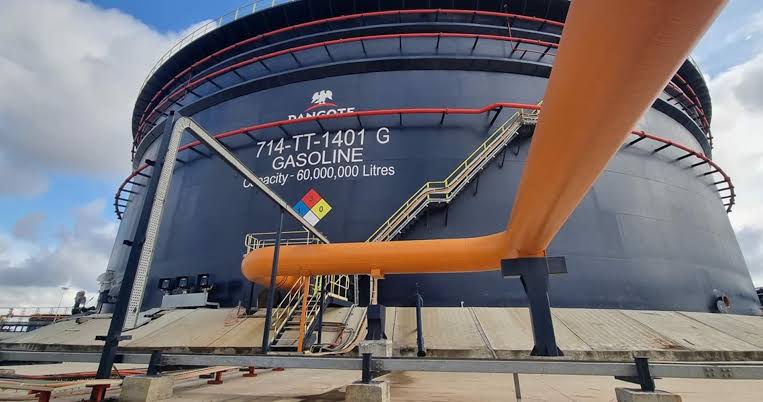
The Southern African Times reports that the Dangote Petroleum Refinery has exported approximately 456000 tonnes of refined petroleum products to several African markets, according to information published by Nairametrics. The shipments, comprising Premium Motor Spirit, were distributed through 12 cargoes handled by international trading firms.
Destinations for the consignments reportedly included Côte d’Ivoire, Cameroon, Ghana, Togo, and Tanzania, reflecting a growing pattern of intra African energy flows. While historically many African states have depended on imports from outside the continent, recent developments suggest a gradual reconfiguration of supply chains in which refining capacity within Africa plays a more central role.
The Dangote refinery, located in the Lekki Free Trade Zone in Nigeria, is widely recognised as one of the largest single train refineries globally, with a nameplate capacity of around 650000 barrels per day. Its scale has positioned it as a potential anchor for regional fuel supply, particularly as countries across West and Central Africa seek to manage import costs, currency pressures, and supply vulnerabilities.




The reported export volumes indicate an operational phase in which refined products are beginning to circulate beyond Nigeria’s domestic market. Industry observers note that this could contribute to easing structural imbalances in the continent’s downstream petroleum sector, where crude oil producing countries have often remained reliant on imported refined products.
At the same time, the development raises questions about pricing dynamics, logistics infrastructure, and regulatory coordination across African markets. Distribution networks, port capacity, and storage facilities remain unevenly developed, which may influence how effectively such exports translate into long term supply stability.
The refinery’s activities also intersect with broader continental initiatives, including the African Continental Free Trade Area, which aims to deepen economic integration and facilitate cross border trade. Energy, as a strategic sector, is expected to play a significant role in shaping the practical outcomes of these frameworks.
While the reported exports mark a notable milestone, analysts caution that sustained impact will depend on consistent production levels, maintenance of key processing units, and alignment with regional demand patterns. As Africa continues to navigate its energy transition alongside immediate development needs, the emergence of large scale refining capacity within the continent introduces both opportunities and complexities that extend beyond national boundaries.
In this context, the Dangote refinery’s export activity can be understood not only as a commercial development but also as part of an evolving African narrative in which industrial capacity, regional interdependence, and economic agency are increasingly interconnected.