Thursday, April 30, 2026
  • Login
The Southern African Times
  • Home
  • Southern Africa
  • Business
    • African Start ups
    • African Continental Free Trade Area
  • Technology
    • Lifestyle
      • Health
      • Culture
      • Food and Drink
      • Entertainment
  • Opinion
  • Sports
  • SAT Jobs
    • Events
  • About Us
    • Advertise with Us
    • Contact Us
No Result
View All Result
  • Home
  • Southern Africa
  • Business
    • African Start ups
    • African Continental Free Trade Area
  • Technology
    • Lifestyle
      • Health
      • Culture
      • Food and Drink
      • Entertainment
  • Opinion
  • Sports
  • SAT Jobs
    • Events
  • About Us
    • Advertise with Us
    • Contact Us
No Result
View All Result
The Southern African Times
No Result
View All Result
Home Middle East

Dubai Property Market Shows Early Signs of Cooling Amid Geopolitical Tensions

by SAT Reporter
March 21, 2026
in Middle East
0
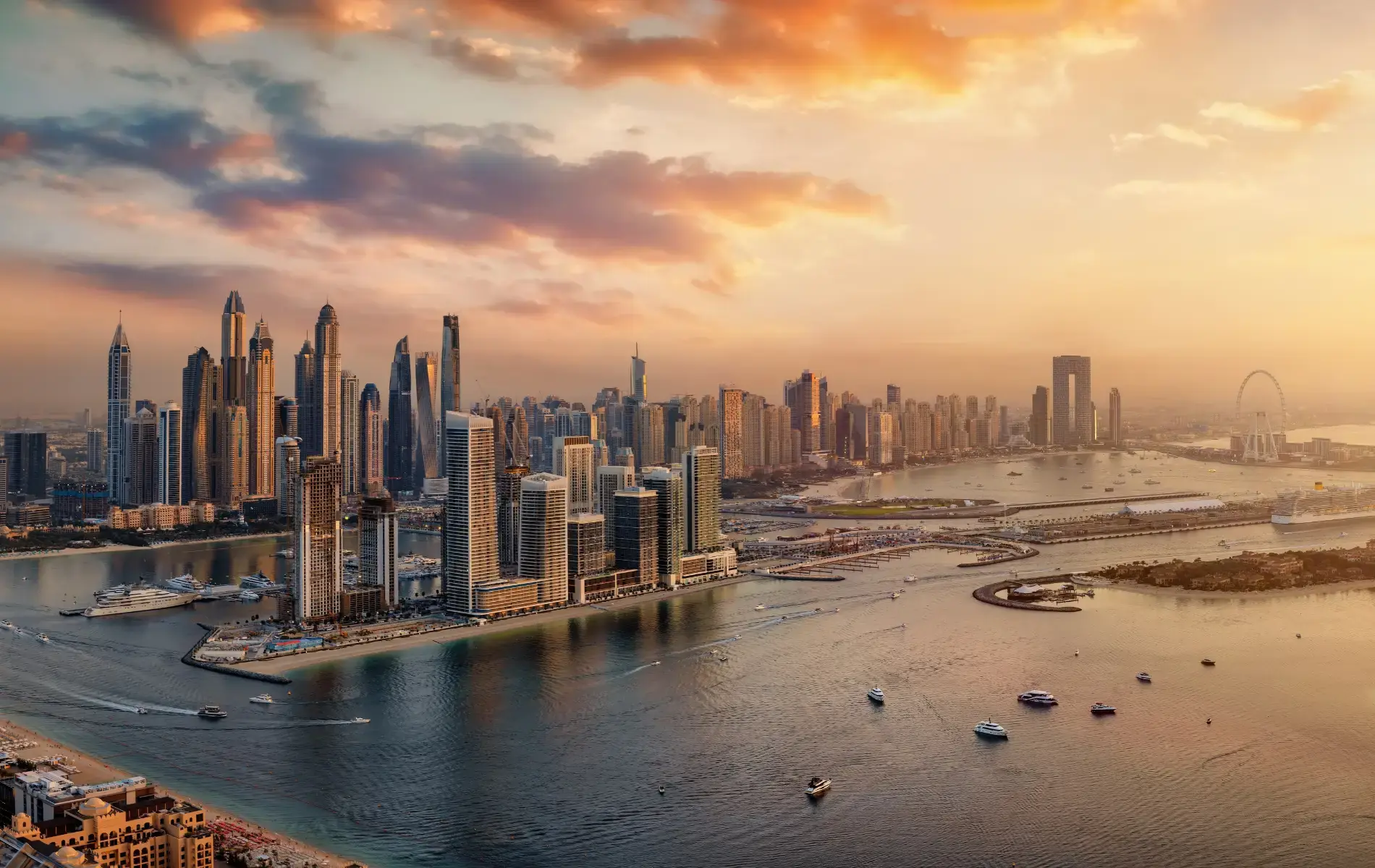
Dubai Property Market Shows Early Signs of Cooling Amid Geopolitical Tensions

Dubai’s property market has entered a period of heightened scrutiny following early indications of declining transaction activity in March 2026, coinciding with escalating geopolitical tensions in the Middle East. Data cited by Reuters and supported by investment bank analyses suggests that while the market has not stalled, there are measurable signs of softening demand and emerging price flexibility.

Transaction volumes across the United Arab Emirates fell sharply in early March, declining by approximately 37 percent year on year and 49 percent compared with the previous month, according to estimates by Goldman Sachs. The total value of completed deals also dropped significantly relative to February, signalling a contraction in short term activity. Despite this, median property prices were reported to have decreased by only about 3 percent on an annual basis, indicating that sellers have not broadly adjusted expectations downward.

Market participants have begun to report selective discounting. Listings reviewed by Reuters and circulating within agent networks indicate price reductions in the range of 12 to 15 percent in some cases. These include high value properties in prime areas such as near the Burj Khalifa and on Palm Jumeirah, where sellers seeking liquidity have adjusted prices in response to current uncertainty. These instances, however, appear to be situational rather than representative of a systemic correction.


ADVERTISEMENT

The current developments are unfolding against the backdrop of renewed regional conflict involving Iran, Israel and the United States, with spillover risks affecting Gulf states including the UAE. Dubai has historically positioned itself as a global safe haven for capital and high net worth migration, supported by its tax environment and relative stability. The perception of risk associated with regional instability now poses a test to that positioning.

Financial institutions have begun to revise their outlooks accordingly. Analysts at Citi have highlighted the potential for reduced population growth, a key driver of housing demand in Dubai. Their projections suggest population expansion could slow to around 1 percent in 2026, compared with an estimated 4 percent annual growth in recent years, before recovering modestly in subsequent years. In a more pessimistic scenario, Citi estimates that property prices could decline by an average of 7 percent annually through to 2028.

Equity markets have reflected these concerns. Shares in major developers such as Emaar Properties have fallen markedly since the onset of the conflict, with declines exceeding 25 percent reported on the Dubai Financial Market. This indicates investor sensitivity to both geopolitical risk and the cyclical nature of the emirate’s property sector.

At the same time, industry stakeholders emphasise that activity continues, albeit at a moderated pace. Executives from regional investment firms report ongoing interest from both international and regional buyers, including investors from Africa and Asia seeking opportunistic acquisitions. Some buyers are actively monitoring the market for distressed or discounted assets, suggesting that liquidity has not disappeared but is becoming more selective.

High profile transactions continue to be recorded, particularly in the luxury segment. The sale of a multi million dollar off plan unit on Palm Jumeirah during the current period underscores sustained demand among ultra high net worth individuals. Developers and brokers note that many long term investors remain reluctant to reduce prices significantly, reflecting confidence in Dubai’s structural fundamentals over the medium to long term.

For African investors and policymakers, the developments in Dubai offer a point of reflection rather than a distant anomaly. The emirate has long attracted capital flows from across the continent, including family offices, entrepreneurs and diaspora investors seeking asset diversification. Any sustained adjustment in Dubai’s property market could therefore have indirect implications for African capital allocation strategies, remittance patterns and cross border investment linkages.

At the same time, the situation highlights the importance of diversified urban development strategies within African cities themselves. As metropolitan centres such as Johannesburg, Nairobi and Lagos continue to expand, the interplay between global capital flows and local housing markets becomes increasingly relevant. Dubai’s experience illustrates both the opportunities and vulnerabilities associated with positioning real estate as a globally traded asset class.

While early indicators point to a cooling phase, the available data does not yet support conclusions of a broad based downturn. Instead, the market appears to be entering a period of recalibration shaped by geopolitical uncertainty, shifting investor sentiment and evolving demographic expectations. The coming months will be critical in determining whether these trends consolidate into a sustained slowdown or remain a temporary response to external shocks.

Tags: African investorsDubai property marketEmaar PropertiesEmerging Marketsglobal property trendshousing marketsinvestment flowsMiddle East conflictUAE real estateurban development
Previous Post

India Turns to Angolan Crude as Global Oil Flows Shift Following Middle East Disruptions

Next Post

African Airlines Face Rising Fuel Costs and Supply Uncertainty

SAT Reporter

Related Posts

Oil Tankers Resume Passage Through Hormuz Amid Fragile Truce
Middle East

Oil Tankers Resume Passage Through Hormuz Amid Fragile Truce

by SAT Reporter
April 18, 2026
US directive on Hormuz shipping raises global concern as diplomatic efforts stall
Middle East

US directive on Hormuz shipping raises global concern as diplomatic efforts stall

by SAT Reporter
April 12, 2026
Netanyahu approves talks with Lebanon as escalating strikes strain regional ceasefire
Middle East

Netanyahu approves talks with Lebanon as escalating strikes strain regional ceasefire

by SAT Reporter
April 10, 2026
Arab economies face up to $200 billion in losses from Iran conflict
Middle East

Arab economies face up to $200 billion in losses from Iran conflict

by SAT Reporter
April 4, 2026
Strike on Iran’s Mobarakeh Steel Raises Global Supply Concerns
Middle East

Strike on Iran’s Mobarakeh Steel Raises Global Supply Concerns

by SAT Reporter
March 29, 2026
Next Post
African Airlines Face Rising Fuel Costs and Supply Uncertainty

African Airlines Face Rising Fuel Costs and Supply Uncertainty

Browse by Category

  • Africa AI
  • African Continental Free Trade Area
  • African Debt
  • African Start ups
  • Agriculture
  • AI Africa
  • Algeria
  • All News
  • Analysis
  • Angola
  • Arts / Culture
  • Asia
  • Botswana
  • BOTSWANA
  • BREAKING NEWS
  • BRICS
  • Burkina Faso
  • Burundi
  • Business
  • Business
  • Business Wire
  • Cameroon
  • Central Africa
  • Chad
  • China
  • Climate Change
  • Climate Changev
  • Community
  • Congo Republic
  • Conservation
  • Côte d’Ivoire
  • COVID 19
  • CRYPTOCURRENCY
  • Culture
  • Democratic Republic of Congo
  • Diplomacy
  • Eastern Africa
  • Economic Development
  • Economy
  • Education
  • Egypt
  • Elections 2024
  • Energy
  • Entertainment
  • Environment
  • Eritrea
  • Ethiopia
  • Europe
  • Fashion
  • Feature
  • Finance
  • Financial Inclusion
  • Food
  • Food and Drink
  • Foods
  • GABON
  • Ghana
  • Global
  • Global Africa
  • Guinea
  • Health
  • Immigration
  • in Southern Africa
  • International news
  • International Relations
  • Investment
  • Ivory Coast
  • Just In
  • Kenya
  • Lesotho
  • Libya
  • Life Style
  • Lifestyle
  • Literature
  • Malawi
  • Malawi
  • Mali
  • Markets
  • Mauritius
  • Middle East
  • Mining in Africa
  • Morocco
  • Mozambique
  • Namibia
  • niger
  • Niger
  • Nigeria
  • North Africa
  • North-Eastern Africa
  • Obituaries
  • Obituary
  • Opinion
  • PARTNER CONTENT
  • Politics
  • Property
  • Racism
  • Rwanda
  • Rwanda
  • SADC
  • SAT Interviews
  • SAT Investigation
  • SAT Jobs
  • Saudi Arabia
  • Senegal
  • Seychelles
  • Somaliland
  • South Africa
  • South Sudan
  • Sports
  • Startup Africa
  • STOCK EXCHANGE
  • Sudan
  • Sustainability
  • Sustainablity
  • Tanzania
  • Technology
  • Telecommunications
  • The Editorial Board
  • The Power Of She
  • Togo
  • Trade
  • Travel
  • Travel
  • Tunisia
  • Uganda
  • Uncategorized
  • Wealth
  • West Africa
  • World
  • World
  • ZAMBIA
  • Zambia
  • ZIMBABWE
  • Zimbabwe

Browse by Tags

#NewsUpdate #SouthAfrica #SouthernAfricanTimes #TheSouthernAfricanTimes AfCFTA africa African Continental Free Trade Area African development African Development Bank African economies African economy African Union Agriculture Angola Botswana Business China Climate change Cyril Ramaphosa Economic Development economic growth energy transition fiscal policy industrialisation Inflation Infrastructure Infrastructure Development International relations Investment Kenya Mozambique Namibia news Nigeria Regional Integration renewable energy Rwanda SADC South Africa Southern Africa sustainable development Tanzania United States Zambia Zimbabwe
ADVERTISEMENT

WHO WE ARE

The Southern African Times is a regional bloc digital newspaper that covers Southern African and world news. The paper also gives a nuanced analysis on news and covers a wide range of reporting which include sports, entertainment, foreign affairs, arts and culture.

Welcome Back!

Login to your account below

Forgotten Password?

Retrieve your password

Please enter your username or email address to reset your password.

Log In

  • Home
  • Southern Africa
  • Business
    • African Start ups
    • African Continental Free Trade Area
  • Technology
    • Lifestyle
      • Health
      • Culture
      • Food and Drink
      • Entertainment
  • Opinion
  • Sports
  • SAT Jobs
    • Events
  • About Us
    • Advertise with Us
    • Contact Us
Are you sure want to unlock this post?
Unlock left : 0
Are you sure want to cancel subscription?