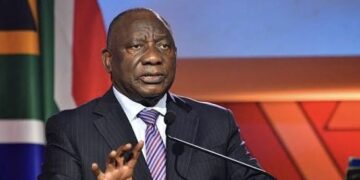
Fuel price increases are likely to become more pronounced in South Africa as geopolitical instability in the Middle East continues to shape global oil markets, Mineral and Petroleum Resources Minister Gwede Mantashe has said.
Speaking at the Southern Africa Oil and Gas Conference 2026 in Cape Town, Mantashe warned that disruptions to fuel supply chains since the onset of conflict in the Middle East have contributed to persistent volatility in pricing. He indicated that, despite uncertainty over the scale of future disruptions, upward pressure on fuel costs is becoming increasingly difficult to avoid.
South Africa, like many economies across the continent, remains structurally exposed to global oil market shifts due to its reliance on imported refined petroleum products. The domestic pricing system is linked to international benchmarks, meaning that fluctuations in global crude oil prices and currency movements are transmitted relatively quickly into local fuel costs. In this context, developments far beyond the continent continue to have immediate implications for households, transport systems and industrial activity.



The minister noted that government is engaging with industry stakeholders to stabilise supply and ensure availability in the domestic market, while seeking to avoid drawing prematurely on strategic fuel reserves. This approach reflects an effort to balance short term energy security with longer term planning in a constrained global environment.

Across Southern Africa and the wider continent, the effects of rising fuel prices are uneven. Oil importing countries face increased fiscal pressure and higher costs of living, while oil producing states may experience revenue gains linked to elevated global prices. This divergence highlights both the opportunities and vulnerabilities embedded within Africa’s position in global energy systems.
The broader economic implications are significant. Higher fuel prices tend to feed into transport and food costs, contributing to inflationary pressures that affect both urban and rural communities. In economies where logistics networks are central to regional trade, these increases can also shape competitiveness and cross border economic activity.
Mantashe emphasised that a more durable response lies in strengthening domestic and regional energy capacity. He pointed to the need for increased exploration and responsible development of petroleum resources within South Africa, alongside deeper collaboration across African markets. Such efforts are increasingly framed within a wider continental conversation about energy sovereignty, industrialisation and the strategic use of natural resources.
The conference, convened under the theme Oil and Gas without Borders Unlocking Southern Africa’s Shared Future, brought together policymakers, industry actors and regional stakeholders to examine developments in the upstream petroleum sector. Discussions reflected a growing recognition that while global energy markets remain interconnected, African countries are seeking more coordinated and locally grounded approaches to managing risk and opportunity.
As global uncertainty persists, the trajectory of fuel prices will remain closely tied to geopolitical developments. For South Africa and its regional partners, the challenge lies not only in navigating immediate price pressures but also in shaping a more resilient and self determined energy future.