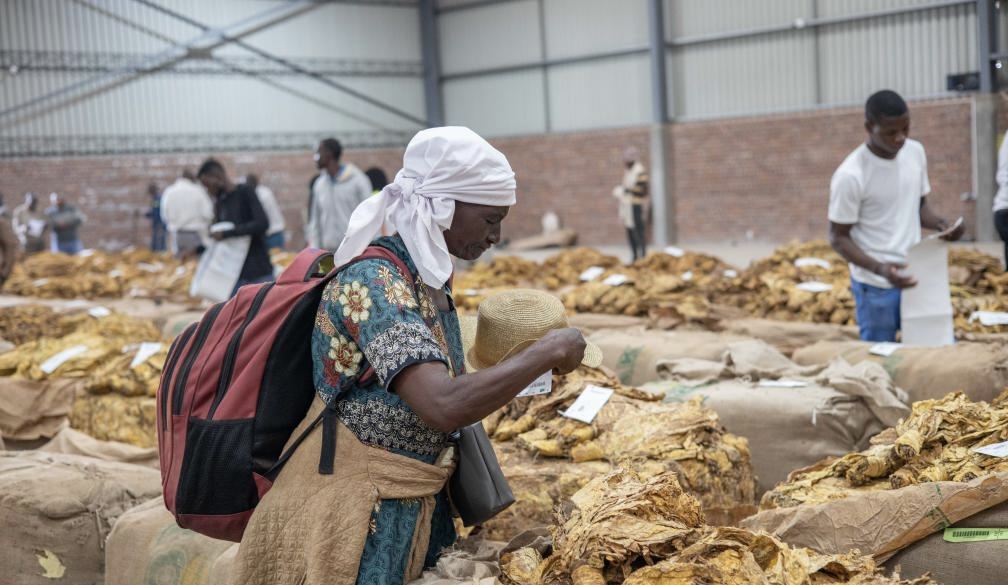
Zimbabwe has formally opened its 2026 tobacco marketing season in Harare, signalling both the start of annual auction sales and the launch of a new national strategy intended to expand domestic processing and strengthen the resilience of growers. Tobacco remains one of the country’s most significant agricultural exports and continues to shape rural livelihoods, regional trade flows and broader debates about value addition within African commodity markets.
At the opening ceremony, Zimbabwe’s Minister of Finance and Economic Development, Mthuli Ncube, announced the Tobacco Value Chain Transformation Plan II covering the period from 2026 to 2030. The programme seeks to deepen local beneficiation, improve agricultural productivity and encourage greater participation by domestic institutions in financing tobacco production. According to the government, the strategy aims to raise the share of locally processed tobacco products from approximately 11 percent to about 30 percent of total output through expanded manufacturing capacity and improved industrial policy frameworks.
The marketing season began with a first bale price of 4.60 United States dollars per kilogramme, slightly below the opening price of 4.65 dollars recorded in 2025. Prices at the start of each marketing season are often symbolic rather than representative of the broader auction trends that unfold over several months. Tobacco auctions typically attract merchants, processors and exporters who purchase graded leaf supplied by farmers across Zimbabwe’s major growing regions.



Zimbabwe remains the largest producer of flue cured tobacco in Africa and among the leading exporters globally. Production has grown steadily over the past decade, driven largely by smallholder farmers who entered the sector following land redistribution and the expansion of contract farming arrangements. Data from the Tobacco Industry and Marketing Board indicates that national output exceeded 350 million kilogrammes in recent seasons, reflecting sustained demand from international buyers and improvements in farm level organisation and financing.
Government officials argue that the next phase of development must focus less on expanding raw leaf volumes and more on capturing value within African production systems. The transformation plan proposes incentives for domestic cigarette manufacturing, processing of cut rag tobacco and expansion of related agro industrial activities. Such measures are framed as part of a wider effort to move Zimbabwe and the region beyond historical patterns in which African economies export largely unprocessed commodities.
The strategy also highlights the importance of climate resilience and agricultural modernisation. Authorities plan to support irrigation development, mechanisation and climate smart farming practices intended to mitigate the effects of increasingly variable rainfall patterns. Research by the Food and Agriculture Organization has emphasised the importance of sustainable land and water management in tobacco producing regions, particularly as climate variability intensifies across southern Africa.
Financing structures are another central component of the policy framework. The government has set a target to localise up to 70 percent of tobacco production financing through domestic banks and financial institutions. Historically, the sector has relied heavily on contract arrangements backed by international merchants who provide seed, fertiliser and credit to growers in exchange for guaranteed supply agreements. Policymakers argue that greater domestic participation in financing could strengthen national value chains and reduce external vulnerabilities.

Regional trade integration is also expected to shape the future of Zimbabwe’s tobacco sector. Officials indicated that export diversification under the African Continental Free Trade Area could broaden market access across the continent while complementing established export destinations in Asia and Europe. The AfCFTA framework aims to reduce tariffs and strengthen intra African trade, including agricultural commodities and processed goods.
Tobacco continues to occupy a complex place in Zimbabwe’s economy and in wider African development debates. While the crop provides income for hundreds of thousands of rural households and remains a major source of foreign exchange earnings, policymakers also face pressures related to sustainability, public health considerations and global shifts in consumption patterns. International institutions such as the World Bank note that agricultural diversification and value addition remain central to strengthening resilience in export oriented sectors across Africa.

Within this broader context, Zimbabwe’s 2026 marketing season represents more than the start of annual trading. It also reflects an ongoing effort to redefine the place of African agricultural producers within global commodity systems by strengthening local industry, expanding regional trade connections and foregrounding the experiences of farmers whose livelihoods underpin the sector.