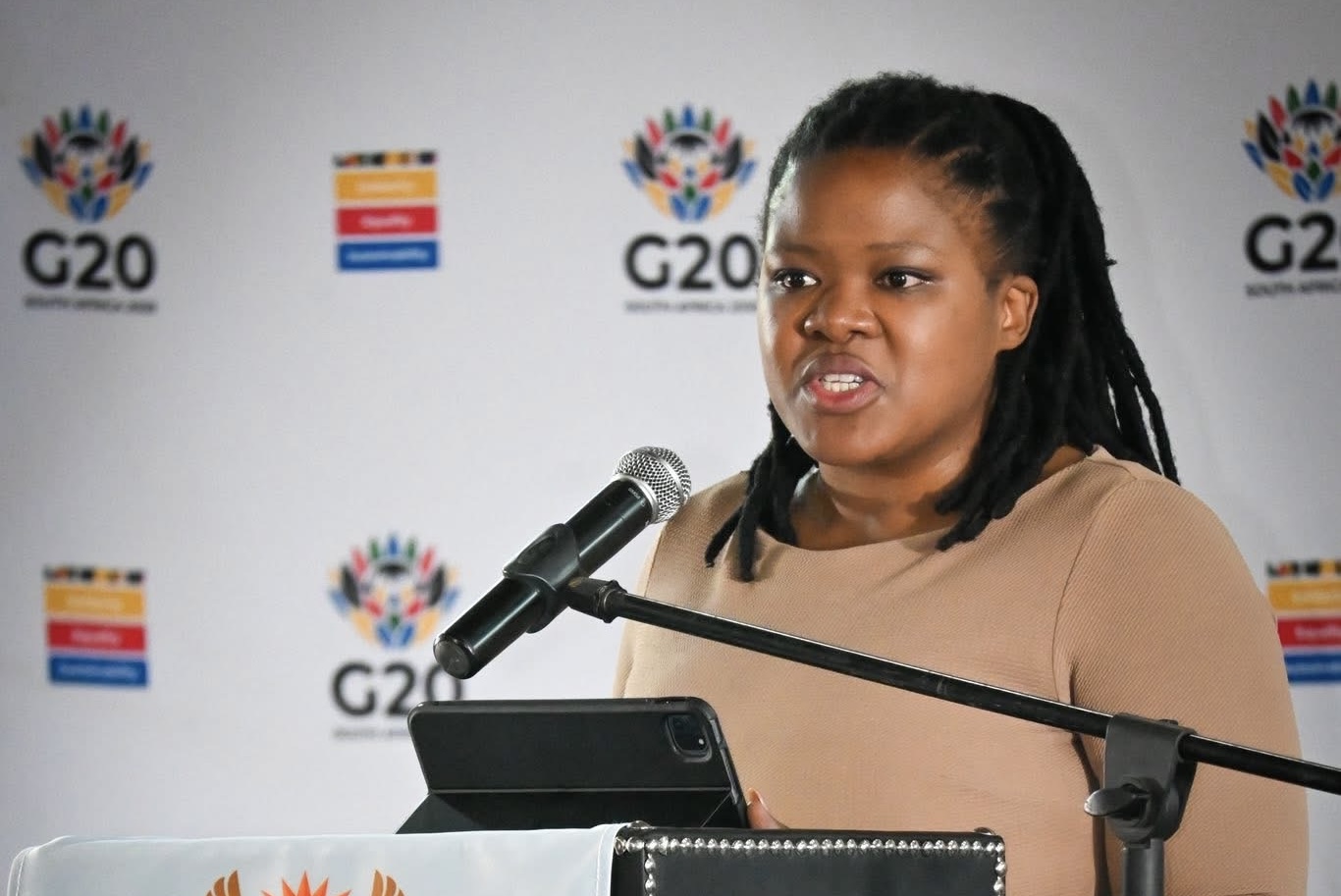
The South African government’s Presidential Youth Employment Intervention (PYEI) has facilitated 294,530 earning opportunities for young people between October and December 2025, marking significant progress in one of the continent’s most ambitious youth employment efforts. The announcement, delivered by Deputy Minister in the Presidency Nonceba Mhlauli, underscores not only a quantitative leap in opportunities created but also the expanding qualitative scope of youth-targeted initiatives in South Africa.
The intervention, which has consistently drawn on a multi-sectoral model involving public, private and academic stakeholders, has continued to scale up its efforts in providing work, skills training and entrepreneurial support to South Africa’s youth. According to Mhlauli, over 11,000 work experience placements were made through collaborative frameworks involving institutions of higher learning and the private sector. Simultaneously, more than 6,700 entrepreneurial opportunities were supported through the National Youth Development Agency (NYDA), reflecting a broader commitment to fostering self-employment and innovation among young South Africans.
One of the notable highlights of the quarter’s results lies in the continued expansion of the revitalised National Youth Service. A total of 132,784 young people have thus far been placed in paid service roles, reinforcing the role of public service in providing meaningful avenues for youth contribution and national development.



The Deputy Minister highlighted the Jobs Boost Fund as a key milestone within the quarter under review. The fund, currently in its pilot year, was established to facilitate high-quality employment for historically excluded youth populations. It functions by incentivising skills providers to deliver targeted training aligned with employment readiness, while enabling smoother transitions into the labour market. With over 9,170 young individuals enrolled and 7,200 already placed into jobs, the fund has exceeded its inaugural targets for the financial year, suggesting both strong demand and efficient implementation.
These interventions are accessible through the zero-rated platform SAYouth.mobi, which consolidates learning, earning, and entrepreneurial opportunities into a single entry point. The platform is structured to remove digital and geographic barriers, ensuring access irrespective of location, financial constraints or infrastructure limitations. By doing so, it addresses some of the systemic exclusions that have historically hindered broad-based participation in the economy.
Since its inception, the PYEI has facilitated over 2.36 million earning opportunities via SA Youth, with an additional 402,515 created through the Department of Employment and Labour’s Employment Services of South Africa (ESSA). Altogether, over five million young people have been reached through the intervention to date, a figure that represents one of the most extensive youth employment efforts on the continent.
Mhlauli noted that the PYEI forms part of a broader national vision to dismantle the structural barriers that obstruct young people from fully engaging in economic life. Her remarks highlighted a policy ethos centred on dignity, agency and inclusion, reflecting a shift towards an employment landscape shaped by local context, participatory governance and socio-economic equity.
While these gains are meaningful, the Deputy Minister was forthright in acknowledging that South Africa’s youth unemployment crisis remains one of its most entrenched social and economic challenges. However, she asserted that through partnership, innovation and the consistent scaling of targeted interventions, tangible pathways to income and autonomy are steadily being created.

The ongoing evolution of the PYEI reflects a continental aspiration to define African development in ways that transcend conventional, externally defined metrics of progress. Rather than privileging linear narratives of poverty and dependency, the initiative embodies a model rooted in African agency, collaboration and structural transformation. It aligns with broader pan-African commitments to generational renewal, inclusive economies and sustainable development designed from within.
While the challenges are profound, the PYEI offers a glimpse into the potential of integrated state and civil society responses that speak to the scale and complexity of the unemployment challenge, without retreating into overly simplified diagnoses or one-dimensional solutions. In doing so, it offers not only a framework for domestic engagement but also a platform of shared learning and solidarity across the Global South.