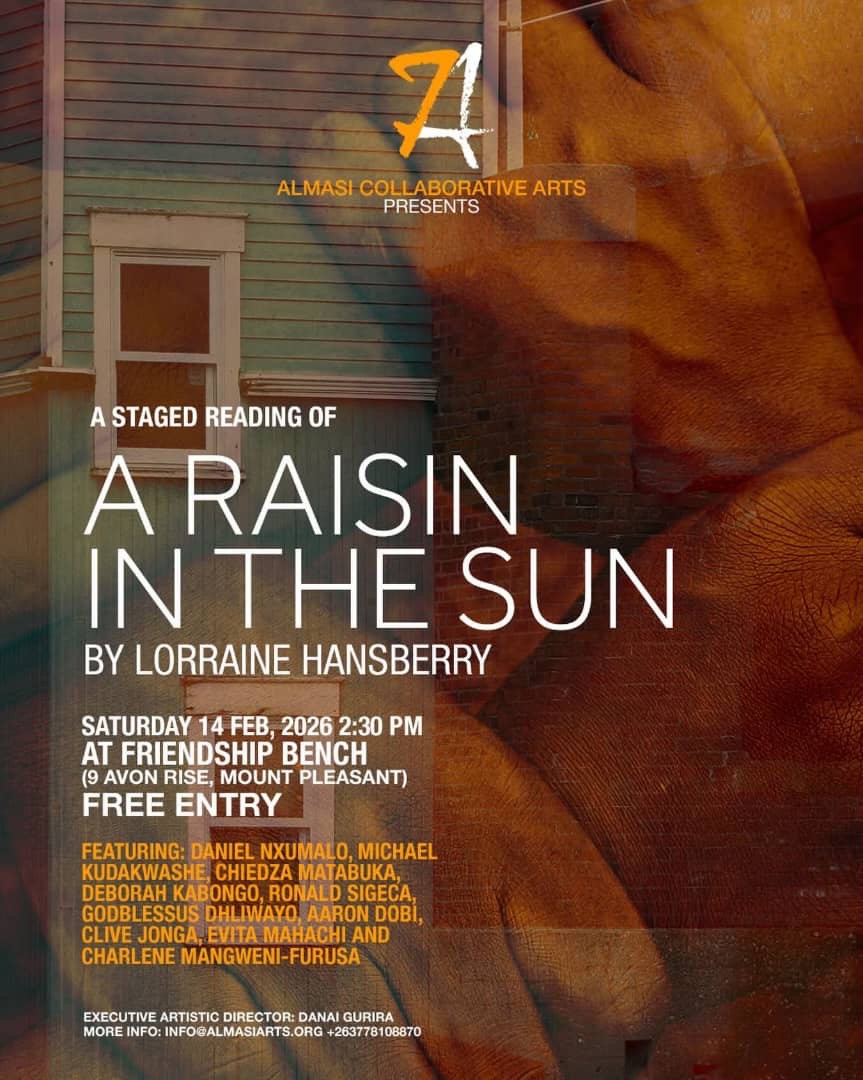
Almasi Collaborative Arts is opening its 2026 calendar with intent, clarity and a clear nod to theatre history. On Saturday, 14 February at 2:30 PM, the organisation will present a free public staged reading of Lorraine Hansberry’s classic A Raisin in the Sun at the Friendship Bench Hub, marking the first major public engagement of its new season.
The staged reading, one of Almasi’s signature programmes, will be directed by Leonard Matsa and brings together a cast that blends long standing Almasi collaborators with emerging performers. The ensemble includes Daniel Nkumalo, Evita Mahachi, Deborah Kabongo, Charlene Mangweni Furusa, Godblessus Dhliwayo, Chiedza Matabuka, Ronald Sigeca, Aaron Dobi, Clive Jonga and Michael Kudakwashe.
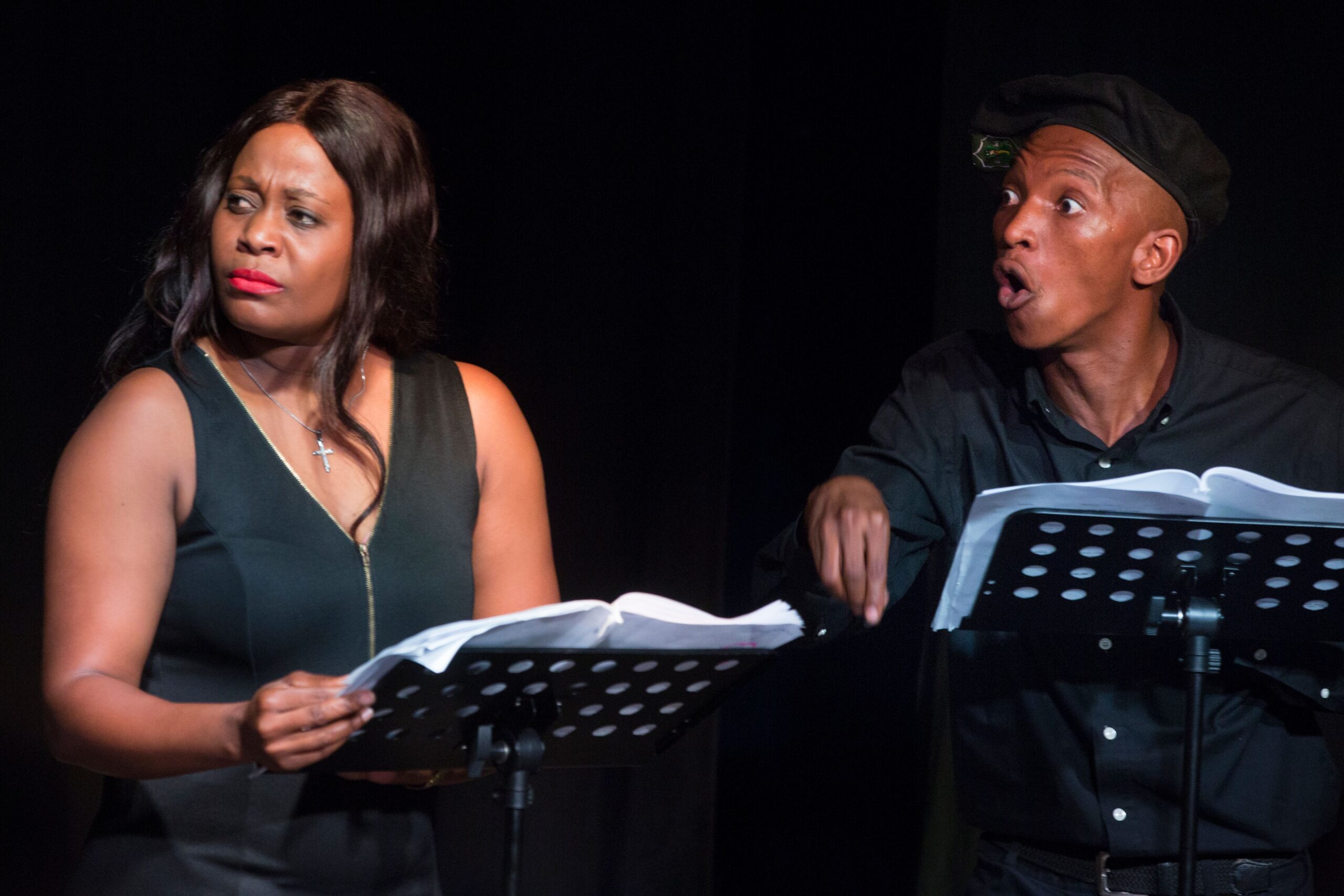
While staged readings are often seen as stripped back presentations, Almasi treats them as a serious artistic and pedagogical exercise. Each reading is built through a rigorous process focused on dramatic literacy and textual analysis, a core pillar of the organisation’s work in developing African artists.



Preparation for A Raisin in the Sun begins with a two day intensive dramaturgical workshop led by Almasi’s Programs Director, Gideon Jeph Wabvuta. The workshop brings together the director, cast, and a cohort of Almasi trained directors and playwrights to closely interrogate the play’s structure, themes and language. Only after this deep dive does the team move into rehearsals, culminating in the public performance.
Director Leonard Matsa says the choice of text speaks directly to the present moment.
“A Raisin in the Sun is a timeless and universally relevant play,” Matsa said. “It reminds us that in the midst of overwhelming adversities including class struggles, hope is all we have and need. It is the fuel that drives existence. And when all seems lost, our integrity is our last line of salvation.”
For Wabvuta, opening the year with Hansberry’s work is both deliberate and symbolic.
“It is truly rewarding to open our 2026 season with one of our mainstay programs, the Almasi Staged Reading,” he said. “By establishing this strong foundational start to the year with one of the greatest plays ever written, we are setting a clear frame through which excellence, professionalism and authentic artistic expression will be nurtured within both our new talent and our seasoned Almasi alumni.”

The reading also signals the tone for what promises to be an ambitious year for Almasi Collaborative Arts. Beyond February, the organisation has lined up a slate of programmes designed to sharpen skills, expand access and deepen Zimbabwe’s creative ecosystem.
The 2026 season includes a Stage Management and Directing Workshop led by visiting US artist Adam Immerwahr from 18 April to 8 May, a Voice and Acting Workshop with NYU Tisch School of the Arts faculty member Scott Miller, and a Filmmaker Intensive led by a multi award winning filmmaker yet to be announced.
A major highlight later in the year will be Africa Voices Now! A Festival of New Plays, running from 17 October to 6 November, followed by the Almasi African Writers Conference from 7 to 20 December, now expanded to include screenwriters. Community outreach remains central to Almasi’s mission, with year round programmes led by Community Engagements Manager Tafadzwa Bob Mutumbi, including the Solo Initiative Monologue Program for out of school youth.
First staged on Broadway in 1959, A Raisin in the Sun holds a singular place in global theatre history. It was the first play by a Black woman to reach Broadway and went on to be named Best Play of the Year by the New York Drama Critics Circle. Inspired by Langston Hughes’ poem Harlem, the play follows a Black family on Chicago’s South Side as they confront housing discrimination, racism and the weight of deferred dreams while awaiting an insurance payout.
More than six decades later, its themes continue to resonate far beyond its original setting. By placing Hansberry’s work at the centre of its 2026 opening, Almasi Collaborative Arts once again positions Zimbabwean audiences within a global theatrical conversation, while reaffirming its commitment to excellence, access and the long game of artist development.