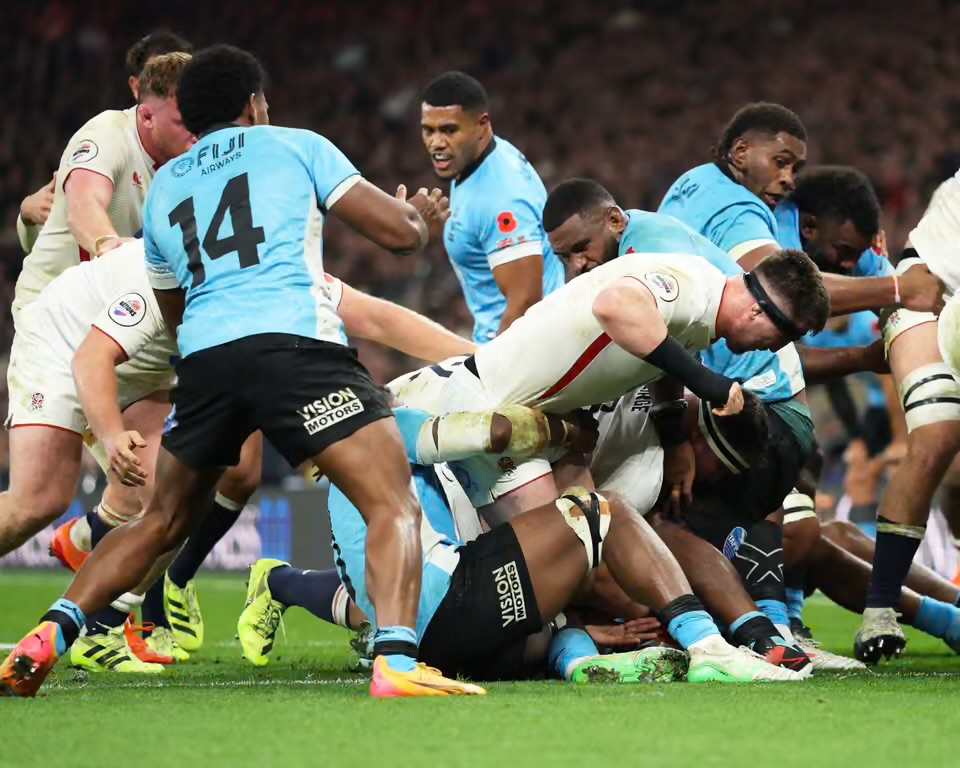
Fiji’s Nations Championship fixture against England, scheduled for 11 July 2026, is expected to take place at Everton Football Club’s Hill Dickinson Stadium in Liverpool. The match, originally designated as a Fiji home game, has been relocated following a request by the Fiji Rugby Union to host the fixture at a neutral venue with greater capacity and commercial potential.
The proposed change has received the endorsement of the governing bodies involved, including World Rugby, the Six Nations and Sanzaar. The agreement is conditional on the fixture not being held at Twickenham Stadium, England’s traditional home ground, in order to maintain the structural integrity of the tournament. While final contractual details remain under negotiation, Everton’s newly built 53,000-capacity stadium appears to be the preferred venue.
The rationale for the move is understood to be primarily economic, reflecting the ongoing challenges that some unions face in hosting high-profile international fixtures domestically. Factors such as stadium infrastructure, broadcasting capacity and revenue generation capabilities contribute to such decisions. In this instance, Fiji’s choice to pursue a venue in England aligns with efforts to maximise income from a marquee fixture in the inaugural edition of the Nations Championship.




This arrangement follows precedents set by other international fixtures that have been staged outside the host union’s national territory. The decision reflects broader trends in global rugby in which fixture locations are increasingly influenced by commercial and logistical considerations. These include stadium availability, matchday revenue potential and audience reach.
From the perspective of the Rugby Football Union (RFU), the opportunity to take the national team to a new venue within England has reportedly been well received. England’s national rugby team has played relatively few matches away from Twickenham in recent years. Notable examples include a 2019 World Cup warm-up match at St James’ Park in Newcastle and a 2015 Rugby World Cup pool game at the Etihad Stadium in Manchester. The forthcoming fixture offers the RFU a chance to engage new regional audiences, while supporting broader tournament objectives.
Everton’s stadium, which opened earlier in the 2025/26 season, is already being positioned as a multi-sport venue. It recently hosted a rugby league Ashes Test between England and Australia and is scheduled to stage the Super League’s Magic Weekend as well as a football international between Scotland and Côte d’Ivoire. The venue’s inclusion in the Nations Championship calendar may further establish it as a site for international sporting events.
World Rugby has previously indicated support for flexible hosting arrangements in cases where the infrastructure of the nominal home nation may not meet the logistical demands of international tournaments. The location of Fiji’s other home fixtures in the tournament, against Wales and Scotland, has yet to be confirmed.
While the shift of venue reflects practical realities, it also points to ongoing discussions within rugby governance regarding resource distribution, hosting capacity and long-term development support for emerging unions. Although such venue relocations are permitted within current regulations, they invite further reflection on how global competitions can balance commercial viability with the principles of equitable participation.
Across the African continent and the broader Southern Hemisphere, rugby unions continue to navigate similar structural considerations. South Africa remains a consistent presence in top-tier international competition, but other African rugby nations encounter infrastructural and financial constraints that shape their engagement at the global level. These realities underscore the importance of long-term investment in infrastructure, administrative capacity and regional competitions as mechanisms to broaden the sport’s reach.
In terms of team preparations, England’s build-up to the upcoming Six Nations has been affected by several injuries. Loosehead prop Fin Baxter has been ruled out following foot surgery. He joins Will Stuart and Asher Opoku-Fordjour on the injury list, with Jack Kenningham called up to the training squad. These changes reflect the physical demands placed on elite players across the international rugby calendar.

The relocation of the Fiji versus England fixture is emblematic of a sport in transition, navigating the intersections of globalisation, financial sustainability and equitable growth. As international rugby continues to evolve through new formats such as the Nations Championship, stakeholders may increasingly be required to balance strategic interests with commitments to inclusive development and representation.