Negotiations have resumed between ArcelorMittal and South Africa’s Industrial Development Corporation regarding a potential transfer of the multinational’s South African steel operations. This development follows the breakdown of exclusive discussions in late 2025 and signals a renewed state-led interest in preserving critical industrial capacity amid a shifting global and continental economic landscape.
Sources close to the matter confirmed that the IDC is expected to submit a nonbinding offer for the operations, although none of the involved parties — ArcelorMittal Group, ArcelorMittal South Africa, nor the IDC — have formally commented on the matter as of this writing. The re-engagement of talks follows the earlier collapse of negotiations in November 2025, when terms could not be aligned despite extended discussions. It is understood that differences in valuation and the strategic role of ArcelorMittal South Africa played a significant role in the impasse.
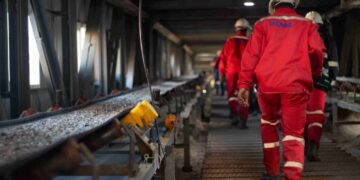
This renewed momentum comes at a critical juncture for South Africa’s steel industry, which has witnessed steady decline due to global overcapacity, rising imports, power supply disruptions and ageing infrastructure. ArcelorMittal, which has operated in South Africa through its listed subsidiary ArcelorMittal South Africa Limited, had previously shuttered multiple steel mills and an iron ore mine. Currently, the Vanderbijlpark facility remains operational, focusing on flat steel production, while other plants remain inactive.



ArcelorMittal South Africa’s share price rose by nearly 3 percent on renewed acquisition prospects, while the parent company saw a near 5 percent increase on European markets. The market response illustrates investor sensitivity to the outcome of the talks, and more broadly, the potential reorganisation of strategic industrial assets on the continent.

The IDC, as South Africa’s foremost development finance institution, plays a pivotal role in industrial policy and economic transformation. Its involvement in these talks is more than a financial transaction. It represents a conscious effort by the state to preserve and potentially revitalise an industrial base that supports a range of downstream manufacturing sectors, including automotive, construction and capital goods.
This evolving story intersects with broader continental trends, where African countries are reassessing the frameworks of ownership, resource sovereignty and value addition. The potential acquisition — even at the nonbinding stage — should not be read narrowly as a rescue mission. It may serve as an expression of a new industrial realism, grounded in African institutions exercising greater agency over critical infrastructure.
However, experts caution that ownership changes alone will not address deeper challenges. Any successful transition will require long-term investment, infrastructure modernisation, skills development and coherent alignment with national energy and trade policies. Moreover, issues of labour, environmental impact and regional supply chains will need to be fully integrated into any transformation plan.
Observers from across Africa are watching this development closely, as it may offer a blueprint for other nations seeking to reconcile deindustrialisation pressures with the demands of sustainable growth. The historical overreliance on extractive industries has begun to give way to renewed calls for industrial policy that is inclusive, regenerative and centred on human development rather than mere GDP targets.
The implications also stretch beyond South Africa’s borders. In a continent where intra-African trade under the African Continental Free Trade Area (AfCFTA) is poised to redefine industrial and commercial linkages, the future of ArcelorMittal South Africa could have ramifications for regional competitiveness and supply chain resilience.
Should the IDC move forward with its bid, and if the transaction proceeds, it may mark a turning point in how African development finance institutions are viewed — not just as funding conduits, but as architects of industrial renewal. For ArcelorMittal, the move could represent a strategic divestment from a challenging market. For South Africa, and indeed the continent, it could mark the beginning of a broader recalibration of industrial capability rooted in public interest and national development imperatives.