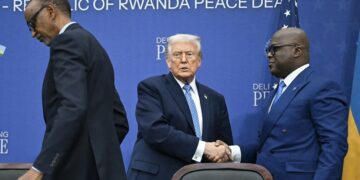
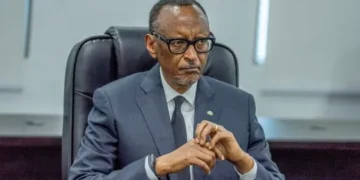
The diplomatic choreography of this year’s G20 summit revealed more than shifting alignments; it exposed deepening fractures in the global financial architecture. The conspicuous absence of the United States, long considered a central axis of multilateral economic governance, came at a moment when more than fifty countries, predominantly in the Global South, are now spending more on servicing external debt than on providing public services. For Africa, the symbolism was unmistakable. The Western-led financial order, already strained by competing geopolitical priorities, no longer reflects the continent’s developmental realities or its economic aspirations. A new era is taking shape, and Africa must now look eastwards with strategic clarity and urgency.
This argument rests not on sentiment but on evidence. The behaviour of Western institutions over the past decade reveals a structural reluctance to support the scale of financing Africa requires. Academic work, including the 2021 Brookings Institution study on sovereign debt negotiations and the 2023 Cambridge Journal of Economics analysis of multilateral lending, highlights how creditor-driven logic continues to dominate Western financial policy. This is often at odds with developmental imperatives and persists even when economic fundamentals across African states have improved materially. Indeed, the International Monetary Fund’s medium-term outlook consistently places several African economies among the fastest-growing globally, a trend expected to continue into the next decade.
Despite this strong performance, Africa continues to be burdened by an inflated and often unscientific risk premium. Research by UNCTAD in 2022 demonstrated that the cost of African sovereign borrowing is disproportionately influenced by perception rather than data, a problem rooted in outdated assumptions rather than contemporary indicators of macroeconomic stability. Standard and Poor’s 2024 risk methodology review further confirmed that African economies are systematically penalised relative to peers in Latin America and Southeast Asia, even when underlying fundamentals are comparable. This pricing distortion is not merely academic; it drains billions of dollars annually from African budgets that could otherwise be directed towards infrastructure, education, healthcare and climate adaptation.




In this context, the United States’ disengagement from the G20 cannot be dismissed as a diplomatic anomaly. It reflects a deeper trend of strategic reorientation. Washington’s lack of enthusiasm for comprehensive debt restructuring frameworks, its resistance to climate-linked financing instruments and its ambivalence toward energy transition partnerships in the Global South stand in stark contrast to Africa’s urgent needs. Scholars increasingly describe this posture as structural indifference. A 2022 analysis in the Princeton International Affairs Journal argued that Western powers, constrained by political fragmentation and domestic pressures, are increasingly unwilling to prioritise Africa in their global policy frameworks, even as they continue to rely on the continent’s strategic minerals and markets.
Europe, despite its historical ties to Africa, faces similar constraints. The AU–EU Summit in Luanda offered warm rhetoric and renewed declarations of partnership, yet the limits of European engagement were evident. Global Gateway investments play an important role, particularly in clean energy, digital transformation and cross-border infrastructure, but they remain overshadowed by Europe’s internal economic pressures, uneven growth and the fiscal demands of its own green transition. The European Union simply does not possess the financial firepower to meet Africa’s infrastructure and industrialisation needs, which the African Development Bank estimated at more than 200 billion US dollars annually in 2024.
It is within this geopolitical vacuum that the East has emerged as a compelling alternative. China, India, the Gulf states and the broader BRICS+ bloc have built a financial ecosystem capable of supporting Africa’s long-term development. China remains the largest financier of infrastructure on the continent, delivering projects in energy, transport, water and telecommunications that have transformed economic connectivity. Academic research by the London School of Economics in 2022 and the Journal of Development Studies in 2023 found no systemic evidence that Chinese debt is more harmful than Western lending. Rather, the risks associated with African sovereign vulnerability are far more influenced by global monetary tightening and dollar-denominated obligations, both of which are shaped by Western central banks.
India has simultaneously emerged as a significant technological and entrepreneurial partner, investing in pharmaceuticals, digital infrastructure and renewable energy. The Gulf states, with more than four trillion US dollars in sovereign wealth funds, increasingly view Africa as a frontier of agricultural, logistical and energy opportunity. These capital pools align closely with Africa’s multi-decade development horizon, offering financing terms and partnership structures that emphasise commercial returns rather than political conditionality.
Beyond capital flows, Africa stands to benefit from Asia’s technological dynamism. The world’s fastest-growing innovation ecosystems are now in China, India, South Korea and the United Arab Emirates. Each of these states is actively investing in renewable energy, artificial intelligence, semiconductors, electric mobility and green industry. Their willingness to integrate Africa into global manufacturing and technological value chains marks a significant departure from the extractive models that characterised earlier eras of engagement.
A further advantage of looking East lies in the changing currency landscape. BRICS countries are investing in alternative payment systems and settlement frameworks that could reduce Africa’s exposure to the dollar. Research published in the Review of International Political Economy in 2024 suggests that dedollarisation, while gradual, is already changing global trade flows and may accelerate significantly in the coming decade. For Africa, the ability to transact in local or regional currencies could reduce vulnerability to global interest rate cycles, insulating economies from the financial shocks that precipitated previous debt crises.

Africa’s strategic task is not to abandon the West but to diversify its partnerships in a deliberate and pragmatic manner. The continent stands at the threshold of becoming a global economic pole, with a population projected to reach 2.5 billion by 2050, expanding middle-class consumption and unparalleled natural resources for the green transition. However, achieving this potential requires financial structures that align with Africa’s ambitions rather than constrain them.
The United States’ absence at the G20 signalled that the old order can no longer be relied upon. Africa’s future prosperity depends on its willingness to look East, to engage with emerging centres of capital and technology, and to build partnerships grounded in mutual benefit and shared economic destiny.