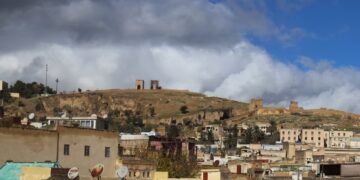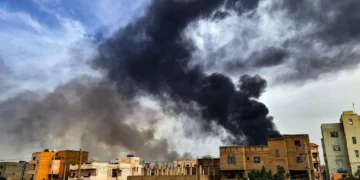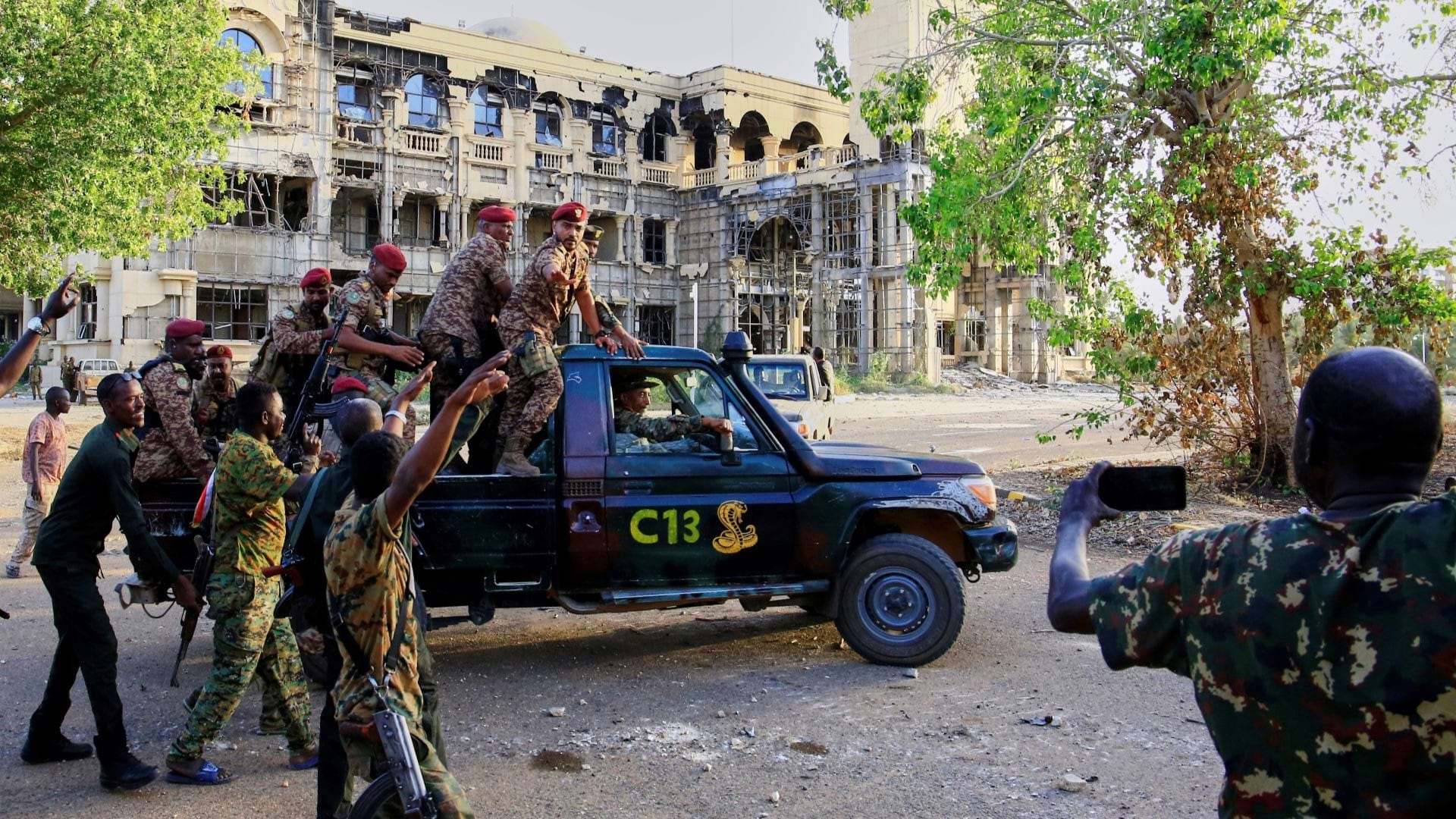
The fall of El Fasher, the capital of North Darfur, to Sudan’s Rapid Support Forces (RSF) represents not only a major tactical gain for the paramilitary group but also a broader symbolic and strategic turning point in Sudan’s civil war, now entering its third year. As the last state capital in Darfur under the control of the Sudanese Armed Forces (SAF), El Fasher had long stood as a fortress against RSF expansion. Its capture solidifies RSF dominance across the entirety of Darfur, a resource-laden and politically sensitive region that has shaped Sudan’s modern history more than any other.
The Sudanese military’s withdrawal from El Fasher was publicly framed by General Abdel Fattah al-Burhan as a move to protect civilians from an intensifying siege that had already decimated the city’s critical infrastructure. However, analysts across the continent see it as a moment of reckoning — a recalibration of power that could alter not only the dynamics of the war, but also the viability of a unified Sudanese state.
Darfur is a geopolitical linchpin. Geographically, the region links Sudan with Chad, the Central African Republic, and South Sudan, making it a crucial node for trade, migration, and smuggling routes. Economically, it is rich in gold, oil, and other minerals, making control over the area highly lucrative for whoever commands it. Politically, it has been a contested territory since the early 2000s, when state-backed militias (the precursors to today’s RSF) carried out large-scale violence against non-Arab ethnic groups during the Darfur War. El Fasher’s fall to the RSF thus reactivates the region’s historical traumas while embedding them into the present civil war.




The current conflict erupted in April 2023, when months of tension between General al-Burhan and Mohamed Hamdan Dagalo, known widely as Hemeti, escalated into open warfare. The two men had previously been allies in the transitional government that followed the ousting of long-time ruler Omar al-Bashir in 2019. Their alliance, however, unravelled over disagreements about security sector reforms, specifically the integration of the RSF into the regular army — a process that threatened Hemeti’s autonomy and business interests.
Since then, Sudan has been effectively partitioned. The SAF retains control over the eastern corridor, including Red Sea ports and the Nile Valley, while the RSF holds sway over western and parts of central Sudan, particularly Darfur and Kordofan, which account for roughly 40 percent of the country’s landmass. The July 2025 announcement by the RSF declaring a parallel government in Darfur was condemned by authorities in Port Sudan but signalled a deeper truth: the country is drifting toward a de facto bipolar political order, with competing claims to governance.
El Fasher endured an 18-month siege before its fall, during which time humanitarian access was cut off, hospitals were destroyed, and civilians bore the brunt of the violence. Sudanese officials claim more than 2,000 civilians were killed following the RSF’s takeover of the city, with independent monitors and medical sources unable to verify the full toll due to ongoing security threats and the collapse of reporting mechanisms. This echoes broader trends across the country, where official casualty figures are widely seen as underestimates. A 2024 study by the London School of Hygiene & Tropical Medicine estimated over 61,000 deaths in Khartoum State alone — a staggering figure that underscores the scale of the war’s human cost.
The broader humanitarian fallout is profound. According to United Nations estimates, over 30 million people in Sudan now require humanitarian assistance. Of these, nearly 10 million have been internally displaced, and more than 15 million are children, many of whom are facing acute malnutrition and the threat of famine. The collapse of the health system, looting of aid convoys, and the breakdown of basic infrastructure in conflict-affected areas such as El Fasher have made sustained humanitarian relief nearly impossible.
Despite the magnitude of the crisis, Sudan’s war has received comparatively little international attention. Global media coverage and diplomatic capital have been disproportionately focused on the wars in Ukraine and Gaza, leaving Sudanese civilians to face an increasingly invisible war. This neglect reflects long-standing patterns of Afro-pessimism and Western disengagement from African conflicts unless they intersect with global strategic interests. Yet Sudan’s stability is critical to regional security, especially in the Horn of Africa and Sahel, where fragile states and armed groups often exploit governance vacuums.
From a pan-African perspective, the situation in Sudan is not merely an internal affair, but a continental concern. The African Union, IGAD (Intergovernmental Authority on Development), and neighbouring states have struggled to broker a meaningful ceasefire, in part due to the complexity of actors involved and the asymmetry of power on the ground. There have also been calls for home-grown African solutions to the crisis, rooted in inclusive governance, transitional justice, and the demilitarisation of state structures — themes that resonate across many postcolonial African nations grappling with legacy conflicts.
The RSF’s military strength has been bolstered by alleged access to foreign funding, weapons smuggling, and cross-border alliances. While General Hemeti positions himself as a representative of marginalised communities in western Sudan, critics argue that the RSF’s actions in Darfur mirror the same patterns of abuse, displacement, and ethnic targeting that defined the early 2000s conflict. Reports of mass killings, sexual violence, and attacks on humanitarian convoys continue to emerge from newly captured areas. Human rights organisations have urged the International Criminal Court (ICC) to open new investigations, particularly into atrocities committed in El Fasher.
The SAF, meanwhile, faces growing criticism for both its strategic failures and its own alleged abuses, particularly in eastern Sudan, where mass detentions and indiscriminate shelling have also been reported. General al-Burhan has vowed to “recapture the lost land,” but the feasibility of such a counteroffensive remains unclear, given the SAF’s stretched supply lines and diminished legitimacy among large segments of the population.

Looking forward, Sudan’s war appears poised to enter a new phase — one in which territorial consolidation by the RSF may give way to escalated conflict in central and eastern regions, particularly if peace negotiations stall or fragment. Yet the longer the war continues, the more entrenched parallel administrations and economies will become, making national reunification a more distant goal.
Ultimately, what El Fasher’s fall reveals is not just a shift in military fortunes, but the urgency of reimagining peace in Sudan. Traditional elite bargains — negotiated abroad and enforced top-down — have failed to produce lasting solutions. Instead, a decentralised, inclusive, and African-centred dialogue is needed: one that foregrounds local communities, women’s voices, ethnic minorities, and youth groups, and which reclaims Sudanese agency in shaping a post-conflict future.