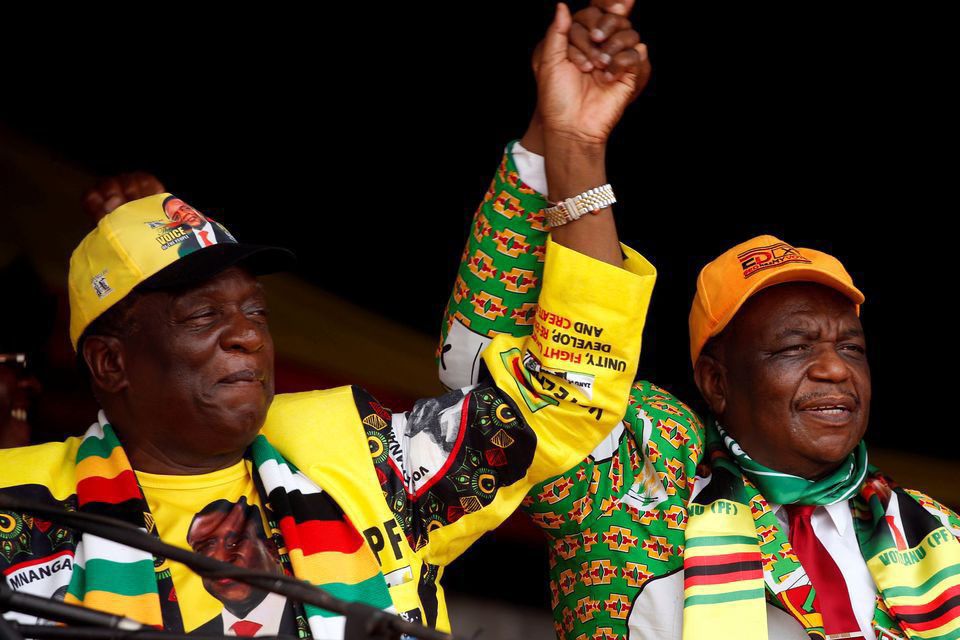
For nearly half a century, Zimbabwe’s politics have been shaped by the interplay of liberation credentials, military authority, and party consensus. Today, as speculation swirls around succession in ZANU-PF, it is tempting to reduce the story to one of rivalry between President Emmerson Mnangagwa and his deputy, Constantino Chiwenga. Yet such portrayals obscure more than they reveal. Far from being estranged, the two men remain bound by a pact forged in the liberation war and reaffirmed during the dramatic ousting of Robert Mugabe in November 2017.
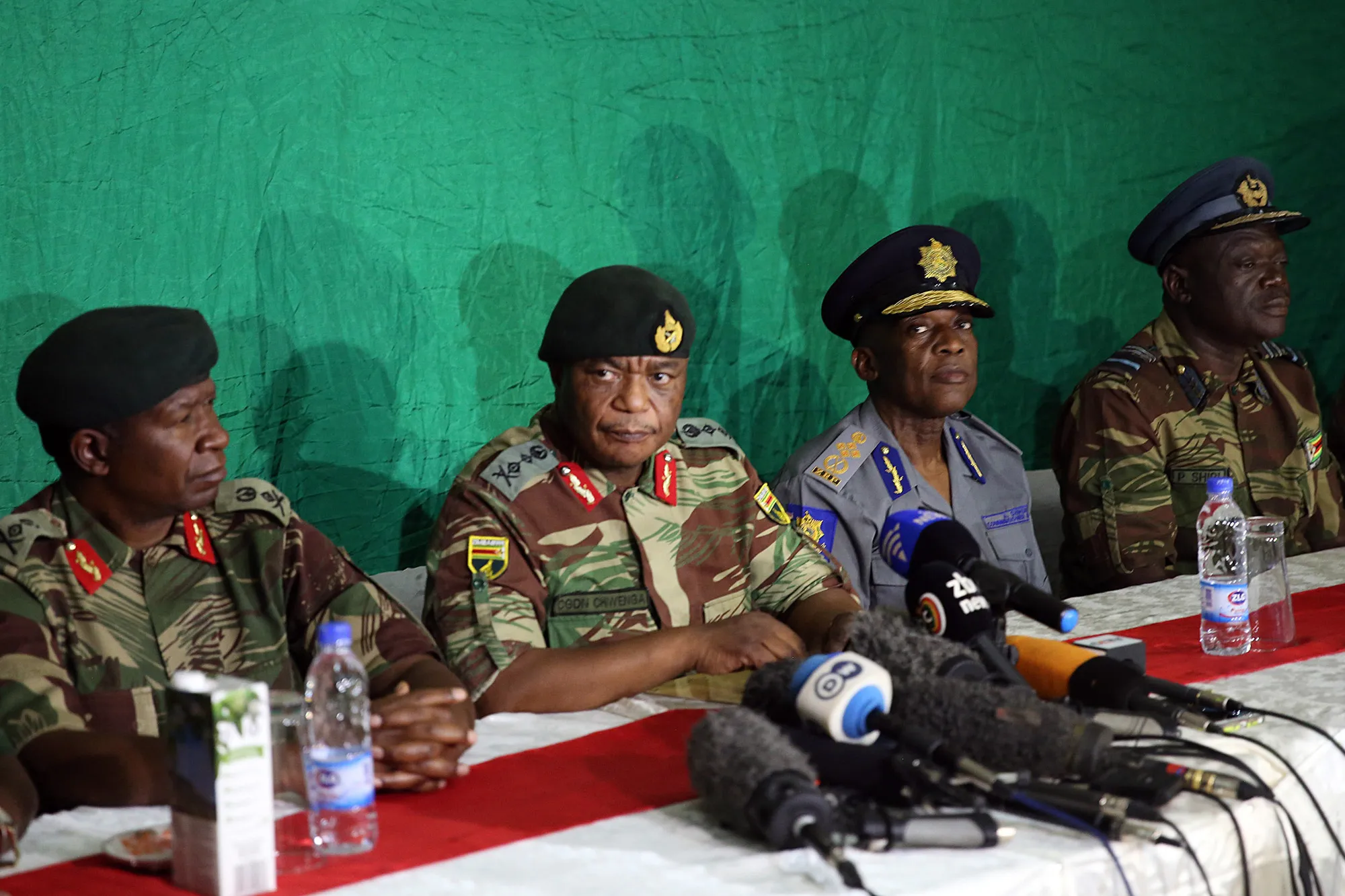
It was Chiwenga who ensured Mnangagwa’s path to power when the latter was temporarily forced into exile in South Africa after his dismissal as vice president. As commander of the Zimbabwe Defence Forces, Chiwenga spearheaded Operation Restore Legacy, tilting the balance decisively against Mugabe. Without his intervention, Mnangagwa’s return and assumption of power would have been far less certain. That shared history explains why talk of open hostility between the two rings hollow.
If divisions exist, they are more reflective of jostling within ZANU-PF’s ranks or the imagination of opposition commentators than of a personal rift at the top. Indeed, Mnangagwa has been clear and consistent in his public assurances: he will not seek to extend his presidency beyond 2028. Even as the 2024 ZANU-PF conference controversially passed a resolution proposing a term extension, he has repeatedly underlined his identity as “a constitutionalist,” declaring that his second mandate will be his last.



Why, then, do rumours persist—and often with such ferocity? The answer lies in Zimbabwe’s unique political context. Having been ruled by one leader for 37 years, the country is only now navigating its first real succession in the post-independence era. Unlike South Africa’s ANC or Mozambique’s FRELIMO, which have gradually normalised leadership transitions within liberation movements, Zimbabwe has never institutionalised the process. The unfamiliarity of a smooth transfer of power creates fertile ground for speculation, exaggeration, and even violent rumour.
This turbulence places enormous responsibility on the shoulders of Mnangagwa and Chiwenga. For ZANU-PF to evolve into a party capable of managing succession with the discipline of its regional peers, both men must signal continuity rather than rupture. That signal may well lie in the fact that Mnangagwa has ruled out an unconstitutional third term, while Chiwenga’s stature within the liberation tradition makes him a natural contender to inherit the mantle when the time comes.
Chiwenga’s profile in Zimbabwean politics is not incidental. Born in Wedza in 1956, he joined the liberation war in the early 1970s, adopting the nom de guerre Dominic Kanenge. By the late 1970s he was already a provincial commander and later joined the ZANLA High Command. These credentials remain the currency of legitimacy in ZANU-PF politics, where liberation service continues to outweigh other forms of authority.
After 1980, Chiwenga transitioned into the Zimbabwe National Army, where he rose steadily before becoming commander of the Defence Forces in 2004. For more than a decade, he embodied the intimate link between Zimbabwe’s military establishment and its political order. Critics argue that this blurred the line between civilian rule and securocratic guardianship. Supporters counter that the liberation compact was always premised on such overlap, with the military acting as guarantor of national sovereignty and political stability.
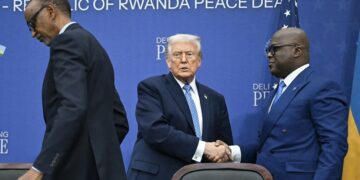
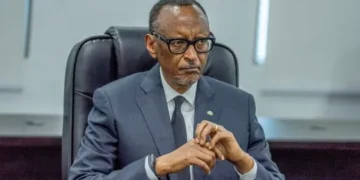
His character has often been described as stern, methodical, and steeped in the ethos of discipline. Unlike many in the ruling elite who rely on patronage or business networks, Chiwenga projects authority through his military service and wartime sacrifices. This image of the “soldier-statesman” is why he is often compared to Paul Kagame in Rwanda or, in earlier decades, Meles Zenawi in Ethiopia—leaders who emerged from armed struggle and were able to exercise decisive governance without being beholden to transactional political classes.
Since entering politics formally as vice president in 2017, Chiwenga has added other dimensions to his profile. His stint as Minister of Health during the COVID-19 pandemic showed him operating in a technocratic capacity, while his regional and international networks have reinforced his presence on the diplomatic stage. Despite battles with ill health, he has cultivated the aura of resilience—a quality that resonates in a society that continues to valorise endurance as a revolutionary virtue.
The question of succession inevitably raises comparisons with business-linked figures inside ZANU-PF. Yet history suggests that economic influence alone has never been sufficient to secure the presidency. From Joice Mujuru to Simba Makoni, those without unimpeachable liberation credentials have struggled to win securocratic backing. This is why the notion that wealthy businessmen such as Kudakwashe Tagwirei could credibly vie for the top job appears misplaced. In ZANU-PF’s internal logic, war credentials are the entry ticket; business networks are merely auxiliary.
What makes the current moment especially delicate is that ZANU-PF has never fully institutionalised competitive elections for its top leadership. Unlike the ANC in South Africa, where the “Top Six” are chosen through robust internal voting at national conferences, or FRELIMO in Mozambique, which has long subjected its political bureau to periodic renewal through elections, ZANU-PF has historically centralised authority in the hands of its president. The politburo, the party’s highest decision-making body outside congress, has largely been appointed rather than elected, with selections endorsed by congress but rarely subjected to open contestation.
There were brief moments when reformers within the party floated the idea of democratizing this process. In the early 1990s and again in the aftermath of the 2017 transition, voices suggested that opening up the politburo and even the top six positions to competitive elections would diffuse factional tensions and enhance legitimacy. Yet the proposals never gained traction, as sitting leaders feared losing control over succession. Instead, the liberation war record and the authority of the presidency remained the primary criteria for elevation to the highest offices.

The absence of institutionalised succession explains why speculation about Mnangagwa’s intentions has been so intense and often so volatile. After nearly four decades under Robert Mugabe, Zimbabwe is only now grappling with its first genuine leadership transition. Without formalised internal elections, rumours easily spiral into narratives of conspiracy, because there is no transparent mechanism to manage ambition. This is why Mnangagwa’s repeated assurances that he will not seek a third term are so important—and why Chiwenga’s presence as vice president is stabilising.
The vice presidency in Zimbabwe functions as more than just a deputyship; it is the reassurance to the party and the security establishment that continuity is possible without rupture. Chiwenga, with his war credentials and securocratic legitimacy, provides precisely that assurance. Were ZANU-PF to move gradually towards a system where the politburo and top six were subject to elections at congress, it could align itself more closely with the practices of its regional peers while still benefiting from the stabilising weight of the liberation ethos.
In such a scenario, the vice presidency remains the bridge between continuity and reform. It reassures traditionalists that the liberation legacy will not be discarded, while offering reformists a pathway to institutionalising party democracy. For ZANU-PF to grow into the mould of the ANC or FRELIMO, it must embrace this balance. And in the Zimbabwean context, that balance is embodied in the Mnangagwa–Chiwenga compact.
Seen in this light, Chiwenga’s positioning is less about personal rivalry with Mnangagwa than about structural continuity within ZANU-PF. If Mnangagwa keeps his word and steps down in 2028, Chiwenga’s claim rests not on intrigue but on the same factors that have long guided leadership selection: liberation legitimacy, securocratic trust, and party consensus. That does not mean the process will be free of contestation—no liberation movement is immune from factional pressures—but it suggests the centre of gravity remains intact.
The challenge, then, is for ZANU-PF to manage this transition with the discipline of its peers in the region. The ANC, despite its internal fissures, has developed a rhythm of leadership renewal that has preserved its dominance. FRELIMO, too, has institutionalised succession in a way that has prevented collapse. Zimbabwe, navigating its first genuine post-Mugabe transition, must now demonstrate the same maturity.
In the end, what matters most is not whether Mnangagwa and Chiwenga are rivals but whether they can continue to act in concert to secure a smooth handover. Their shared history, stretching back to the struggle and crystallised in 2017, suggests that they can. The violent intensity of rumour reflects not their actual relationship, but Zimbabwe’s collective anxiety at entering uncharted territory.

If handled with discipline, 2028 could mark the beginning of a new phase for ZANU-PF: one in which succession is no longer a source of national crisis, but a normalised, even routine, exercise of party democracy. Chiwenga’s presence at the heart of this process is less a matter of speculation than of inevitability. His career, his credentials, and his compact with Mnangagwa ensure he will remain central to Zimbabwe’s future.
For now, the silent pact between president and deputy holds. And in Zimbabwean politics, silence has always spoken louder than rumour.