Thursday, April 30, 2026
  • Login
The Southern African Times
  • Home
  • Southern Africa
  • Business
    • African Start ups
    • African Continental Free Trade Area
  • Technology
    • Lifestyle
      • Health
      • Culture
      • Food and Drink
      • Entertainment
  • Opinion
  • Sports
  • SAT Jobs
    • Events
  • About Us
    • Advertise with Us
    • Contact Us
No Result
View All Result
  • Home
  • Southern Africa
  • Business
    • African Start ups
    • African Continental Free Trade Area
  • Technology
    • Lifestyle
      • Health
      • Culture
      • Food and Drink
      • Entertainment
  • Opinion
  • Sports
  • SAT Jobs
    • Events
  • About Us
    • Advertise with Us
    • Contact Us
No Result
View All Result
The Southern African Times
No Result
View All Result
Home Markets

Goldman Sachs Warns Gold Could Reach $5,000 As Tensions Over US Federal Reserve Independence Intensify

by Times Reporter
September 5, 2025
in Markets
0
Goldman Sachs Warns Gold Could Reach $5,000 As Tensions Over US Federal Reserve Independence Intensify

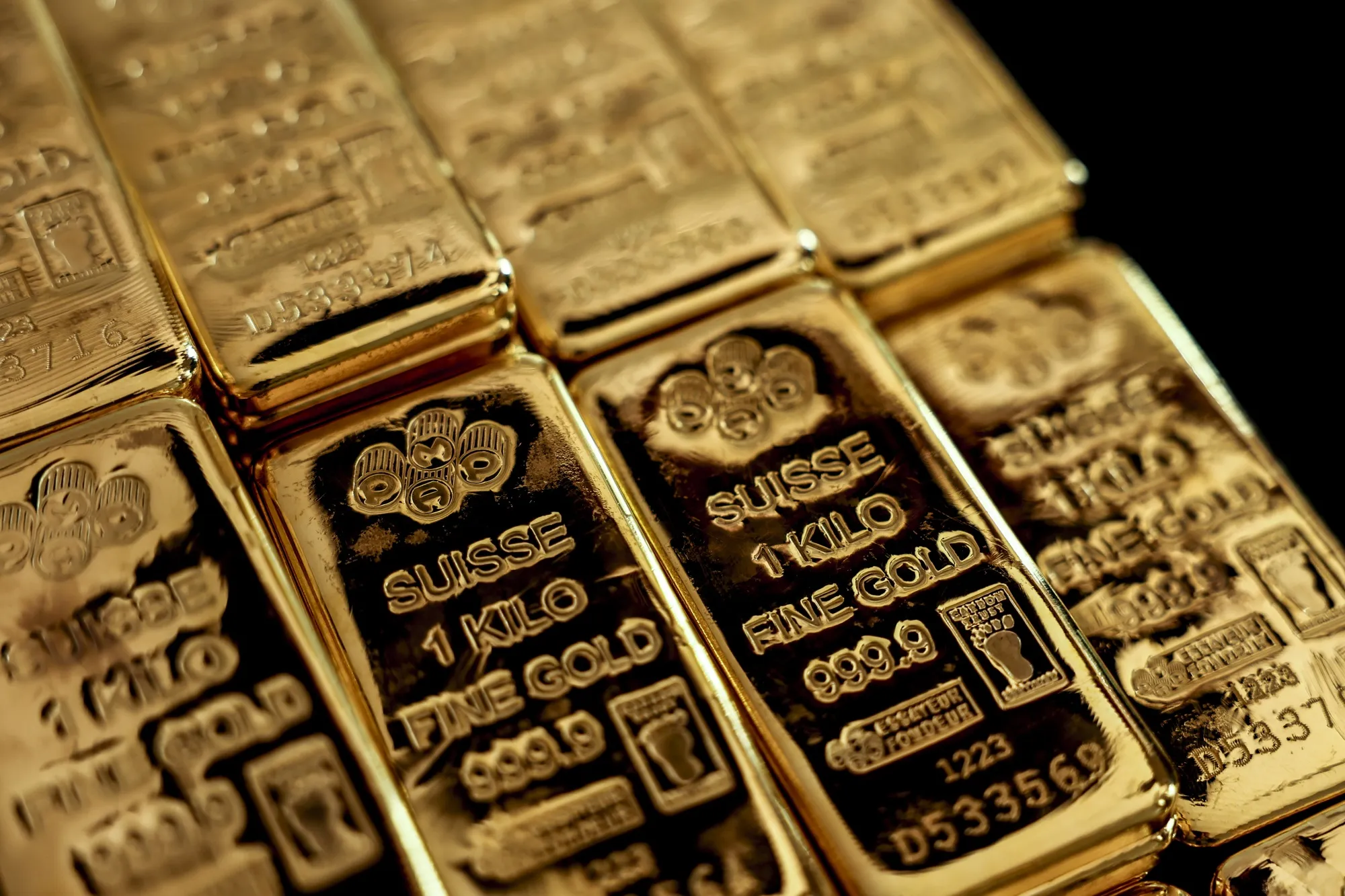
Goldman Sachs has cautioned that gold prices could climb towards $5,000 per troy ounce if global investors lose confidence in the United States’ financial institutions due to political interference with the Federal Reserve. The investment bank suggested that attempts by President Donald Trump to weaken the independence of the Federal Reserve may prompt capital flight away from equities, bonds, and the US dollar, driving demand towards gold, a traditional store of value.

Currently trading at approximately $3,596 on the Comex exchange, gold has risen by 36% since the beginning of 2025 and is close to its historic peak. According to analysts at Goldman Sachs, the independence of the Federal Reserve serves as a crucial anchor of investor trust. Undermining this framework, they argue, risks triggering a “tail risk” scenario characterised by rising inflation, declining stock markets, higher long-term borrowing costs, and erosion of the dollar’s reserve currency role. Under such conditions, gold would gain greater appeal as a hedge against uncertainty.

The research emphasised that a relatively modest reallocation of investment from US Treasury securities into gold could produce a substantial impact. Goldman Sachs estimated that if just one per cent of privately held Treasury holdings were redirected to gold, the price of the metal could approach $5,000 per ounce. Within the commodities sector, gold was described as the bank’s “highest-conviction long recommendation,” signalling confidence in its resilience compared to other asset classes.


ADVERTISEMENT

The political context is central to these forecasts. President Trump has publicly clashed with Federal Reserve officials, criticising Chair Jerome Powell and Governor Lisa Cook, and has indicated intentions to replace them with figures aligned with his preference for lower interest rates. This has reignited debate over the value of central bank independence as a safeguard against inflationary pressures and short-term political considerations.

Alongside political uncertainty, economic data remains uneven. Job openings have fallen more sharply than expected, while surveys of private payrolls suggest a deterioration in the labour market. Market analysts now assign a near-certain probability of a Federal Reserve interest rate cut in September. Nonetheless, divisions remain among policymakers. Some officials caution that inflation is still too high, while others argue that multiple cuts are required to sustain growth in the face of weakening employment.

For Africa and the broader Global South, these developments carry substantial significance. Gold is one of the continent’s most important exports, with South Africa, Ghana, and Sudan ranking among the world’s leading producers. In these economies, shifts in global bullion prices directly affect fiscal balances, foreign exchange reserves, and public investment capacity. A sharp increase in gold prices may therefore provide a short-term revenue windfall, strengthening currencies and offering governments additional fiscal space.

However, reliance on commodity cycles introduces vulnerability. A surge in export revenues can easily mask structural weaknesses, including dependence on extractive industries, limited economic diversification, and exposure to external shocks. For example, while Ghana and Sudan would stand to gain from higher revenues, the volatility of gold markets means that long-term planning based on such gains is fraught with risk. South Africa, though still a major producer, faces declining production costs relative to global peers and must manage labour tensions and energy supply challenges, which may offset the benefits of higher global prices.

There are also wider implications for African monetary policy. Rising gold prices may bolster reserves in producer nations, potentially improving credit ratings and reducing borrowing costs. Yet, for net importers or countries with currencies heavily tied to the dollar, the knock-on effects of Federal Reserve instability—such as dollar depreciation or global inflationary pressures—could create new challenges. In such cases, the benefits of stronger gold prices may be partially offset by higher costs of imports and tighter financial conditions.


Bitcoin, sometimes described as a digital counterpart to gold, has also shown signs of volatility, dropping to around $110,700. This divergence highlights that in periods of profound uncertainty, investors still prioritise the historical and tangible value of gold. For Africa, this reinforces the enduring role of physical commodities within global finance, even as digital assets gain traction in speculative markets.

The interplay between politics, central banking, and commodity markets underscores the interconnectedness of the global economy. While Africa may benefit from higher gold prices in the short term, the continent’s longer-term resilience lies in economic diversification, strengthening regional trade, and building buffers against external volatility. The gold market’s fluctuations offer opportunities but also serve as a reminder of the risks associated with over-dependence on global commodity cycles.

Tags: African economiesCommoditiesDonald Trumpeconomic diversificationFederal ReserveGlobal MarketsGoldGoldman SachsInflationMonetary Policysafe-haven assets
Previous Post

Zimbabwe Highlights Mining Reforms and Incentives at London Investment Conference

Next Post

Guyana’s President Ali Re-elected as Oil Wealth Shapes Nation’s Political Future

Times Reporter

Related Posts

AELP Drives African Capital Market Integration at London Conference
Markets

AELP Drives African Capital Market Integration at London Conference

by SAT Reporter
April 30, 2026
Fed Holds Rates Steady as Powell Defends Central Bank Independence
Markets

Fed Holds Rates Steady as Powell Defends Central Bank Independence

by SAT Reporter
April 30, 2026
Botswana Makes Its Case to Global Investors as Frontier Markets Re-enter Focus
Markets

Botswana Makes Its Case to Global Investors as Frontier Markets Re-enter Focus

by SAT Reporter
April 29, 2026
Africa Faces Prolonged Energy and Fertiliser Shock as Policy Uncertainty Grows
Markets

Africa Faces Prolonged Energy and Fertiliser Shock as Policy Uncertainty Grows

by SAT Reporter
April 27, 2026
AFRINEX highlights global capital platform at African markets conference
Markets

AFRINEX highlights global capital platform at African markets conference

by SAT Reporter
April 27, 2026
Next Post
Guyana’s President Ali Re-elected as Oil Wealth Shapes Nation’s Political Future

Guyana’s President Ali Re-elected as Oil Wealth Shapes Nation’s Political Future

Browse by Category

  • Africa AI
  • African Continental Free Trade Area
  • African Debt
  • African Start ups
  • Agriculture
  • AI Africa
  • Algeria
  • All News
  • Analysis
  • Angola
  • Arts / Culture
  • Asia
  • BOTSWANA
  • Botswana
  • BREAKING NEWS
  • BRICS
  • Burkina Faso
  • Burundi
  • Business
  • Business
  • Business Wire
  • Cameroon
  • Central Africa
  • Chad
  • China
  • Climate Change
  • Climate Changev
  • Community
  • Congo Republic
  • Conservation
  • Côte d’Ivoire
  • COVID 19
  • CRYPTOCURRENCY
  • Culture
  • Democratic Republic of Congo
  • Diplomacy
  • Eastern Africa
  • Economic Development
  • Economy
  • Education
  • Egypt
  • Elections 2024
  • Energy
  • Entertainment
  • Environment
  • Eritrea
  • Ethiopia
  • Europe
  • Fashion
  • Feature
  • Finance
  • Financial Inclusion
  • Food
  • Food and Drink
  • Foods
  • GABON
  • Ghana
  • Global
  • Global Africa
  • Guinea
  • Health
  • Immigration
  • in Southern Africa
  • International news
  • International Relations
  • Investment
  • Ivory Coast
  • Just In
  • Kenya
  • Lesotho
  • Libya
  • Life Style
  • Lifestyle
  • Literature
  • Malawi
  • Malawi
  • Mali
  • Markets
  • Mauritius
  • Middle East
  • Mining in Africa
  • Morocco
  • Mozambique
  • Namibia
  • Niger
  • niger
  • Nigeria
  • North Africa
  • North-Eastern Africa
  • Obituaries
  • Obituary
  • Opinion
  • PARTNER CONTENT
  • Politics
  • Property
  • Racism
  • Rwanda
  • Rwanda
  • SADC
  • SAT Interviews
  • SAT Investigation
  • SAT Jobs
  • Saudi Arabia
  • Senegal
  • Seychelles
  • Somaliland
  • South Africa
  • South Sudan
  • Sports
  • Startup Africa
  • STOCK EXCHANGE
  • Sudan
  • Sustainability
  • Sustainablity
  • Tanzania
  • Technology
  • Telecommunications
  • The Editorial Board
  • The Power Of She
  • Togo
  • Trade
  • Travel
  • Travel
  • Tunisia
  • Uganda
  • Uncategorized
  • Wealth
  • West Africa
  • World
  • World
  • Zambia
  • ZAMBIA
  • ZIMBABWE
  • Zimbabwe

Browse by Tags

#NewsUpdate #SouthAfrica #SouthernAfricanTimes #TheSouthernAfricanTimes AfCFTA africa African Continental Free Trade Area African development African Development Bank African economies African economy African Union Agriculture Angola Botswana Business China Climate change Cyril Ramaphosa Economic Development economic growth energy transition fiscal policy industrialisation Inflation Infrastructure Infrastructure Development International relations Investment Kenya Mozambique Namibia news Nigeria Regional Integration renewable energy Rwanda SADC South Africa Southern Africa sustainable development Tanzania United States Zambia Zimbabwe
ADVERTISEMENT

WHO WE ARE

The Southern African Times is a regional bloc digital newspaper that covers Southern African and world news. The paper also gives a nuanced analysis on news and covers a wide range of reporting which include sports, entertainment, foreign affairs, arts and culture.

Welcome Back!

Login to your account below

Forgotten Password?

Retrieve your password

Please enter your username or email address to reset your password.

Log In

  • Home
  • Southern Africa
  • Business
    • African Start ups
    • African Continental Free Trade Area
  • Technology
    • Lifestyle
      • Health
      • Culture
      • Food and Drink
      • Entertainment
  • Opinion
  • Sports
  • SAT Jobs
    • Events
  • About Us
    • Advertise with Us
    • Contact Us
Are you sure want to unlock this post?
Unlock left : 0
Are you sure want to cancel subscription?