David Wej, the Lagos and London fashion house founded by designer Adedayo David Eweje, unveiled its House of Flannels collection at Africa Fashion Week London on 10 August 2025 at Space House. Since its creation in 2011 by Queen Ronke Ademiluyi-Ogunwusi, Africa Fashion Week London has become the world’s largest and longest-running showcase of African and African-inspired fashion, created to expand the visibility, awareness, and sustainability of African and Black brands through catwalks, exhibitions, and education.
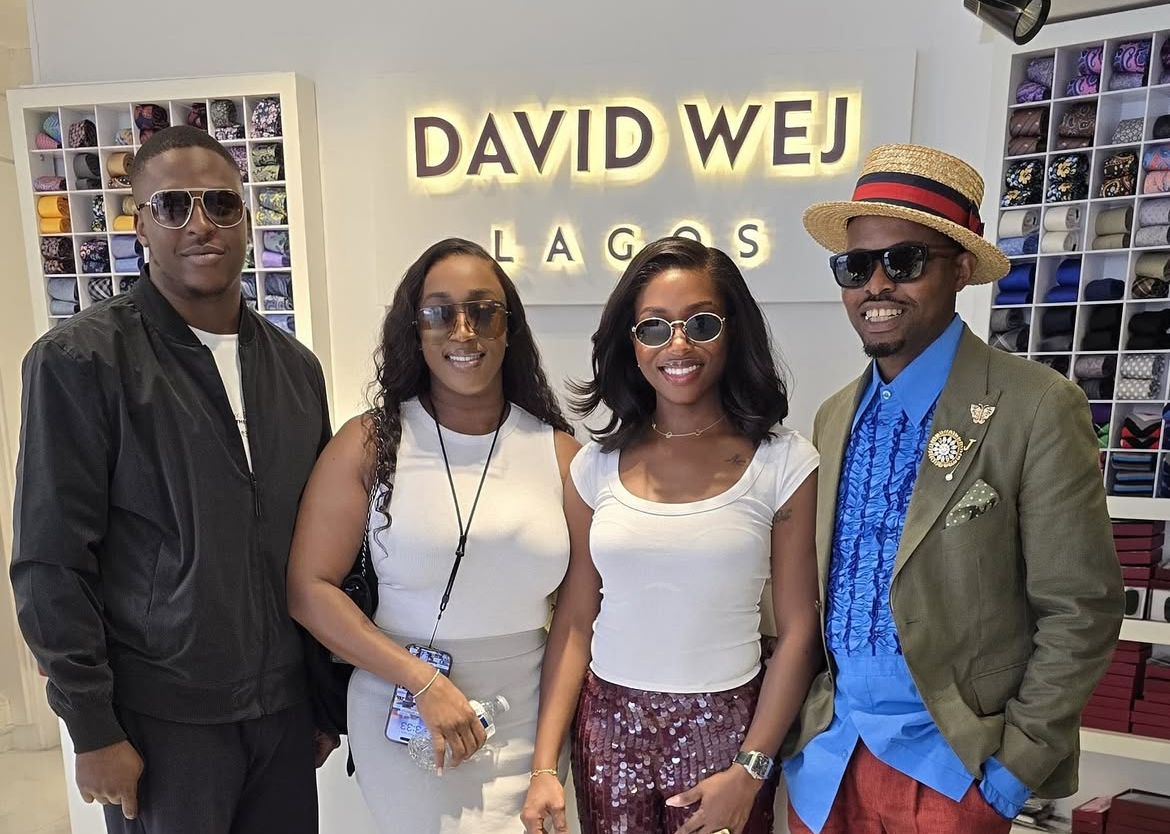
An award-winning international lifestyle label, David Wej is known for its traditionally inspired jacquard suits, classic shirts, and accessories. With a flagship store on London’s Great Portland Street, the brand has become a bridge between African tailoring and global style.
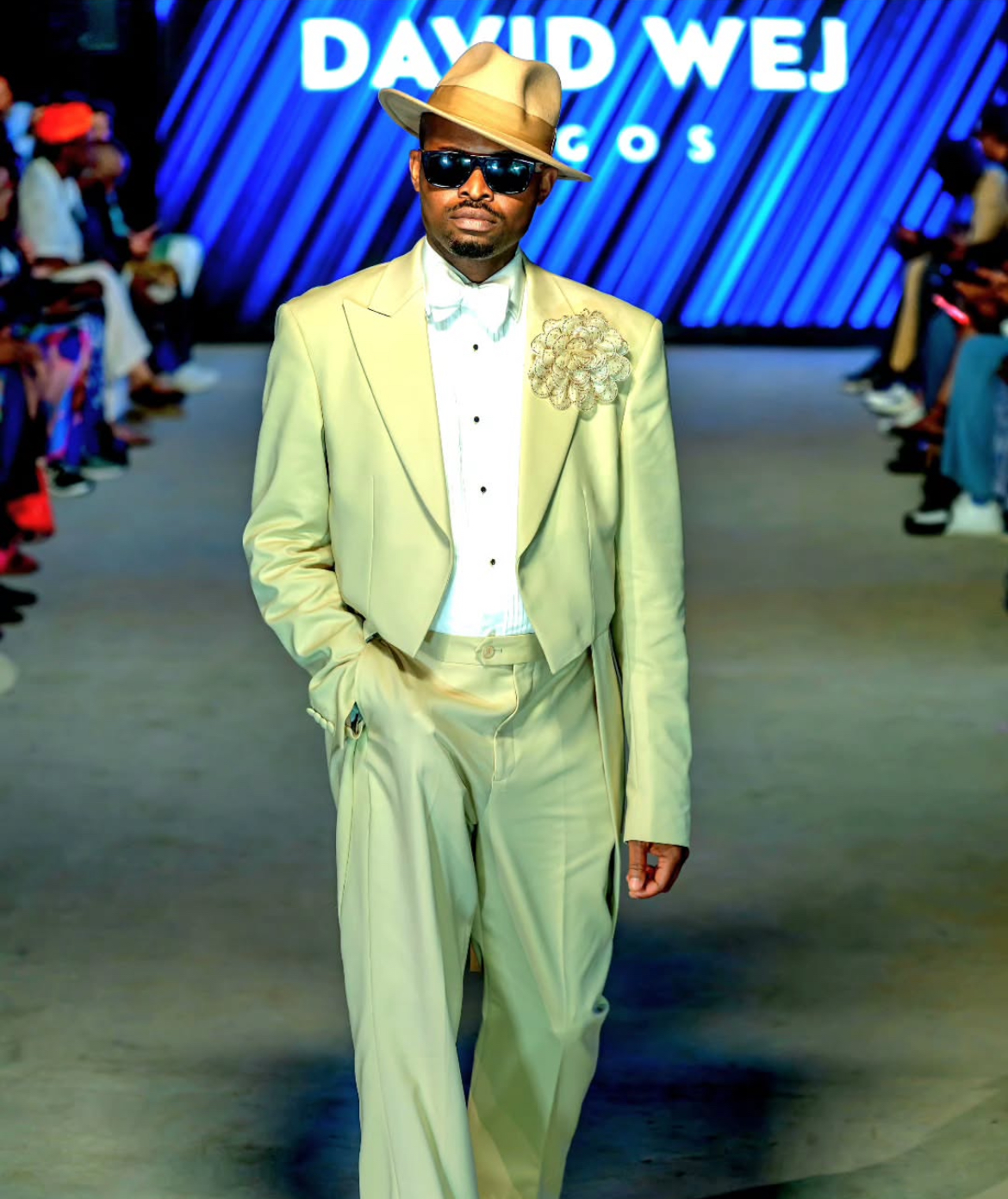
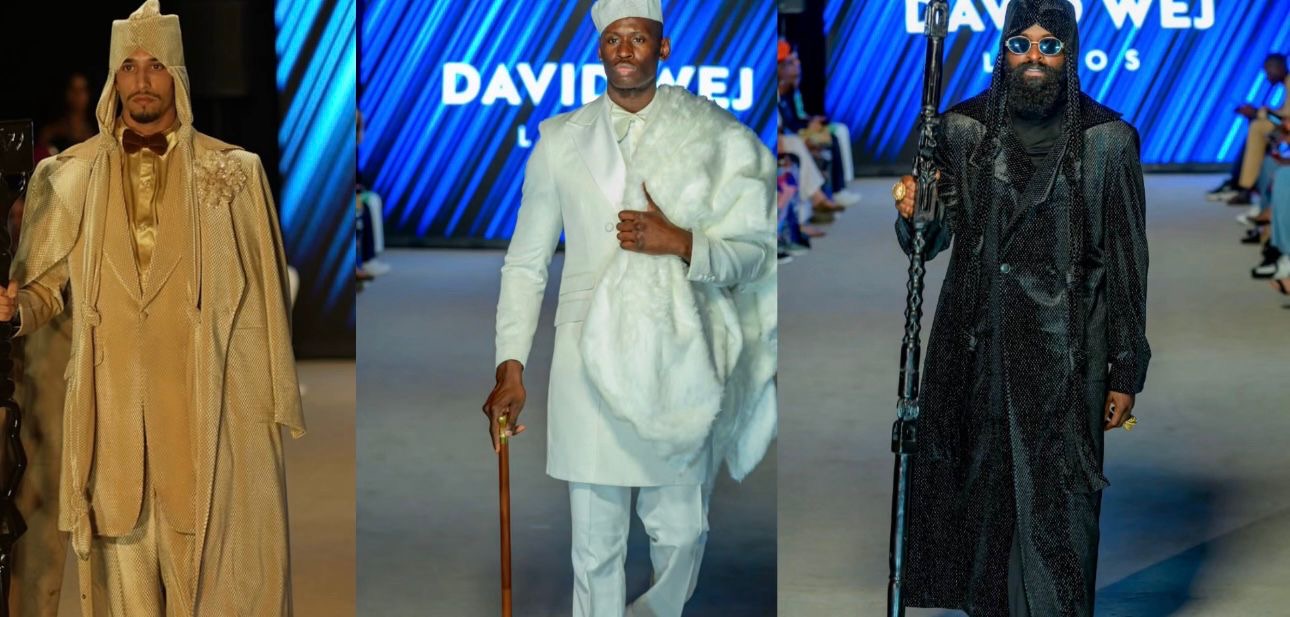
House of Flannels read as an African thesis on menswear. Inspired by Chief Emmanuel Olukoya Adebanjo (1907–1982), it honoured a fabric language that predates and exceeds the Western canon, reworking damask, jacquard velvet, cotton, and brocade into modern silhouettes. Floor-length coats, flowing robes, and razor-cut suits echoed the grandeur of agbada and babanriga, prestige garments long associated with dignity, leadership, and ceremony across West Africa. Accessories such as canes, turbans, hats, and fur stoles extended that vocabulary of authority, recalling insignia that for centuries have functioned as visible signs of office. In many traditions, a staff is not an accessory but a political instrument, from Akan okyeamepoma linguist staffs to Yoruba ọpá aṣẹ, each conferring voice, legitimacy, and spiritual sanction.



The collection also located itself within a longer history of African dandyism as both identity and politics. Across the continent, dressing well has served as self-definition, critique, and everyday sovereignty. In the Congo, La Sape codified elegance as a public philosophy of respectability and joy, a movement born under colonialism that evolved into a statement of cultural pride. In South Africa, Swenkas pageants among Zulu migrant workers cast tailoring as a disciplined code of dignity and etiquette. These were not imitations of Europe but re-authorings that turned the suit into a tool of self-possession. House of Flannels spoke directly to that lineage, insisting that Black men have long worn power and that African menswear is not derivative but foundational.
Earlier this year, the Metropolitan Museum of Art’s Costume Institute exhibition “Superfine: Tailoring Black Style” placed dandyism at the centre of a global narrative, framing Black sartorial practice as a driver of taste, cool, and citizenship. David Wej’s collection, however, returned dandyism to its source. What was presented in New York as an exhibition thesis appeared in London as living tradition, articulated not through mannequins but through cloth, gesture, and ceremony.

Casting underscored the expansiveness of this message. Both men and women walked the runway in tailoring that moved fluidly across gender, highlighting how African traditions of power dressing are not bound by category. Among those featured were Paul Briggs, Princess Adesile, Woh Dee, and Daniel Asante, with entertainment mogul Dr. King SMADE closing the show in its most commanding look.
SMADE’s finale appearance distilled the collection’s argument. A floor-length, double-breasted black velvet overcoat with a soft sheen carried the material weight of nobility. In hand, a carved staff signalled command and counsel, aligning the wearer with the continuum of chiefs and spiritual leaders for whom regalia is a public contract. A hooded headpiece and tinted glasses introduced a veil of modern mystique. The layered textures, all-black palette, and elongated line produced an image of quiet, spiritual authority. The references were historical, yet the presence was entirely contemporary: a modern African figure of office, clothed in legacy as much as fabric.
House of Flannels affirmed that African menswear is not a variation of Western fashion but an archive of codes, textiles, and signs that continues to generate new forms. By leaning into that archive, David Wej presented more than occasionwear. He restored a grammar of presence in which dress communicates sovereignty, dignity, and accountability to community. Africa Fashion Week London provided the stage; the collection supplied the proof that to wear African tailoring is to wear history, culture, and power in the present tense.