Friday, May 1, 2026
  • Login
The Southern African Times
  • Home
  • Southern Africa
  • Business
    • African Start ups
    • African Continental Free Trade Area
  • Technology
    • Lifestyle
      • Health
      • Culture
      • Food and Drink
      • Entertainment
  • Opinion
  • Sports
  • SAT Jobs
    • Events
  • About Us
    • Advertise with Us
    • Contact Us
No Result
View All Result
  • Home
  • Southern Africa
  • Business
    • African Start ups
    • African Continental Free Trade Area
  • Technology
    • Lifestyle
      • Health
      • Culture
      • Food and Drink
      • Entertainment
  • Opinion
  • Sports
  • SAT Jobs
    • Events
  • About Us
    • Advertise with Us
    • Contact Us
No Result
View All Result
The Southern African Times
No Result
View All Result
Home Markets

US Imposes Highest Tariffs in a Century, Drawing Global Pushback

by Times Reporter
August 8, 2025
in Markets
0
South Africa Voices Concern over Trump’s Election Impact on COP29 Climate Agenda

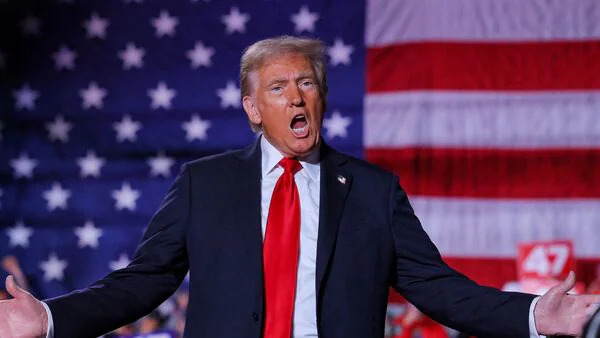
The United States has instituted a sweeping increase in tariffs on imports from a broad group of countries, marking a significant escalation in its trade policy under President Donald Trump. These tariffs, effective from 12:01 a.m. EDT on Thursday, range from 10% to 50%, with some of the heaviest duties targeting nations such as Brazil, India, Switzerland and Canada. The policy has pushed U.S. import duties to their highest levels in over a century, eliciting a combination of diplomatic urgency and strategic defiance among key trade partners.

The new tariff regime, which follows Trump’s April announcement of “Liberation Day” tariffs, is expected to impact global supply chains, contribute to inflationary pressures, and shift geopolitical alignments. The rationale, as stated by U.S. officials, centres on reducing trade deficits and reinforcing domestic manufacturing—an economic objective framed as a rectification of longstanding imbalances in global commerce.

Among those countries facing the steepest tariffs are Brazil, at 50%, Switzerland at 39%, Canada at 35%, and India, which is subject to both a 25% blanket tariff and an additional 25% duty scheduled in 21 days due to its purchases of Russian oil. These decisions are part of a broader policy matrix that includes potential increases on imports from China, pending the expiration of an existing truce, and a newly announced tariff of up to 100% on semiconductors and other strategic sectors.


ADVERTISEMENT

In the words of U.S. Trade Representative Jamieson Greer, writing in The New York Times, the U.S. “cannot be bound by international trade rules that operate to its detriment.” Greer characterised the tariff policy as a bold corrective to policies that have undermined the U.S. manufacturing base.

However, this approach has not been met without resistance. Countries including India, South Africa, and Brazil have indicated that they will not capitulate to what they see as coercive negotiating tactics. Indian Prime Minister Narendra Modi and Brazilian President Luiz Inácio Lula da Silva have each taken firm public stances, stating their refusal to compromise national interests, especially in relation to domestic agriculture and industrial policy. Lula reportedly declined to make a personal appeal to Trump, although cabinet-level negotiations are ongoing.

Switzerland’s President Karin Keller-Sutter, after returning from a last-minute diplomatic visit to Washington without a deal, convened an emergency cabinet meeting on Thursday to assess the economic implications. Meanwhile, South Africa’s negotiations for a reduced tariff rate also concluded without resolution, though talks are expected to continue at the technical level, according to President Cyril Ramaphosa’s office.

Some nations have succeeded in mitigating the tariff burden. Eight key U.S. trading partners, including the European Union, Japan, and South Korea, have secured framework agreements reducing their base tariff rates to 15%. The United Kingdom negotiated a 10% rate, while others such as Vietnam, Indonesia, Pakistan, and the Philippines managed to lower their respective duties to between 19% and 20%. Vietnam has publicly stated it will pursue further reductions through continued dialogue.

While U.S. officials contend that these tariffs are primarily aimed at restoring balance in international trade, early signs suggest a complex economic impact. According to Commerce Department data, there has already been an observable uptick in U.S. prices for consumer and industrial goods, including motor vehicles and recreational products. Toyota Motor Corporation, for example, revised its full-year profit forecast downward by 16%, citing an expected $10 billion loss due to U.S. import duties. Conversely, companies such as Sony and Honda, based in Japan, anticipate lesser impacts following the successful tariff negotiation between Japan and the U.S.

U.S. Commerce Secretary Howard Lutnick projected on Fox Business Network that federal revenues from the new tariff schedule could reach $50 billion monthly, signalling a significant inflow into government coffers. According to estimates by the Atlantic Institute, the average U.S. tariff rate has risen to approximately 20%, up from 2.5% when President Trump assumed office in January, making it the most protectionist American trade policy in modern times.

As the policy reverberates across the global economic landscape, discussions have emerged about coordinated responses. President Lula has indicated interest in initiating a BRICS-level consultation with India and China to consider collective trade strategies. Notably, Prime Minister Modi has confirmed his intention to visit China for the first time in seven years, possibly signalling broader geopolitical shifts in reaction to American economic assertiveness.

The evolving trade environment raises critical questions for nations such as South Africa, whose exposure to U.S. markets and vulnerability to tariff shocks may require strategic economic recalibration. The outcomes of ongoing negotiations and potential multilateral alignments could reshape global trade flows well beyond the duration of these tariff measures.

Previous Post

The Open Chats Podcast Should Wake Up South Africa’s Cybercrime Response

Next Post

White Pearl Technology Group Acquires South Africa’s Afrison in Strategic Expansion

Times Reporter

Related Posts

African Capital Markets Conference spotlights diaspora capital for market growth
Markets

AFRINEX Lists US$33 million Bond for Cellecor Gadgets Limited

by SAT Reporter
May 1, 2026
Botswana Raises Interest Rates as Inflation Surges and Global Energy Shock Intensifies
Markets

Botswana Raises Interest Rates as Inflation Surges and Global Energy Shock Intensifies

by SAT Reporter
May 1, 2026
Victoria Falls Financial Centre Positioned as Gateway for Global Capital into Africa
Markets

Victoria Falls Financial Centre Positioned as Gateway for Global Capital into Africa

by SAT Reporter
May 1, 2026
AELP Drives African Capital Market Integration at London Conference
Markets

AELP Drives African Capital Market Integration at London Conference

by SAT Reporter
April 30, 2026
Fed Holds Rates Steady as Powell Defends Central Bank Independence
Markets

Fed Holds Rates Steady as Powell Defends Central Bank Independence

by SAT Reporter
April 30, 2026
Next Post
White Pearl Technology Group Acquires South Africa’s Afrison in Strategic Expansion

White Pearl Technology Group Acquires South Africa’s Afrison in Strategic Expansion

Browse by Category

  • Africa AI
  • African Continental Free Trade Area
  • African Debt
  • African Start ups
  • Agriculture
  • AI Africa
  • Algeria
  • All News
  • Analysis
  • Angola
  • Arts / Culture
  • Asia
  • Botswana
  • BOTSWANA
  • BREAKING NEWS
  • BRICS
  • Burkina Faso
  • Burundi
  • Business
  • Business
  • Business Wire
  • Cameroon
  • Central Africa
  • Chad
  • China
  • Climate Change
  • Climate Changev
  • Community
  • Congo Republic
  • Conservation
  • Côte d’Ivoire
  • COVID 19
  • CRYPTOCURRENCY
  • Culture
  • Democratic Republic of Congo
  • Diplomacy
  • Eastern Africa
  • Economic Development
  • Economy
  • Education
  • Egypt
  • Elections 2024
  • Energy
  • Entertainment
  • Environment
  • Eritrea
  • Ethiopia
  • Europe
  • Fashion
  • Feature
  • Finance
  • Financial Inclusion
  • Food
  • Food and Drink
  • Foods
  • GABON
  • Ghana
  • Global
  • Global Africa
  • Guinea
  • Health
  • Immigration
  • in Southern Africa
  • International news
  • International Relations
  • Investment
  • Ivory Coast
  • Just In
  • Kenya
  • Lesotho
  • Libya
  • Life Style
  • Lifestyle
  • Literature
  • Malawi
  • Malawi
  • Mali
  • Markets
  • Mauritius
  • Middle East
  • Mining in Africa
  • Morocco
  • Mozambique
  • Namibia
  • Niger
  • niger
  • Nigeria
  • North Africa
  • North-Eastern Africa
  • Obituaries
  • Obituary
  • Opinion
  • PARTNER CONTENT
  • Politics
  • Property
  • Racism
  • Rwanda
  • Rwanda
  • SADC
  • SAT Interviews
  • SAT Investigation
  • SAT Jobs
  • Saudi Arabia
  • Senegal
  • Seychelles
  • Somaliland
  • South Africa
  • South Sudan
  • Sports
  • Startup Africa
  • STOCK EXCHANGE
  • Sudan
  • Sustainability
  • Sustainablity
  • Tanzania
  • Technology
  • Telecommunications
  • The Editorial Board
  • The Power Of She
  • Togo
  • Trade
  • Travel
  • Travel
  • Tunisia
  • Uganda
  • Uncategorized
  • Wealth
  • West Africa
  • World
  • World
  • ZAMBIA
  • Zambia
  • ZIMBABWE
  • Zimbabwe

Browse by Tags

#NewsUpdate #SouthAfrica #SouthernAfricanTimes #TheSouthernAfricanTimes AfCFTA africa African Continental Free Trade Area African development African Development Bank African economies African economy African Union Agriculture Angola Botswana Business China Climate change Cyril Ramaphosa Economic Development economic growth energy transition fiscal policy industrialisation Inflation Infrastructure Infrastructure Development International relations Investment Kenya Mozambique Namibia news Nigeria Regional Integration renewable energy Rwanda SADC South Africa Southern Africa sustainable development Tanzania United States Zambia Zimbabwe
ADVERTISEMENT

WHO WE ARE

The Southern African Times is a regional bloc digital newspaper that covers Southern African and world news. The paper also gives a nuanced analysis on news and covers a wide range of reporting which include sports, entertainment, foreign affairs, arts and culture.

Welcome Back!

Login to your account below

Forgotten Password?

Retrieve your password

Please enter your username or email address to reset your password.

Log In

  • Home
  • Southern Africa
  • Business
    • African Start ups
    • African Continental Free Trade Area
  • Technology
    • Lifestyle
      • Health
      • Culture
      • Food and Drink
      • Entertainment
  • Opinion
  • Sports
  • SAT Jobs
    • Events
  • About Us
    • Advertise with Us
    • Contact Us
Are you sure want to unlock this post?
Unlock left : 0
Are you sure want to cancel subscription?