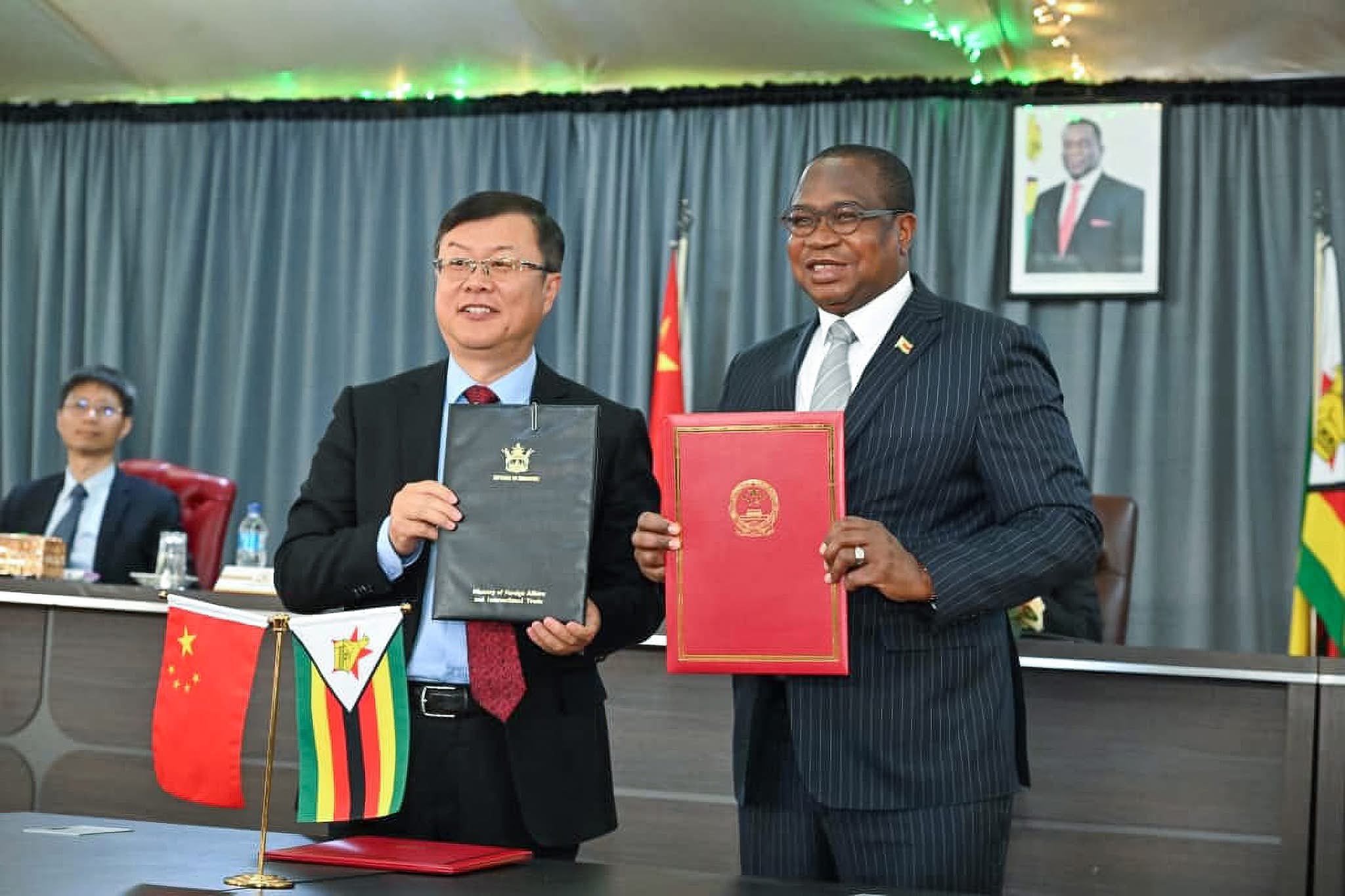
In a continued demonstration of diplomatic engagement and development-oriented collaboration, the governments of China and Zimbabwe have signed a new agreement on economic and technical cooperation, alongside an additional food assistance package. The signing ceremony took place on Wednesday at the State House in Harare, presided over by Zimbabwean President Emmerson Mnangagwa.
The bilateral agreement, according to official statements, is aimed at reinforcing Zimbabwe’s economic infrastructure and food security mechanisms. It builds upon a previous agreement signed in 2020, which contributed to the rollout of essential projects, including the nationwide drilling of boreholes and the implementation of the Juncao technology project—a Chinese-introduced agricultural technique that enables the cultivation of high-protein hybrid grass, primarily for livestock and sustainable agriculture.
Zimbabwe’s Minister of Finance and Economic Development, Professor Mthuli Ncube, expressed appreciation for China’s consistent assistance across various sectors of the Zimbabwean economy. “The Government of Zimbabwe sincerely appreciates and acknowledges the emergency food assistance continuously received from China,” said Ncube. He further noted the significance of this partnership, describing China as an “all-weather friend” to Zimbabwe.




The Chinese Ambassador to Zimbabwe, Zhou Ding, reaffirmed Beijing’s commitment to strengthening bilateral cooperation and enhancing Zimbabwe’s capacity to achieve its Vision 2030, a national strategy aimed at transforming Zimbabwe into an upper-middle-income country by the year 2030. Ambassador Zhou stated that the agreements signed were part of a broader framework of 17 cooperation deals concluded during President Mnangagwa’s 2024 state visit to China.
“Time and again, we have proven that we are bound by a shared future, standing side by side through every trial. We cherish this profound and enduring friendship, and will continue to stand together in the face of all challenges,” he remarked.
According to diplomatic sources, the newly signed documents reflect a maturing bilateral relationship that has extended well beyond political symbolism. China’s involvement in Zimbabwean development spans a wide spectrum, from energy and infrastructure to agriculture and humanitarian assistance. The consistent delivery of food aid, particularly during periods of drought and macroeconomic instability, has helped to alleviate food insecurity in vulnerable communities.
The economic and technical cooperation agreement is also seen as a continuation of broader South-South cooperation efforts, with China positioning itself as a key partner to developing nations across Africa. Observers note that the relationship between Harare and Beijing remains largely grounded in mutual interest and long-term development objectives.
Although the specific monetary value of the latest package was not disclosed at the event, officials underscored the tangible benefits of ongoing Chinese development assistance. These include the funding and operationalisation of multiple community-level infrastructure projects that are directly contributing to rural development and climate resilience.
While both nations describe the cooperation as strategic and mutually beneficial, analysts caution that transparency, long-term sustainability, and local ownership of development initiatives will remain critical for ensuring that such partnerships yield enduring outcomes for Zimbabwean citizens.
The development follows several similar agreements signed between China and other African nations, reflecting a broader geopolitical trend wherein China continues to expand its footprint through infrastructure finance, humanitarian aid, and trade partnerships.