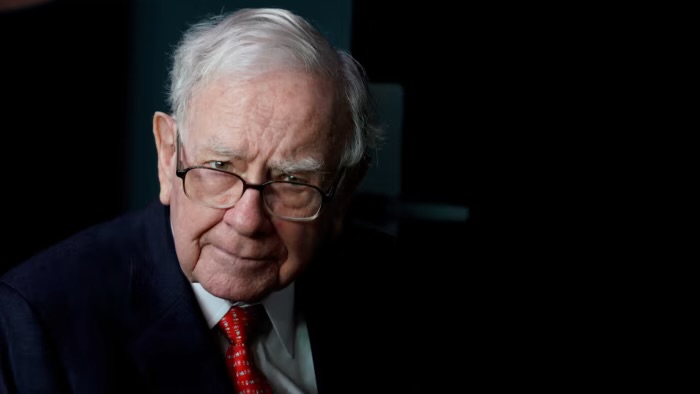
Warren Buffett’s Berkshire Hathaway has reported a 3.79% year-on-year decrease in its second-quarter operating earnings, marking a notable shift for the conglomerate in a period characterised by leadership transition and escalating global economic pressures. This disclosure, released on Saturday, is the first since Buffett, aged 94, confirmed his decision to step down as chief executive at the end of 2025. Vice Chairman Greg Abel, who currently oversees non-insurance operations, has been named his successor.
For the first half of the year, Berkshire posted US$20.8 billion in operating earnings, a decline of 8.8% from the same period in 2024. The firm’s second-quarter operating earnings stood at US$11.16 billion, down from US$11.6 billion recorded in Q2 2024. In a steeper fall, net income plummeted by nearly 59%, reaching US$12.37 billion, compared with last year’s US$30.4 billion.
The company’s insurance underwriting segment, a traditional profit pillar, recorded pre-tax earnings of US$2.53 billion, representing a decline of almost 11% from the US$2.84 billion reported in the same quarter of the previous year. This downturn highlights mounting pressures in risk-based revenue sectors.



Cash holdings also experienced a marginal contraction. Between May and July 2025, Berkshire’s cash reserves slipped to US$344 billion, down from the US$347 billion publicly disclosed during the company’s Annual Shareholders Meeting held on 3 May in Omaha.
Of particular consequence was a US$3.8 billion write-down linked to its investment in Kraft Heinz Co., the packaged food conglomerate in which Berkshire has held a significant stake since 2015. Buffett had previously acknowledged strategic missteps regarding the acquisition, noting in a 2019 interview with CNBC that he had “been wrong in a couple ways” about the deal’s future value trajectory.

Macroeconomic headwinds continue to compound the challenges faced by Berkshire’s sprawling portfolio. The company reiterated its concerns about the unpredictability introduced by the tariff regime enacted by President Donald Trump, particularly following the recent escalation of trade tensions. The White House announced new tariff measures targeting several US trade partners, scheduled to come into effect on 7 August 2025.
In its filing, Berkshire stated: “We are currently unable to reliably predict the nature, timing or magnitude of the potential economic consequences of any such changes.” The firm further cited “macroeconomic conditions and geopolitical events” as factors complicating earnings forecasting across its diverse business units.
The impact of protectionist trade policies was especially pronounced in Berkshire’s consumer brands segment. Fruit of the Loom, Garan, and Jazwares – all owned subsidiaries – experienced double-digit year-to-date revenue declines of 11.7%, 10.1%, and 38.5%, respectively. These figures reflect weakened consumer demand and delays in global supply chains attributed to tariff-induced disruptions.
However, not all areas of the conglomerate underperformed. BNSF Railway, one of the largest freight rail networks in North America, saw an 11.5% increase in earnings before taxes. Similarly, Berkshire Hathaway Energy (BHE) reported a net income rise of 18%, underlining the resilience of infrastructure and utility assets in contrast to more volatile consumer and financial holdings.
Despite the mixed financials, Berkshire’s Class B shares (NYSE: BRK.B) closed at US$472.84 on Friday, marking a 4.82% gain since the beginning of 2025. While the broader market remains wary of impending geopolitical shifts, investor sentiment appears cautiously optimistic about the strategic direction under incoming leadership.
Berkshire Hathaway’s quarterly performance reflects a period of flux not only for the firm itself but for the global investment landscape more broadly. With its unique composition of insurance, infrastructure, consumer goods, and industrial assets, the firm remains a barometer for economic confidence – and caution – as it navigates both internal succession and external turbulence.