Saturday, July 4, 2026
  • Login
The Southern African Times
  • Home
  • Southern Africa
  • Business
    • African Start ups
    • African Continental Free Trade Area
  • Technology
    • Lifestyle
      • Health
      • Culture
      • Food and Drink
      • Entertainment
  • Opinion
  • Sports
  • SAT Jobs
    • Events
  • About Us
    • Advertise with Us
    • Contact Us
No Result
View All Result
  • Home
  • Southern Africa
  • Business
    • African Start ups
    • African Continental Free Trade Area
  • Technology
    • Lifestyle
      • Health
      • Culture
      • Food and Drink
      • Entertainment
  • Opinion
  • Sports
  • SAT Jobs
    • Events
  • About Us
    • Advertise with Us
    • Contact Us
No Result
View All Result
The Southern African Times
No Result
View All Result
Home Opinion

South Sudan’s Central Bank Turmoil Reflects a Deeper Institutional Challenge

by SAT Reporter
June 24, 2025
in Opinion
0
South Sudan’s Central Bank Turmoil Reflects a Deeper Institutional Challenge

In the short span of just two years, South Sudan has seen three changes at the leadership of its central bank. In any context, this would be unusual. But for a young country still finding its footing after conflict, it is especially troubling. At stake is not simply who occupies the post, but whether the country can build institutions strong enough to inspire trust, ensure policy consistency, and guide long-term economic recovery.

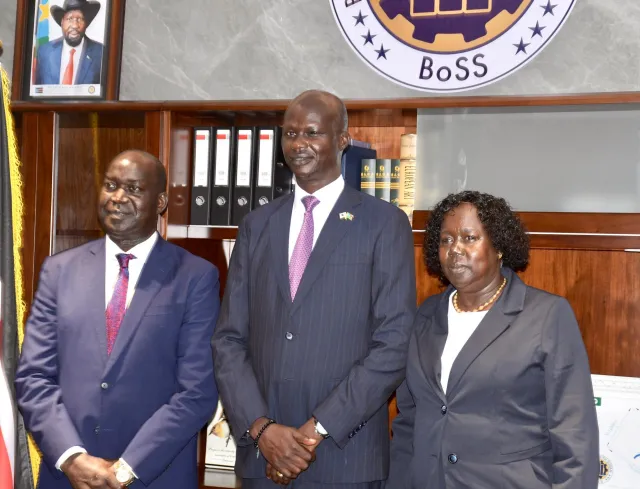
Since August 2022, the governor’s chair has been held by Johnny Ohisa Damian, James Alic Garang, and now Dr Addis Ababa Othow. Mr Damian’s initial removal and subsequent brief reinstatement, followed by Mr Garang’s sudden departure despite his impressive international background, have raised eyebrows among economists and development partners alike. While the reasons for these changes remain murky, the implications are increasingly clear.

First and foremost is the question of continuity. A central bank plays a pivotal role in stabilising currency, managing inflation, and directing national monetary policy. It is not merely a symbolic post. Frequent changes at the top disrupt planning, delay implementation, and can lead to an erosion of credibility both at home and abroad. Institutions thrive on predictability. When that is lacking, confidence falters.


ADVERTISEMENT

Mr Garang, a trained economist with experience working alongside international financial institutions, brought a level of professionalism and reformist thinking that many hoped would signal a new chapter. His sudden departure, barely a year into his term, undermines that hope and sends a disheartening message to other professionals who may consider serving in such roles. It also signals to investors and international observers that South Sudan’s technocratic leadership may not be insulated from political interference.

The challenge is not unique to South Sudan. Across the continent, a recurring tension exists between political control and institutional autonomy. Yet the most successful economies are often those that protect key economic institutions from political churn. When appointments are made and reversed with little transparency or explanation, it becomes difficult for any serious investor to plan with confidence. It also becomes harder for ordinary citizens to believe that decisions are made in their interest.

Dr Othow’s recent appointment brings with it a measure of internal familiarity, having served previously as a deputy governor. This could help restore a degree of institutional memory. But experience alone is not enough. What matters most now is whether he will be given the space and security to implement a stable and coherent monetary strategy. That will depend not only on his own leadership, but on whether the political environment allows the central bank to operate as a truly independent body.

This is about more than individuals. It is about systems. It is about whether South Sudan, at this critical stage in its development, can build institutions that outlast the personalities who lead them. It is about whether governance can move from short-term calculations to long-term commitments.

A central bank must be a pillar of consistency, not a revolving door of appointments. It must be respected, not politicised. And above all, it must be seen as a professional institution whose mission is to serve the national interest, not partisan agendas.

There is still time to correct course. South Sudan’s leadership can restore trust by allowing economic experts to lead with independence, by prioritising continuity in monetary policy, and by sending a clear message that the integrity of institutions matters. The country’s future depends not only on peace and diplomacy but also on sound economic stewardship.

Governance is not only about who is in charge. It is about building structures that inspire confidence, even when leadership changes. It is about creating a culture of accountability, predictability, and service.

Stability matters. Credibility matters. Institutions matter. And now, more than ever, South Sudan needs all three.


Written by Ambassador Uzo Owunne (Master of Arts in International Relations) a seasoned development practitioner, thought leader, and public policy advisor with over three decades of experience in diplomacy, governance, and international development. He previously served as Ambassador of the Union of the Comoros to the United Nations International Maritime Organization.

The views expressed in this article are those of the author and do not necessarily reflect the official position of The Southern African Times. 

Tags: #AddisAbabaOthow#AfricanBusiness#CentralBank#NewsUpdate#SouthSudan#UzoOwunneafricagovernanceOpinion
Previous Post

Russia and Mali Deepen Economic Ties, Eye Nuclear Energy Collaboration

Next Post

Best Low-Cost Airlines in Africa 2025: FlySafair Leads the Pack Again

SAT Reporter

Related Posts

The Algorithm Didn’t Create Xenophobia. It Made It Impossible to Ignore
Opinion

The Algorithm Didn’t Create Xenophobia. It Made It Impossible to Ignore

by Kundai Vambe
July 4, 2026
LONG READ | The Oldest Alibi: South Africa’s Xenophobia and the Economic Ruin It Presages
Opinion

LONG READ | The Oldest Alibi: South Africa’s Xenophobia and the Economic Ruin It Presages

by Times Reporter
June 30, 2026
President Cyril Ramaphosa’s Opinion: How South Africa’s Natural Splendour Can Drive Inclusive Growth
Opinion

Op-Ed by President Ramaphosa | Protest Is Both a Right and a Responsibility

by Times Reporter
June 29, 2026
The Insurance Hack More Drivers Should Know
Opinion

The Insurance Hack More Drivers Should Know

by Times Reporter
June 22, 2026
Southern African Times Announces Brendan Amadi as Recipient of the 2026 Editorial Recognition of the Year Award
The Editorial Board

Southern African Times Announces Brendan Amadi as Recipient of the 2026 Editorial Recognition of the Year Award

by The Editorial Board
June 19, 2026
Next Post
Best Low-Cost Airlines in Africa 2025: FlySafair Leads the Pack Again

Best Low-Cost Airlines in Africa 2025: FlySafair Leads the Pack Again

Browse by Category

  • Africa AI
  • African Continental Free Trade Area
  • African Debt
  • African Start ups
  • Agriculture
  • AI Africa
  • Algeria
  • All News
  • Analysis
  • Angola
  • Arts / Culture
  • Asia
  • Botswana
  • BOTSWANA
  • BREAKING NEWS
  • BRICS
  • Burkina Faso
  • Burundi
  • Business
  • Business
  • Business Wire
  • Cameroon
  • Central Africa
  • Chad
  • China
  • Climate Change
  • Climate Changev
  • Community
  • Congo Republic
  • Conservation
  • Côte d’Ivoire
  • COVID 19
  • CRYPTOCURRENCY
  • Culture
  • Democratic Republic of Congo
  • Diplomacy
  • Eastern Africa
  • Economic Development
  • Economy
  • Education
  • Egypt
  • Elections 2024
  • Energy
  • Entertainment
  • Environment
  • Eritrea
  • Ethiopia
  • Europe
  • Fashion
  • Feature
  • Finance
  • Financial Inclusion
  • Food
  • Food and Drink
  • Foods
  • GABON
  • Ghana
  • Global
  • Global Africa
  • Guinea
  • Health
  • Humanitarian Aid
  • Immigration
  • in Southern Africa
  • International news
  • International Relations
  • Investment
  • Ivory Coast
  • Just In
  • Kenya
  • Lesotho
  • Libya
  • Life Style
  • Lifestyle
  • Literature
  • Malawi
  • Malawi
  • Mali
  • Markets
  • Mauritius
  • Middle East
  • Mining in Africa
  • Morocco
  • Mozambique
  • Namibia
  • Niger
  • niger
  • Nigeria
  • North Africa
  • North-Eastern Africa
  • Obituaries
  • Obituary
  • Opinion
  • PARTNER CONTENT
  • Politics
  • Property
  • Racism
  • Rwanda
  • Rwanda
  • SADC
  • SAT Interviews
  • SAT Investigation
  • SAT Jobs
  • Saudi Arabia
  • Senegal
  • Seychelles
  • Somaliland
  • South Africa
  • South Sudan
  • Sports
  • Startup Africa
  • STOCK EXCHANGE
  • Sudan
  • Sustainability
  • Sustainablity
  • Tanzania
  • Technology
  • Telecommunications
  • The Editorial Board
  • The Power Of She
  • Togo
  • Trade
  • Travel
  • Travel
  • Tunisia
  • Uganda
  • Uncategorized
  • Wealth
  • West Africa
  • World
  • World
  • ZAMBIA
  • Zambia
  • ZIMBABWE
  • Zimbabwe

Browse by Tags

#NewsUpdate #SouthAfrica #SouthernAfricanTimes #TheSouthernAfricanTimes AfCFTA africa African Continental Free Trade Area African development African Development Bank African economies African economy African Union Agriculture Angola Botswana China Climate change critical minerals Cyril Ramaphosa Economic Development economic growth energy transition governance industrialisation Inflation Infrastructure Infrastructure Development International relations Investment Kenya Mozambique Namibia news Nigeria Regional Integration renewable energy Rwanda SADC South Africa Southern Africa sustainable development Tanzania United States Zambia Zimbabwe
ADVERTISEMENT

WHO WE ARE

The Southern African Times is a regional bloc digital newspaper that covers Southern African and world news. The paper also gives a nuanced analysis on news and covers a wide range of reporting which include sports, entertainment, foreign affairs, arts and culture.

Welcome Back!

Login to your account below

Forgotten Password?

Retrieve your password

Please enter your username or email address to reset your password.

Log In
  • Home
  • Southern Africa
  • Business
    • African Start ups
    • African Continental Free Trade Area
  • Technology
    • Lifestyle
      • Health
      • Culture
      • Food and Drink
      • Entertainment
  • Opinion
  • Sports
  • SAT Jobs
    • Events
  • About Us
    • Advertise with Us
    • Contact Us
Not enough quota to unlock this post
Unlock left : 0
Are you sure want to cancel subscription?