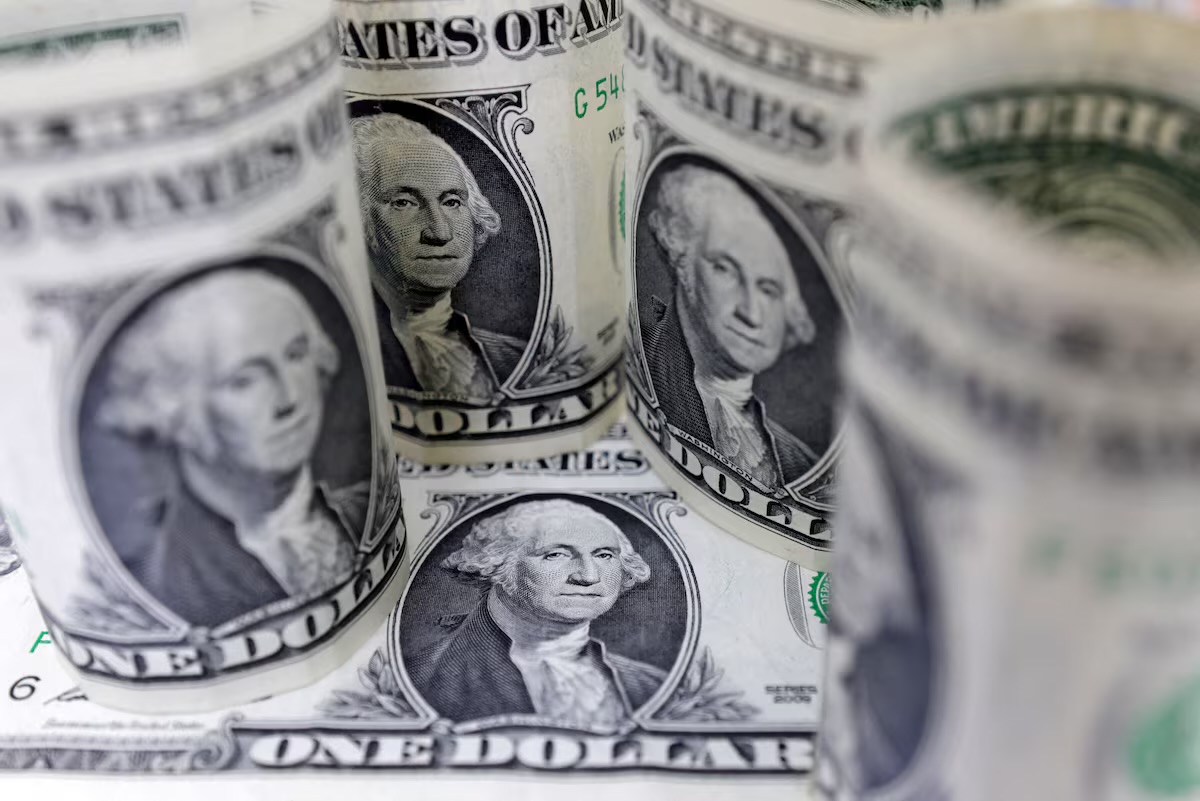
The United States dollar gained ground on Friday as investors turned to safe assets amid escalating conflict between Israel and Iran. The flight to safety also lifted U.S. Treasury bonds and gold prices, reflecting deepening unease in global markets as geopolitical risks intensified.
The surge followed widespread Israeli air strikes across Iranian military targets, prompting swift retaliation from Tehran in the form of drone attacks. The flare-up has added further strain to already fragile investor sentiment, which has been weighed down by persistent concerns about global inflation, trade uncertainty and monetary policy.
Charu Chanana, chief investment strategist at Saxo, noted that the latest developments may prove pivotal. “The geopolitical escalation adds another layer of uncertainty to already fragile sentiment,” she said. “The key question now is whether this marks a brief flare-up or the beginning of broader regional escalation. If tensions rise, particularly with any threat to oil supply routes, the risk-off mood could persist, keeping upward pressure on crude and haven assets.”



Despite ongoing diplomacy, with a sixth round of talks between the United States and Iran scheduled in Oman on Sunday to address Tehran’s uranium enrichment programme, Israel insisted its military actions were carried out independently. Israel’s ambassador to the United Nations stated the strikes were not coordinated with allies and reflected the country’s sovereign right to respond to security threats.
In currency markets, the U.S. dollar index, which tracks the greenback against six major currencies, rose 0.61 percent to reach 98.28. The gains marked a sharp rebound after a recent downtrend and were driven primarily by investors seeking stability amid heightened geopolitical stress.
Traditional safe-haven currencies like the Japanese yen and the Swiss franc, which initially strengthened by around 0.5 percent each, later held steady against the dollar. The Australian and New Zealand dollars, often viewed as proxies for global risk sentiment, dropped by about 1 percent each. The euro, which had posted four straight days of gains, fell 0.5 percent to 1.1528 dollars.
Government bond markets reflected similar anxieties. Investors moved into U.S. Treasuries, pushing yields lower. The yield on the benchmark 10-year note fell as much as 4.7 basis points at one stage, reaching a more than one month low of 4.31 percent. Meanwhile, gold prices climbed 1.1 percent to their highest levels since early May, as the precious metal attracted renewed demand from investors hedging against geopolitical shocks.
Although the dollar gained on the day, its overall trajectory remains uncertain. The dollar index remains close to its lowest point since March 2022, a level reached earlier in the week. Broader concerns, including the evolving trade relationship between the United States and China, continue to weigh on the outlook. President Joe Biden’s administration has signalled an intention to set unilateral trade terms with various economies, leaving markets unclear about the future direction of global trade policy.
On a weekly basis, the dollar index is on course for a decline of nearly 1 percent, which would be its sharpest weekly drop in more than three weeks. It is also set to post weekly losses against the yen, the Swiss franc and the euro, underlining the fragile state of investor confidence.

Christopher Wong, a currency strategist at OCBC, observed that while the dollar may see short term support due to geopolitical tensions, the broader trend remains under pressure. “Geopolitical noise may temporarily distort the dollar downtrend and temporarily weigh on risk proxies especially heading into the weekend,” he said.
Adding to the complexity are signs of easing inflation in the United States. Two reports released this week showed that price pressures remained contained, reinforcing expectations of interest rate cuts by the Federal Reserve. However, some analysts cautioned that potential tariff measures or extended supply disruptions could push inflation higher in the months ahead.

For now, the sharp market reaction underscores how global investors are quick to reprice risk when conflict flares in strategically sensitive regions. Whether the latest escalation marks a turning point or proves to be a temporary spike remains to be seen, but the return of safe-haven flows suggests that anxiety over regional instability is likely to remain a key driver of market dynamics in the near term.