Friday, April 24, 2026
  • Login
The Southern African Times
  • Home
  • Southern Africa
  • Business
    • African Start ups
    • African Continental Free Trade Area
  • Technology
    • Lifestyle
      • Health
      • Culture
      • Food and Drink
      • Entertainment
  • Opinion
  • Sports
  • SAT Jobs
    • Events
  • About Us
    • Advertise with Us
    • Contact Us
No Result
View All Result
  • Home
  • Southern Africa
  • Business
    • African Start ups
    • African Continental Free Trade Area
  • Technology
    • Lifestyle
      • Health
      • Culture
      • Food and Drink
      • Entertainment
  • Opinion
  • Sports
  • SAT Jobs
    • Events
  • About Us
    • Advertise with Us
    • Contact Us
No Result
View All Result
The Southern African Times
No Result
View All Result
Home Opinion

OPINION | There’s Reason to Be Optimistic for Africa

While Sudan could be partitioned between rival factions, the continent’s 55 countries have mostly avoided open warfare for decades.

by SAT Reporter
April 19, 2025
in Opinion
0
OPINION | There’s Reason to Be Optimistic for Africa

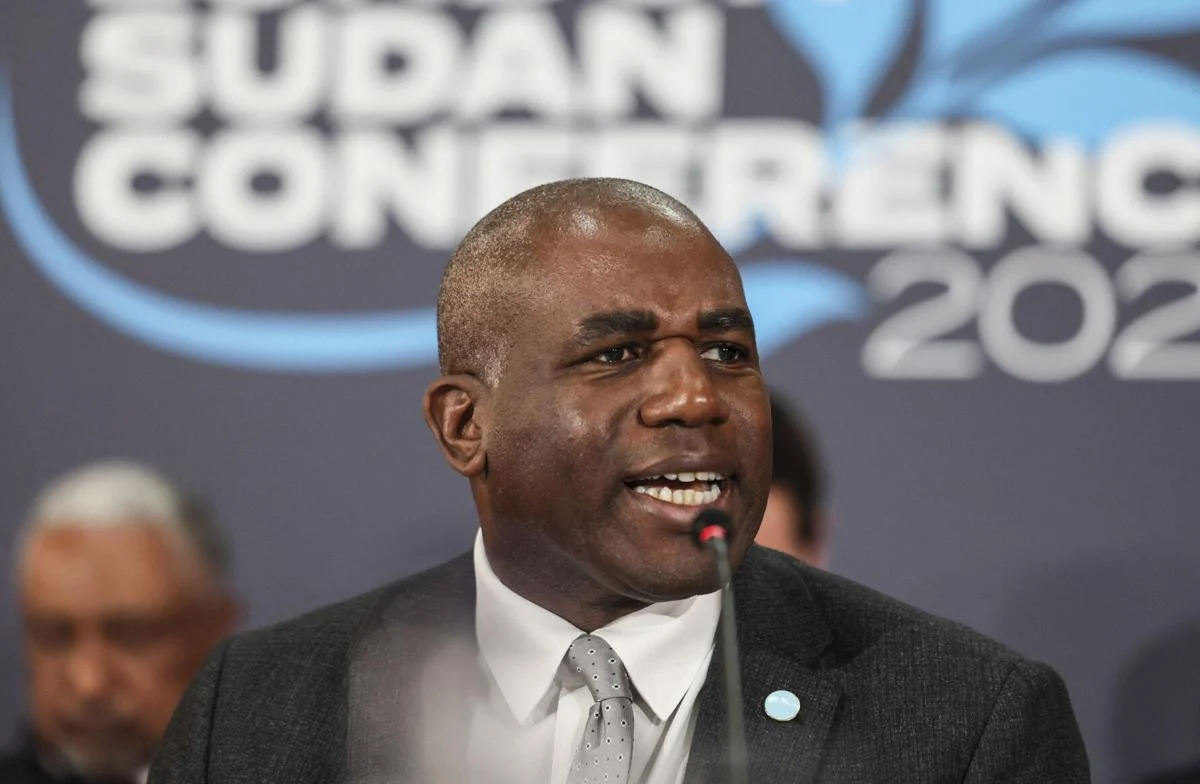
British Foreign Secretary David Lammy says “we simply cannot look away” from what’s happening in Sudan. But that’s exactly what we’re doing, Gwynne Dyer writes. Isabel Infantes/The Associated Press file photo

Last Tuesday, British Foreign Secretary David Lammy stated, “Many have given up on Sudan, but that is wrong. It’s morally wrong when we see so many civilians beheaded, infants as young as one subjected to sexual violence, more people facing famine than anywhere else in the world… We simply cannot look away.”

But Lammy was wrong. Of course we can look away. We do it all the time, especially when the disaster is happening in Africa.

And by the way, “we” includes many, if not most, Africans themselves: they too feel exhausted by the seemingly endless media reports of turmoil, violence, and injustice. Lammy was hosting an international meeting in London to mark the second anniversary of the outbreak of the Sudanese civil war, and all the usual things were said, all the standard (quite modest) pledges of money for starving Sudanese refugees made.

At the end, everybody went home in despair.

The civil war in Sudan is truly terrible, with no hope of better in sight. The death toll, mostly civilians, is estimated at 150,000 but could plausibly be anything up to half a million. Twelve million people, more than a quarter of the population, have fled from their homes, and Khartoum, the capital (which recently changed hands), looks only slightly better than Gaza.

Local residents cheer as soldiers arrive to an area recaptured from the Rapid Support Forces paramilitary group south of Khartoum, Sudan, on March 27. The death toll in the Sudanese civil war is estimated at 150,000, but could plausibly be up to half a million, Gwynne Dyer writes.
The Associated Press file photo

The leaders of the two sides are cruel and cynical bandits masquerading as military officers. General Abdel Fattah al Burhan is the commander of the Sudan Armed Forces (SAF). Mohamed Hamdan Dagalo, universally known as “Hemedti,” is the leader of the Rapid Support Forces (RSF). And the mercenaries who work for them are the scum of the earth.

The only reason for the war is the struggle between the two crooks for control of the country’s resources. Hemedti has most of the gold, Burhan controls the flow of oil from South Sudan to the country’s only port, Port Sudan on the Red Sea. And the sole hope for peace is a recent hint by Hemedti that they might just partition what’s left of the old Sudan between them.

The African Union immediately stated that it will not allow the country to be partitioned again, but the RSF has already taken a tentative step in that direction by declaring itself a rival government across the whole country. Stay tuned for more tragedies.

However…

Everything I have written here is true, and it is the sort of thing people expect to see in a report on Africa. But it is also misleading about the reality of the African continent today.

There are 55 countries in Africa (including a number of offshore islands), and in only two of them, Sudan and the Democratic Republic of Congo, are there open wars. In both cases, the fighting is confined within the borders of the country, although the DRC also has the troops of at least two neighbouring countries on its territory.

There are close to a dozen ongoing insurgencies in parts of other African countries (Mozambique, Cameroon, Nigeria, Mali, Somalia, etc.), but in almost every case you would have to travel to out-of-the-way parts of the country to see any evidence of fighting above the level of mere terrorism.

In big African cities, the level of personal safety ranges from New York City in the late 1980s to London now. In most countries there is a tolerable level of crime and reasonable safety for those who take the obvious precautions.

And then there is the enduring African miracle of stable borders. Even 55 African countries are not nearly enough to provide each major ethnic and linguistic group with its own sovereign territory. You’d need at least twice as many even to accommodate every group of half a million with its own country.

So the founding doctrine of the Organisation of African Unity 62 years ago was that all the colonial borders must stay where they are. The diverse populations within each border will have to learn to live together, because the only alternative is several centuries of war to sort the surviving ethnic groups into linguistically and ethnically homogeneous nation-states.

The miracle is that it worked.

Apart from the Sudan/South Sudan and Eritrea/Ethiopia splits, there have been no major changes to African borders since the end of colonial rule in the 1950s and ’60s. Compare that to what happened in 20th-century Europe, where borders changed drastically amid catastrophic wars, and you will understand what an achievement that is.

Most African countries are poor and many are dictatorships. They face huge challenges from climate change and rapid population growth. But the glass is more than half-full.

Written by Gwynne Dyer is a London-based independent journalist whose articles are published in 45 countries. His latest book is “Intervention Earth: Life-Saving Ideas from the World’s Climate Engineers. The article reflects the author’s views and not necessarily those of The Southern African Times.
Tags: Abdel Fattah Al-BurhanafricaAfrican bordersAfrican developmentAfrican politicsAfrican securityAfrican stabilityAfrican Unioncivil warDavid LammyGwynne DyerHemedtiinsurgenciesOrganisation of African UnityRapid Support ForcesSudan
Previous Post

Uganda to Pivot Towards Intra-African Trade in Wake of U.S. Tariff Impositions

Next Post

Zimbabwe Marks 45 Years of Independence as Economic Recovery Gains Traction

SAT Reporter

Related Posts

Feeding the Future: Why AI and Agriculture Must Work Together
Opinion

Feeding the Future: Why AI and Agriculture Must Work Together

by Sonny Iroche
April 19, 2026
Julius Malema Sentenced to Five Years in Firearm discharge case
Opinion

Malema’s Sentence: A Test of South Africa’s Rule of Law in a Polarized Age

by Kundai Vambe
April 18, 2026
Zambia’s Copper and the Social Cost of Extraction Deals
The Editorial Board

Zambia’s Copper and the Social Cost of Extraction Deals

by Nothando Ndlovu
April 17, 2026
Op-Ed by Yemi Osinbajo, Former Vice President of Nigeria: Africa Is Losing the Iran War
Opinion

Op-Ed by Yemi Osinbajo, Former Vice President of Nigeria: Africa Is Losing the Iran War

by SAT Reporter
April 13, 2026
A Superpower Under Strain: Iran and the Limits of American Power
Opinion

A Superpower Under Strain: Iran and the Limits of American Power

by Kundai Vambe
April 8, 2026
Next Post
Zimbabwe Marks 45 Years of Independence as Economic Recovery Gains Traction

Zimbabwe Marks 45 Years of Independence as Economic Recovery Gains Traction

Browse by Category

  • Africa AI
  • African Continental Free Trade Area
  • African Debt
  • African Start ups
  • Agriculture
  • AI Africa
  • Algeria
  • All News
  • Analysis
  • Angola
  • Arts / Culture
  • Asia
  • Botswana
  • BOTSWANA
  • BREAKING NEWS
  • BRICS
  • Burkina Faso
  • Burundi
  • Business
  • Business
  • Business Wire
  • Cameroon
  • Central Africa
  • Chad
  • China
  • Climate Change
  • Climate Changev
  • Community
  • Congo Republic
  • Conservation
  • Côte d’Ivoire
  • COVID 19
  • CRYPTOCURRENCY
  • Culture
  • Democratic Republic of Congo
  • Diplomacy
  • Eastern Africa
  • Economic Development
  • Economy
  • Education
  • Egypt
  • Elections 2024
  • Energy
  • Entertainment
  • Environment
  • Eritrea
  • Ethiopia
  • Europe
  • Fashion
  • Feature
  • Finance
  • Financial Inclusion
  • Food
  • Food and Drink
  • Foods
  • GABON
  • Ghana
  • Global
  • Global Africa
  • Guinea
  • Health
  • Immigration
  • in Southern Africa
  • International news
  • International Relations
  • Ivory Coast
  • Just In
  • Kenya
  • Lesotho
  • Libya
  • Life Style
  • Lifestyle
  • Literature
  • Malawi
  • Malawi
  • Mali
  • Markets
  • Mauritius
  • Middle East
  • Mining in Africa
  • Morocco
  • Mozambique
  • Namibia
  • niger
  • Niger
  • Nigeria
  • North Africa
  • North-Eastern Africa
  • Obituaries
  • Obituary
  • Opinion
  • PARTNER CONTENT
  • Politics
  • Property
  • Racism
  • Rwanda
  • Rwanda
  • SADC
  • SAT Interviews
  • SAT Investigation
  • SAT Jobs
  • Saudi Arabia
  • Senegal
  • Seychelles
  • Somaliland
  • South Africa
  • South Sudan
  • Sports
  • Startup Africa
  • STOCK EXCHANGE
  • Sudan
  • Sustainability
  • Sustainablity
  • Tanzania
  • Technology
  • Telecommunications
  • The Editorial Board
  • The Power Of She
  • Togo
  • Trade
  • Travel
  • Travel
  • Tunisia
  • Uganda
  • Uncategorized
  • Wealth
  • West Africa
  • World
  • World
  • ZAMBIA
  • Zambia
  • ZIMBABWE
  • Zimbabwe

Browse by Tags

#NewsUpdate #SouthAfrica #SouthernAfricanTimes #TheSouthernAfricanTimes AfCFTA africa African Continental Free Trade Area African development African Development Bank African economies African economy African Union Agriculture Angola Botswana Business China Climate change Cyril Ramaphosa Economic Development economic growth energy transition fiscal policy food security industrialisation Inflation Infrastructure Development International relations Investment Kenya Mozambique Namibia news Nigeria Regional Integration renewable energy Rwanda SADC South Africa Southern Africa sustainable development Tanzania United States Zambia Zimbabwe
ADVERTISEMENT

WHO WE ARE

The Southern African Times is a regional bloc digital newspaper that covers Southern African and world news. The paper also gives a nuanced analysis on news and covers a wide range of reporting which include sports, entertainment, foreign affairs, arts and culture.

Welcome Back!

Login to your account below

Forgotten Password?

Retrieve your password

Please enter your username or email address to reset your password.

Log In

  • Home
  • Southern Africa
  • Business
    • African Start ups
    • African Continental Free Trade Area
  • Technology
    • Lifestyle
      • Health
      • Culture
      • Food and Drink
      • Entertainment
  • Opinion
  • Sports
  • SAT Jobs
    • Events
  • About Us
    • Advertise with Us
    • Contact Us
Are you sure want to unlock this post?
Unlock left : 0
Are you sure want to cancel subscription?