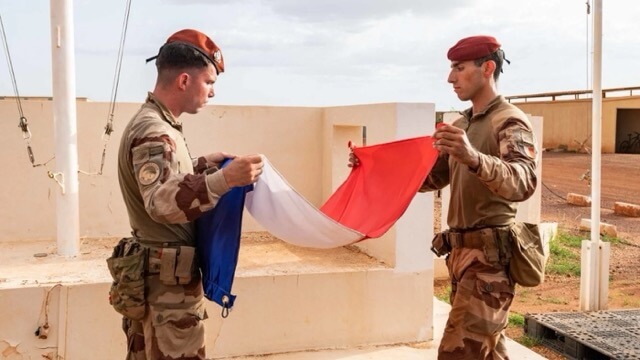
The recent announcement by Chadian President Mahamat Déby concerning the withdrawal of French military forces from Chad signifies the culmination of more than 120 years of French military involvement in the country. This decision represents a broader continental shift towards self-determination and the reconfiguration of Africa’s geopolitical landscape. The departure of French troops from Chad is not merely a military adjustment but a profound symbol of the continent’s evolving stance on foreign influence.
Africa’s history with Western colonial powers has been deeply complex. From the transatlantic slave trade that began in the 16th century to the 19th-century Scramble for Africa, European powers imposed artificial borders, disrupted indigenous governance structures, and extracted immense wealth from the continent. The colonial era left an indelible impact, with its economic and social consequences persisting long after formal independence was achieved by most African nations in the mid-20th century.
Despite decolonisation, foreign influence often through economic dependencies, military agreements, and political intervention remained entrenched. The French military presence in Chad, along with similar arrangements in other former French colonies, has long been a contentious issue. Critics argue that such military outposts represent a form of neo-colonialism, maintaining Western hegemony under the guise of security cooperation. The end of this arrangement in Chad is thus perceived as a move towards genuine sovereignty, aligning with a wider African aspiration to break free from external tutelage.
Africa has, in recent years, experienced an economic and political awakening. Industrialisation is advancing, regional integration efforts are gaining momentum, and many nations are pushing for self-reliance. The African Continental Free Trade Area stands as a testament to this shift, promising to unlock economic potential by fostering intra-African trade and reducing dependency on Western markets. Additionally, countries across the continent are pursuing independent monetary policies and reassessing their reliance on Western financial institutions.
The continent’s growing influence on the global stage is increasingly evident. Africa’s economic trajectory remains promising, with the International Monetary Fund forecasting a 4.2 percent growth rate in Sub-Saharan Africa in 2025, outpacing the global average. The continent’s demographic dividend, with one of the youngest populations in the world, further underscores its economic potential.
Africa’s push for autonomy extends beyond the economic sphere into political and security domains. Recent years have seen heightened demands for apologies and reparations from former colonial powers for historical injustices, including the transatlantic slave trade. Many African nations are asserting their independence in diplomatic engagements, pushing back against external interference and sanctions that are perceived as neocolonial tools of control.
Security, too, is undergoing a transformation. The principle of African solutions to African problems is becoming more central in conflict resolution and peacekeeping efforts. Regional bodies such as the African Union and the Economic Community of West African States are playing a more prominent role in addressing internal disputes and maintaining stability. This shift is particularly crucial in regions where Western military interventions have often exacerbated tensions rather than resolving them.
The declining influence of Western powers in Africa coincides with the continent’s deeper engagement with alternative global alliances. Africa’s growing alignment with the BRICS bloc, which includes major economies like China, Russia, and India, reflects a diversification of its international partnerships. The African Union’s recent inclusion in the G20 further demonstrates Africa’s increasing role in shaping global governance structures. These developments indicate a strategic recalibration, wherein African nations are forging partnerships based on mutual respect rather than historical hierarchies.
While the Western narrative has often painted Africa as a continent mired in instability and dependence, recent trends tell a different story. The outdated perception of Africa as the hopeless continent is being replaced by a more accurate depiction of a dynamic and rapidly evolving region. Africa is no longer a passive recipient of external aid and influence it is actively shaping its future, advocating for fairer global trade terms, and demanding a seat at decision-making tables.
Chad’s decision to end France’s military presence within its borders should be understood in this broader context of African resurgence. It is not an isolated event but part of a larger movement towards reclaiming agency over the continent’s affairs. The shift signals a growing consensus among African nations that sovereignty is not just a political ideal but a tangible objective that must be pursued across economic, diplomatic, and security fronts.
The world is witnessing the emergence of a new Africa one that seeks equal partnerships rather than paternalistic relationships. As the continent continues to assert itself, global actors will need to engage with African nations on the basis of respect and mutual benefit. The departure of French troops from Chad is, therefore, more than a military manoeuvre it is emblematic of a continent that is rewriting its narrative, no longer defined by its colonial past but by the aspirations of its people for a self-determined future.
For further analysis on Africa’s evolving geopolitical landscape, visit The Southern African Times.