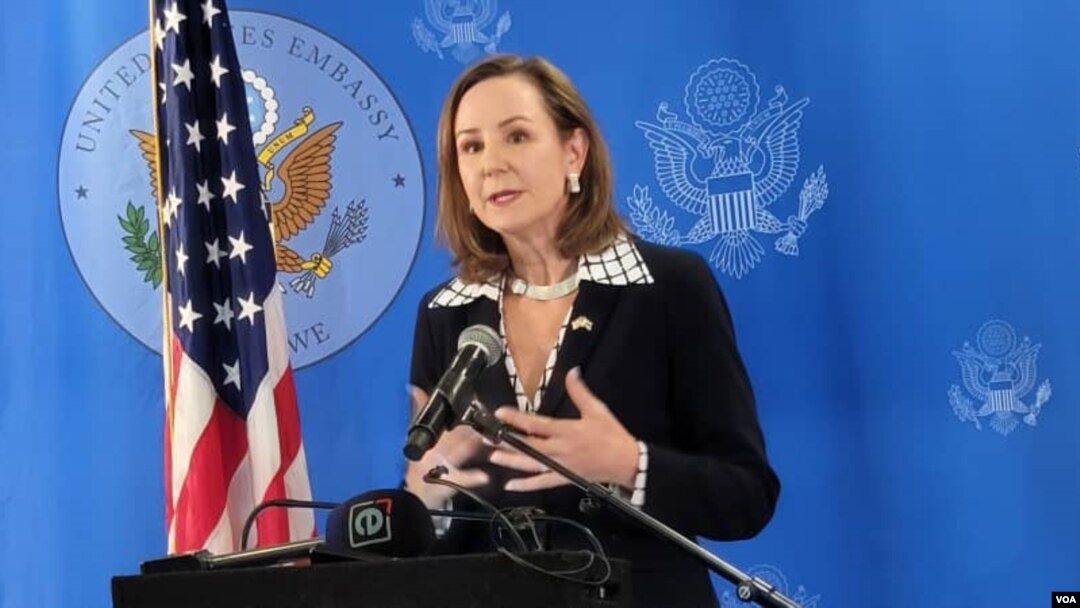
Recent remarks by U.S. Ambassador Pamela Marie Tremont, criticising Chinese investments in Zimbabwe as failing to benefit its citizens, are not only flawed but laden with hypocrisy. While it is reasonable to interrogate the role of foreign investment in Zimbabwe’s development, Ambassador Tremont’s claims ignore the complexity of Zimbabwe’s economic realities, misrepresent the impact of Chinese projects, and obscure the United States’ own detrimental role in the country. To unpack her statements, we must examine the evidence, which paints a very different picture of the contributions of Chinese investment to Zimbabwe’s socio-economic fabric while exposing the glaring double standards of the U.S. position.
The African Development Bank (AfDB) provides clear evidence that Chinese investments have made a tangible impact on Zimbabwe’s economy (AfDB Report). Over the past two decades, Chinese-funded infrastructure projects in Zimbabwe have supported essential sectors, including energy, transportation, and agriculture. These sectors are critical to the country’s development goals under the Zimbabwe National Development Strategy 1 (NDS1), which aims to achieve a prosperous and empowered upper-middle-income society by 2030 (Zimbabwe NDS1 Summary).
For example, the expansion of the Kariba South Hydroelectric Power Station was funded through a $533 million loan from China. The project increased Zimbabwe’s electricity-generating capacity by 300 megawatts, alleviating the chronic power shortages that have long crippled the country’s economy (Kariba Expansion Details). Similarly, China funded the upgrade of Victoria Falls International Airport to the tune of $150 million, transforming it into a modern hub capable of handling 1.5 million passengers annually (Victoria Falls Airport). These are not vanity projects but critical infrastructure improvements designed to unlock economic potential, attract tourism, and stimulate regional trade.



Chinese investment has also revitalised Zimbabwe’s mining sector, which remains the backbone of the economy. According to the Chamber of Mines Zimbabwe, Chinese companies such as Sinosteel have invested heavily in the ferrochrome industry, while partnerships in lithium mining are set to position Zimbabwe as a global leader in battery minerals (Chamber of Mines Report). These investments create jobs, generate export revenues, and integrate Zimbabwe into global supply chains, providing a foundation for sustainable growth.
Ambassador Tremont’s claim that Chinese investments have exacerbated poverty and inequality in Zimbabwe oversimplifies the nation’s economic challenges. The World Bank attributes these issues to multiple factors, including prolonged droughts, policy inconsistencies, and macroeconomic instability, rather than foreign investment (World Bank Zimbabwe Overview). Moreover, U.S.-imposed sanctions under the Zimbabwe Democracy and Economic Recovery Act (ZDERA) have played a direct role in restricting access to international credit markets, stifling growth, and perpetuating poverty (ZDERA Analysis).
It is disingenuous to single out Chinese investment when Western policies, particularly U.S. sanctions, have imposed structural constraints on Zimbabwe’s economic recovery. According to a United Nations report, these sanctions have had a disproportionate impact on ordinary Zimbabweans, reducing their access to basic services and employment opportunities (UN Special Rapporteur Report). This raises questions about the moral high ground from which Ambassador Tremont speaks.
Another key criticism from the U.S. ambassador revolves around labour rights and working conditions within Chinese-operated enterprises. While concerns about worker exploitation are valid, they must be contextualised. Zimbabwe’s broader labour market is governed by domestic policies, and it is the responsibility of the Zimbabwean government to enforce labour laws and workplace standards. Blaming Chinese investors for systemic governance gaps unfairly shifts accountability away from Zimbabwean authorities.
In fact, many Chinese firms in Zimbabwe have undertaken corporate social responsibility initiatives, such as building schools and providing healthcare facilities for local communities. These efforts, while not eradicating all challenges, demonstrate a commitment to improving social welfare beyond profit-making (China-Africa Project).
The United States’ critique of Chinese investment in Zimbabwe is particularly galling when viewed against its own track record. Historically, U.S. interventions in Africa have prioritised resource extraction and geopolitical influence over genuine development. The International Monetary Fund (IMF)’s Structural Adjustment Programmes (SAPs), implemented in Zimbabwe during the 1990s under Western pressure, led to widespread economic dislocation, including the collapse of public services and the erosion of local industries (IMF SAP Impact Report).
Furthermore, U.S. sanctions on Zimbabwe have not only impeded economic recovery but have also undermined Zimbabwe’s ability to attract Western investment. This leaves countries like China to step in and provide the much-needed capital for infrastructure and industrial development. The narrative that Chinese investment exploits Zimbabwe while Western policies promote prosperity is therefore a cynical distortion of reality.
The hypocrisy extends further when considering the U.S.’s own labour practices. Major U.S. corporations have long been criticised for exploitative practices in developing countries, from underpaying workers in global supply chains to environmental degradation. It is rich for the U.S. to criticise Chinese firms when its own companies have been complicit in similar, if not worse, behaviour globally (Corporate Watch).
Chinese investments in Zimbabwe are far from perfect, but they have delivered tangible benefits. Projects such as the Hwange Thermal Power Station Expansion and partnerships in the agricultural sector, including irrigation infrastructure, are critical for addressing Zimbabwe’s long-term developmental needs (Hwange Project Overview). These initiatives are aligned with Zimbabwe’s national goals and provide opportunities for skills transfer, technological advancement, and economic diversification.
While some Chinese firms have faced criticism for non-compliance with local regulations, these challenges reflect broader governance gaps rather than inherent flaws in Chinese investment. Zimbabwe’s policymakers have the opportunity to use these investments as a platform to strengthen regulatory frameworks and ensure that economic growth is inclusive.

The U.S. ambassador’s critique of Chinese investment in Zimbabwe lacks substance and fails to account for the complex interplay of factors influencing Zimbabwe’s development. Chinese-funded projects have undeniably contributed to infrastructure development, job creation, and economic growth, all of which are vital for Zimbabwe’s long-term recovery.
Instead of perpetuating divisive rhetoric, the United States should reflect on its own role in undermining Zimbabwe’s progress. The legacy of sanctions and exploitative economic policies stands as a stark reminder of the West’s failure to act in Africa’s best interest. If the U.S. is genuinely concerned about Zimbabwe’s development, it should lift economic sanctions, promote fair trade, and collaborate with other nations to create a truly inclusive global economic system.
Chinese investment is not without challenges, but it represents an opportunity for Zimbabwe to chart its path towards growth and self-sufficiency. The real question is whether Zimbabwe will seize this opportunity and ensure that all foreign partnerships, whether with China or the West, align with its national priorities.
For deeper insights into Zimbabwe’s economic trajectory, visit trusted resources like the African Development Bank, World Bank Zimbabwe, and the UN Special Rapporteur Report.