Namibia has entered a transformative partnership with the European Union (EU), aiming to position itself as a global leader in the green hydrogen sector. The alliance holds the potential to attract approximately N$400 billion (around $21 billion) in European private investments, which could substantially double Namibia’s GDP and stimulate widespread economic growth.
During a recent announcement, EU Ambassador to Namibia Ana Beatriz Martins revealed that several projects within the green hydrogen sector, primarily driven by European entities, are advancing toward final investment decisions expected by 2025. These initiatives underscore Namibia’s strategic push toward renewable energy and sustainable industrialisation. The ambassador highlighted the dual benefits of the partnership: a significant contribution to global decarbonisation efforts, particularly in carbon-intensive industries like steel production and shipping, alongside fostering local economic opportunities. Central to this vision is Namibia’s commitment to creating jobs, empowering youth, and enabling equitable growth.
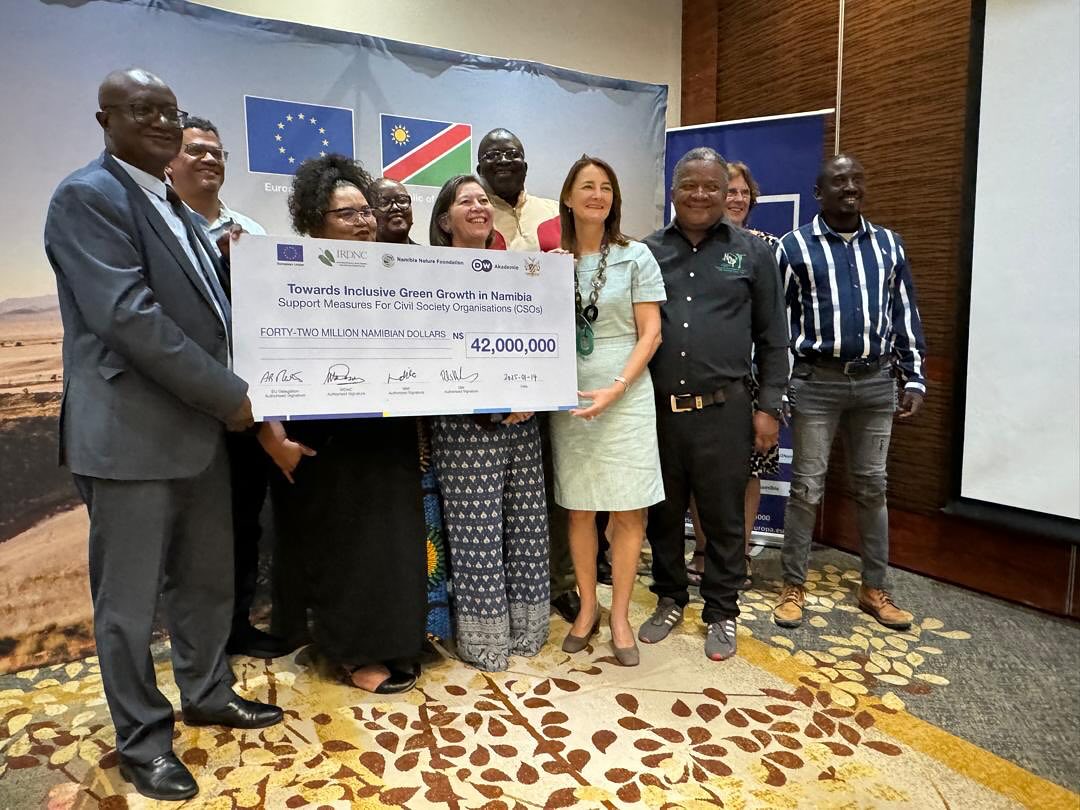
As part of the partnership, the EU has signed a N$42 million ($2.2 million) grant agreement with local organisations, including the Integrated Rural Development and Nature Foundation, Namibia Development Trust, and Deutsche Welle Academy. This grant aims to strengthen the capacity of civil society organisations (CSOs) to engage meaningfully in Namibia’s policy landscape, particularly in the green energy and extractive industries. The focus of this initiative is to ensure that economic and social progress is inclusive and sustainable. Efforts will prioritise empowering marginalised groups, including women and youth, and will foster local participation in shaping the country’s renewable energy future.




Namibia’s Green Industrialisation Blueprint, unveiled in 2024, estimates a total investment requirement of over $55 billion to establish the green hydrogen and manufacturing industries. This sum includes $40 billion earmarked for kickstarting the green energy sector and $15 billion for infrastructural advancements such as regional connectivity and port developments. Notably, the Namibian government, alongside the GH2 Namibia programme, has pledged $15 billion to support infrastructure development. This foundational investment is seen as critical for integrating Namibia into global renewable energy markets and ensuring its competitiveness in the burgeoning green hydrogen economy.
In a significant boost to Namibia’s ambitions, four Team Europe initiatives were launched in November 2024 during the Global African Hydrogen Summit in Windhoek. These initiatives reflect a collective commitment by the EU and its member states, providing financial and technical support to Namibia’s green energy agenda. Key announcements included a $25 million grant from the EU to advance Namibia’s Green Industrialisation Agenda, technical assistance worth $2.7 million for energy planning and renewable energy integration, a $9 million contribution from the Netherlands, Germany, and the EU to facilitate the Namibian Green Hydrogen Programme (NGHP), and a $442,000 agreement between Germany’s Ministry for Economic Affairs and Climate Action and Namibia’s Ministry of Industrialisation and Trade to develop quality infrastructure for green hydrogen, focusing on safety, regulatory frameworks, and standardisation.
Strategically situated to become a global green hydrogen hub, Namibia is leveraging its abundant renewable energy resources and advantageous geographic location. Green hydrogen, alongside power-to-X technologies, forms the cornerstone of the country’s long-term strategy to attract foreign investment, enhance energy security, and support a just energy transition. Reports, such as the 2023 study on localising green industries in Namibia, have highlighted the country’s potential to anchor its industrialisation agenda in renewable energy, reinforcing its position in global decarbonisation initiatives.
Namibia’s collaboration with the EU represents a major step in its journey toward green industrialisation. The alignment of international support, technical expertise, and local ambitions offers a roadmap for achieving significant economic and environmental milestones. As the nation continues to attract investment and foster innovation, its green hydrogen sector is poised to make a lasting impact on both regional and global scales.