As the United Kingdom accelerates its commitment to green hydrogen as a cornerstone of its industrial strategy, a growing chorus of voices warns of far-reaching consequences for southern Africa. At the heart of this emerging economy lies a glaring contradiction: while the technology is trumpeted as a solution to climate change, its production relies on extractive processes that could deepen energy poverty, water scarcity, and community displacement in resource-rich regions such as South Africa and Zimbabwe.
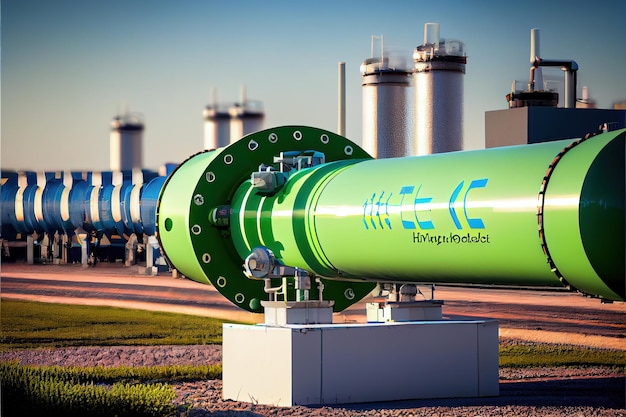
Green hydrogen, produced by splitting water into hydrogen and oxygen using renewable electricity, is heralded as a clean energy panacea. The British Labour Government has doubled the nation’s production target to 10GW by 2030, pledging £2 billion towards the hydrogen economy in its most recent Autumn Budget. However, the process’s colossal demand for energy, water, and critical minerals—particularly platinum—has provoked scepticism among affected communities and industry observers alike.
Platinum, essential for electrolyser production, sits at the crux of this debate. South Africa accounts for an overwhelming 72% of the world’s platinum supply, with Anglo American—a British multinational mining corporation born of colonial roots—dominating extraction operations in the region. From the Mogalakwena mine in Limpopo to its holdings in Zimbabwe, Anglo American’s presence underscores the UK’s heavy dependence on southern Africa to power its ambitious hydrogen vision.



While governments in London and Pretoria envisage prosperity, communities in platinum-rich regions paint a starkly different picture. Reports released by Corporate Europe Observatory and Mining Affected Communities United in Action (MACUA) highlight concerns surrounding land dispossession, water diversion, and environmental degradation tied to platinum mining and the green hydrogen push. Around Mogalakwena, where Anglo American plans to establish a hydrogen production facility, residents fear worsening access to clean water and heightened energy insecurity.
South Africa’s plans to export green hydrogen to Europe would require staggering quantities of resources. According to projections, annual water usage for the industry could reach 34 billion litres—equivalent to 13,680 Olympic-sized swimming pools. In a country grappling with chronic drought and water scarcity, this diversion risks exacerbating hardships for local communities reliant on the same sources for drinking, farming, and daily life.
The energy requirements are equally formidable. Critics argue that renewable electricity—critical for domestic decarbonisation efforts—could instead be funnelled into hydrogen production for export markets. This mirrors a concern raised in Scotland, where Friends of the Earth Scotland observed that satisfying hydrogen-related demands would require 180% more renewable energy than the nation currently produces. In both contexts, the promise of a sustainable future risks coming at the expense of vulnerable populations.

Further complicating matters is the growing prominence of “blue hydrogen,” produced using fossil fuels coupled with carbon capture technologies. Despite being branded as “low-carbon,” blue hydrogen has drawn scrutiny for its continued reliance on gas infrastructure. In the UK, a staggering 84% of government-backed “low-carbon” hydrogen projects fall under this category, raising questions about the true environmental benefits of the broader hydrogen strategy.
As pressure mounts for the UK and Europe to scale up their green hydrogen economies, the extractive costs borne by southern Africa demand urgent reflection. Reports such as “Hyped Hydrogen. Hidden Harm,” published by SOMO and ActionAid Netherlands, amplify the voices of communities disproportionately impacted by mining operations and hydrogen projects. They argue that this scramble for resources perpetuates an age-old dynamic of exploitation, where local realities are sidelined in favour of foreign industrial priorities.

What emerges is a picture of profound inequity: one in which southern Africa’s natural wealth fuels decarbonisation ambitions abroad while leaving behind a legacy of dispossession and scarcity. Communities on the frontlines of platinum extraction and hydrogen production are sounding the alarm, urging governments and corporations to reconcile the lofty ideals of sustainability with the on-the-ground realities of those most affected.
As the UK races to meet its hydrogen targets, the true costs of this green transition cannot be ignored. For southern Africa’s mining communities, the future of hydrogen remains uncertain—a development promising innovation, but too often mired in historical patterns of inequality.