
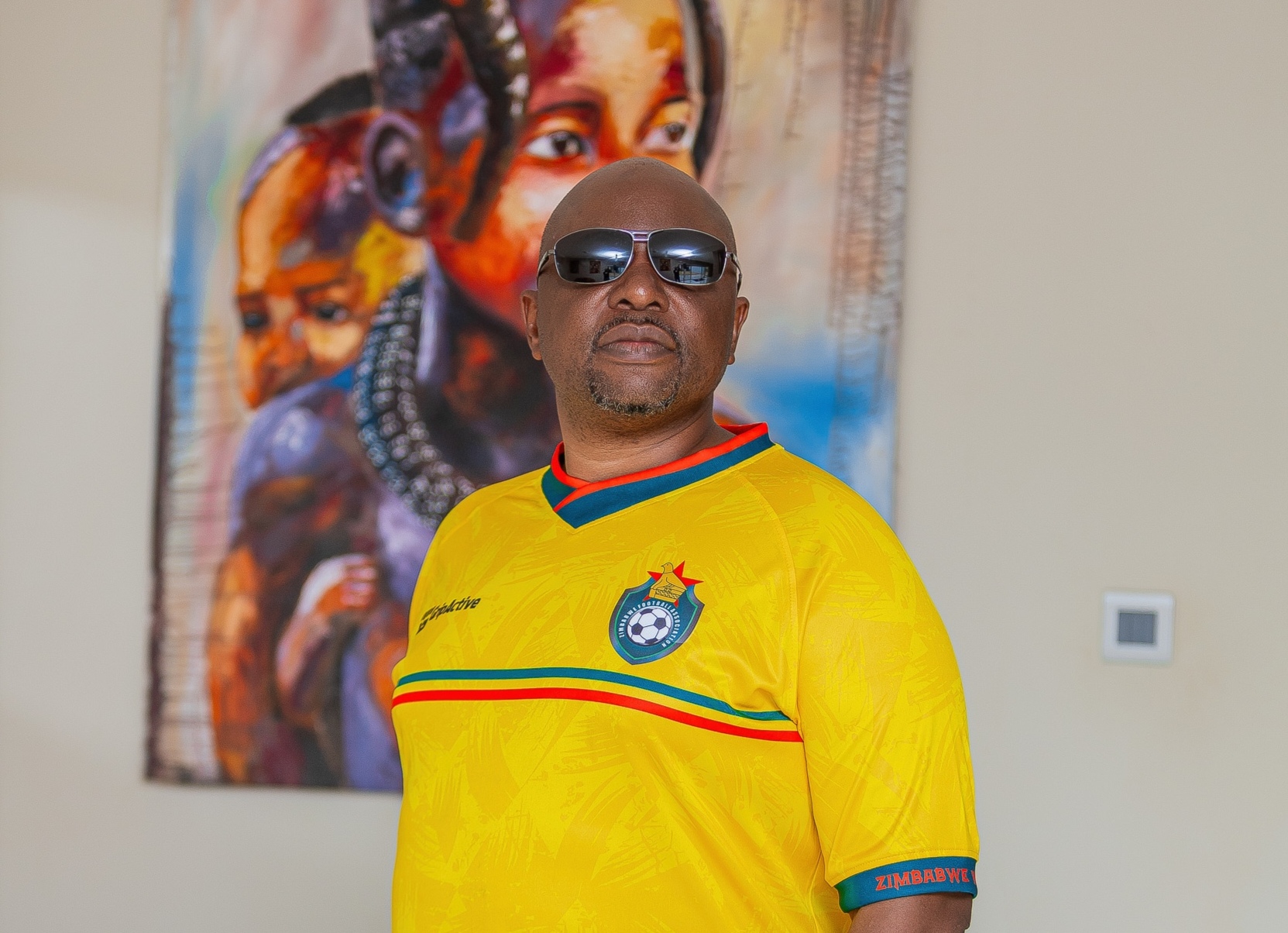
As the race for the presidency of Zimbabwe Football (ZIFA) intensifies, a prominent name steadily rising in the ranks is Marshall Gore. A figure with deep roots in the sport, Gore is not merely seeking office for the sake of titles, but rather, he is driven by an unwavering commitment to overhaul the country’s footballing landscape. Drawing from over 30 years of dedicated involvement in football, Gore offers a vision that seeks to revive Zimbabwean football to its rightful stature, blending experience with ambition and revitalising the sport from its very core.
Gore’s journey has been anything but conventional. A former semi-professional player, his transition into leadership roles within the sport speaks volumes about his versatility and determination. As the former CEO of Team Zimbabwe UK, Gore demonstrated a rare combination of vision and pragmatism—qualities that have helped foster connections between Zimbabwe’s football community and its diaspora. His ability to navigate multiple spheres, from football to healthcare and business, marks him as a multidimensional leader, capable of pushing forward meaningful change across a variety of sectors. As he surveys the current state of football in Zimbabwe, it is evident that his understanding of both local dynamics and global opportunities is what sets him apart from other contenders.




At the heart of Gore’s campaign is his belief in grassroots development as the cornerstone of a thriving footballing ecosystem. Zimbabwean football has long been hobbled by underinvestment at the most basic level, where emerging talent remains largely untapped. Gore is resolute in his stance that investment in youth and community football is not merely a necessity but an urgent priority. His proposal for a dedicated football development fund—a collaborative effort between the government, FIFA, and the private sector—offers a groundbreaking model that could bring sustainable growth to the sport. The idea is both innovative and simple: incentivising the private sector to channel resources into grassroots programs through tax breaks, ensuring that talent development becomes an attractive business prospect. With this initiative, Gore seeks to create an ecosystem where young talent is given the tools to excel, and where the foundation for Zimbabwe’s future footballing success is firmly established.

Yet, the issue of grassroots football is merely one thread in the complex fabric of Zimbabwean football. The country’s administration has long been plagued by inefficiency and a lack of transparency. Gore’s candidacy promises a sweeping reform of the governance structure at ZIFA, emphasising transparency, inclusivity, and long-term sustainability. This shift is essential, he argues, not only to restore public trust in the sport but to make Zimbabwe a more attractive partner for global football organisations and investors. In particular, Gore envisions a governance model that is democratic and transparent, giving all stakeholders—be they fans, players, or sponsors—a real voice in how the game is run. This overhaul is not about cosmetic change; rather, it is a blueprint for rebuilding a sport that has suffered from years of poor management and a lack of accountability.
In parallel to governance reforms, Gore is acutely aware of the dilapidated state of Zimbabwe’s football infrastructure. Acknowledging that the physical environment is as important as the administrative one, he has outlined a detailed plan for the rehabilitation of existing stadiums and training facilities. The urgency of this need is reflected in the disrepair of many of Zimbabwe’s football arenas, which are ill-equipped to host top-tier competitions. Gore’s strategy focuses on “quick wins” in the short term—refurbishing facilities that can be immediately improved—while also laying the groundwork for the construction of world-class stadiums and training grounds in the long term. This dual approach, aimed at immediate relief and long-term sustainability, reflects his comprehensive understanding of the sport’s infrastructural needs.
Perhaps the most ambitious aspect of Gore’s plan is his vision for the professionalisation of the Zimbabwean football league. He argues that without a fully professional league, the country’s footballing ecosystem will always remain in a state of stagnation. The goal, according to Gore, is to create a football league that is competitive on the continental stage and capable of attracting both sponsorship and international media attention. By professionalising the league, Gore hopes to establish a framework where clubs are financially stable, players are well-compensated, and competition is fierce. For him, professionalisation is not just about improving the spectacle of the game but also about turning football into a sustainable business—an engine for national pride and international recognition.

Women’s football, an area often sidelined in many African nations, is another critical focus of Gore’s campaign. He argues that Zimbabwe is severely lagging behind in the development of women’s football, which remains underfunded and underexposed. Gore is determined to address this imbalance by developing a dedicated strategy to grow women’s football from the grassroots level upwards. His vision is one where female players are afforded the same resources and opportunities as their male counterparts. More than just a matter of equality, Gore views this as an opportunity to use football as a platform for broader social change, creating an environment where women can thrive both on and off the pitch.
Marshall Gore’s candidacy offers a refreshing and comprehensive roadmap for the future of Zimbabwean football. His long-term vision includes the professionalisation of the league, the rehabilitation of infrastructure, the revitalisation of grassroots football, and the empowerment of women’s football—all underpinned by a new governance structure rooted in transparency and accountability. In an era when Zimbabwe’s football has been beset by scandal, mismanagement, and stagnation, Gore’s plan offers a rare and much-needed opportunity for reinvention. His vision is not just to elevate the standard of Zimbabwean football but to create a footballing ecosystem that can withstand the test of time.
As the election draws nearer, Gore’s campaign is gaining traction, buoyed by his unwavering commitment to the future of Zimbabwean football. His message resonates with a wide array of stakeholders—players, coaches, fans, and sponsors—each of whom see in him a leader capable of bringing about real change. For Gore, football is not just a game; it is a vehicle for national unity, social development, and pride. As the race for the presidency of ZIFA intensifies, it is clear that Marshall Gore offers more than just a vision—he offers a genuine opportunity for Zimbabwean football to reclaim its former glory.