Bulawayo, Zimbabwe’s second-largest city, has successfully raised over US$21 million towards the construction of the Glassblock Bopoma Dam, a crucial infrastructure project designed to alleviate the city’s ongoing water shortages while also promoting rural industrialisation through irrigation. The total cost of the dam project is estimated at US$100 million, with the remaining funds still to be secured. This progress was announced during the 2024 Africa Investment Forum (AIF) Market Days in Rabat, Morocco, where various investment institutions and development banks gathered to discuss key regional initiatives.
Genesis Global Finance (Pty) Limited, the project’s financial advisor, presented a request for funding to the AfDB-led transaction platform. The proposal includes US$54 million in debt financing, US$4.8 million in equity, and US$10 million in grant funding. Together with the locally raised US$21 million, these contributions aim to close the gap in financing the dam’s construction.
The project has garnered support from prominent institutions, including the African Export–Import Bank, Africa50, Africa Finance Corporation, the Development Bank of Southern Africa, the European Investment Bank, the Islamic Development Bank, and the Trade and Development Bank. These institutions’ involvement highlights the importance of the Glassblock Bopoma Dam in solving Bulawayo’s water crisis and fostering economic growth in surrounding rural areas.



The Zimbabwean government has awarded the construction contract to J R Goddard Contracting, with the concession agreement scheduled for signing in January 2025 and financial closure expected by March 2025. The dam’s construction is expected to begin shortly thereafter, with completion targeted for May 2027.
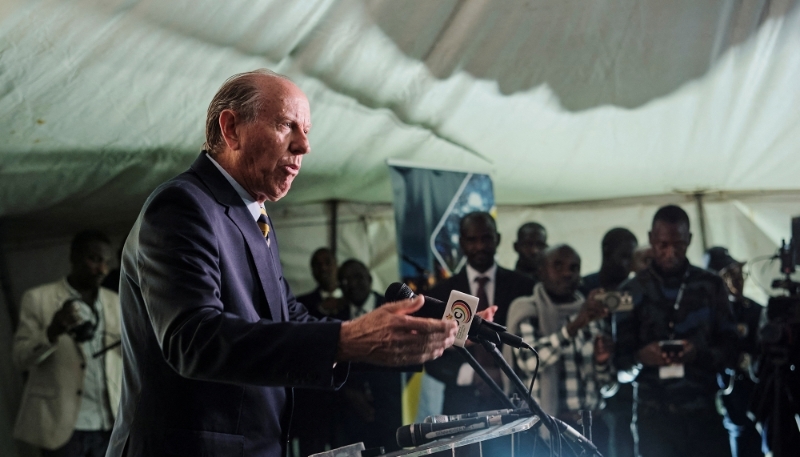
Felix Kumirai, Managing Director of Genesis, outlined the extensive benefits of the project, which will not only address water and sanitation issues but also provide irrigation for over 1,800 hectares of land. This development promises to transform local agriculture, while the 6.4-megawatt solar power component will supply energy to nearby small towns. Opportunities in fisheries, tourism, and biodiversity, including bio-credit investments, are also anticipated.

Strategically located at the intersection of Gwanda, Umzingwane, and Insiza districts, the Glassblock Bopoma Dam will have a storage capacity of 130 million cubic metres. This capacity is expected to provide a reliable water source for Bulawayo, especially after the decommissioning of the Umzingwane and Upper Ncema dams. The city faces mounting pressure, with the Lower Ncema Dam also at risk of decommissioning if substantial rainfall does not materialise.
The Glassblock Bopoma Dam will offer a sustainable solution to Bulawayo’s water challenges while advancing rural industrialisation and creating new opportunities for economic development in the region. This initiative represents a critical step toward addressing the continent’s infrastructure needs, especially in water management.