Thursday, April 30, 2026
  • Login
The Southern African Times
  • Home
  • Southern Africa
  • Business
    • African Start ups
    • African Continental Free Trade Area
  • Technology
    • Lifestyle
      • Health
      • Culture
      • Food and Drink
      • Entertainment
  • Opinion
  • Sports
  • SAT Jobs
    • Events
  • About Us
    • Advertise with Us
    • Contact Us
No Result
View All Result
  • Home
  • Southern Africa
  • Business
    • African Start ups
    • African Continental Free Trade Area
  • Technology
    • Lifestyle
      • Health
      • Culture
      • Food and Drink
      • Entertainment
  • Opinion
  • Sports
  • SAT Jobs
    • Events
  • About Us
    • Advertise with Us
    • Contact Us
No Result
View All Result
The Southern African Times
No Result
View All Result
Home International Relations

US Defies UN Vote on Cuban Embargo

by SAT Reporter
November 1, 2024
in International Relations
0
US Defies UN Vote on Cuban Embargo

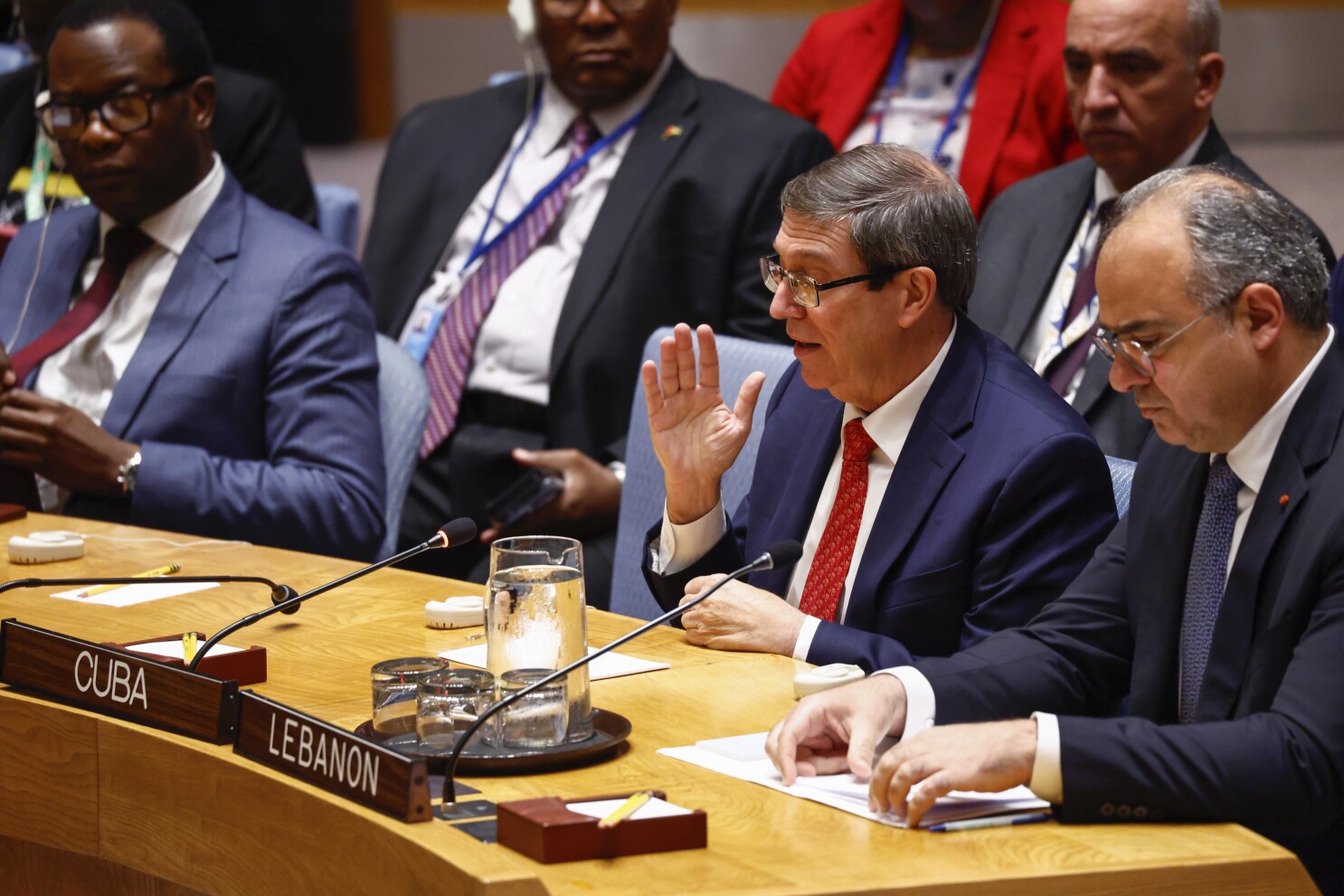
Bruno Eduardo Rodriguez Parrilla, Cuba's foreign minister speaks during a United Nations Security Council meeting on the situation in the Middle East, including the Palestinian question at U.N. headquarters, Tuesday, Oct. 29, 2024. (AP Photo/Kena Betacur)

In a testament to the enduring disparities of the global political order, the United States’ economic blockade of Cuba remains firmly entrenched despite yet another overwhelming international vote to end it. On 30 October, at the United Nations General Assembly, 187 countries voted in favour of a non-binding resolution calling for the blockade’s cessation. Only the United States and Israel opposed the measure, with Moldova abstaining—a familiar configuration for those who have observed this perennial spectacle, now into its fourth decade.

The embargo, which has gripped Cuba since 1960, was intended as a punitive measure in response to the Cuban Revolution and the establishment of a socialist government under Fidel Castro. Over six decades later, it endures as a vestige of Cold War antagonism, with successive American administrations choosing to maintain this anachronistic policy despite shifting geopolitical realities and persistent pleas from the global community. Since 1992, nearly every nation has supported an end to the blockade, recognising the futility of isolating Cuba and the severe human costs inflicted on its population.


ADVERTISEMENT

Economically, the toll has been catastrophic. A 2018 report from the UN’s Economic Commission for Latin America and the Caribbean estimated that the embargo had drained $130 billion from the island’s economy over the previous sixty years, with pervasive shortages of essential goods, medicines, and technological resources that are now indispensable to modern society. These shortfalls are felt even more acutely as the Caribbean nation grapples with the aftermath of Hurricane Oscar. The storm made landfall in eastern Cuba on 20 October, severely damaging critical infrastructure and leaving over half a million citizens in urgent need of relief. With an economy already straitened by the embargo, Cuba’s capacity to respond effectively to such natural disasters is severely compromised, its government hamstrung in its ability to alleviate widespread suffering.

Indeed, the embargo’s impact is not confined to the present moment. It is a cyclical impediment that resurfaces with each crisis, from hurricanes to public health emergencies, revealing the profound limitations it imposes on Cuba’s economic resilience and developmental progress. While humanitarian exceptions ostensibly exist, the bureaucratic restrictions and complex licensing requirements that accompany them often render assistance prohibitively difficult to deliver. Consequently, the embargo is not merely an economic weapon but a tool that actively curtails the island’s autonomy, placing its people in a perpetual state of precarity.

The United States, however, remains unwavering, often invoking the language of human rights and democracy to justify its stance. Yet, critics argue that this is an increasingly hollow justification, given the evident disconnect between these ideals and the collective will of the international community, which has consistently endorsed a policy of engagement over isolation. The American insistence on maintaining the embargo, despite a near-universal condemnation, is emblematic of a broader malaise within global governance structures: the persistence of unilateralism in a multipolar world increasingly defined by the interdependence of nations.

As Cuba once again confronts the dual burden of natural disaster and geopolitical hardship, the call for an end to the embargo grows ever more urgent. History will judge the longevity of this policy as an artefact of an era long past, sustained more by inertia and entrenched interests than by any tangible benefit to the cause of international peace or stability.


Tags: Cuban embargoeconomic sanctionsglobal political orderhumanitarian crisisHurricane Oscarinternational diplomacyIsraelUN General AssemblyUS foreign policyUS-Cuba relations
Previous Post

Botswana’s Ruling Party Ousted After 58 Years as UDC Secures Majority

Next Post

From Alexandra’s Streets to the World Stage: Marcus Harvey’s Rise

SAT Reporter

Related Posts

UN and AU Urge Faster Implementation of SDGs Across Africa
Diplomacy

UN and AU Urge Faster Implementation of SDGs Across Africa

by SAT Reporter
April 29, 2026
Zimbabwe warns nationals in South Africa after reports of anti-foreigner unrest
Diplomacy

Zimbabwe warns nationals in South Africa after reports of anti-foreigner unrest

by SAT Reporter
April 29, 2026
Russia and Rwanda Deepen Cooperation on Nuclear Energy and Trade
Diplomacy

Russia and Rwanda Deepen Cooperation on Nuclear Energy and Trade

by SAT Reporter
April 21, 2026
LONG READ | Macky Sall’s UN bid tests AU procedure more than African unity
International Relations

LONG READ | Macky Sall’s UN bid tests AU procedure more than African unity

by SAT Reporter
April 10, 2026
Madagascar Balances Russia and France Ties During Transition
International Relations

Madagascar Balances Russia and France Ties During Transition

by SAT Reporter
April 10, 2026
Next Post
From Alexandra’s Streets to the World Stage: Marcus Harvey’s Rise

From Alexandra’s Streets to the World Stage: Marcus Harvey’s Rise

Browse by Category

  • Africa AI
  • African Continental Free Trade Area
  • African Debt
  • African Start ups
  • Agriculture
  • AI Africa
  • Algeria
  • All News
  • Analysis
  • Angola
  • Arts / Culture
  • Asia
  • Botswana
  • BOTSWANA
  • BREAKING NEWS
  • BRICS
  • Burkina Faso
  • Burundi
  • Business
  • Business
  • Business Wire
  • Cameroon
  • Central Africa
  • Chad
  • China
  • Climate Change
  • Climate Changev
  • Community
  • Congo Republic
  • Conservation
  • Côte d’Ivoire
  • COVID 19
  • CRYPTOCURRENCY
  • Culture
  • Democratic Republic of Congo
  • Diplomacy
  • Eastern Africa
  • Economic Development
  • Economy
  • Education
  • Egypt
  • Elections 2024
  • Energy
  • Entertainment
  • Environment
  • Eritrea
  • Ethiopia
  • Europe
  • Fashion
  • Feature
  • Finance
  • Financial Inclusion
  • Food
  • Food and Drink
  • Foods
  • GABON
  • Ghana
  • Global
  • Global Africa
  • Guinea
  • Health
  • Immigration
  • in Southern Africa
  • International news
  • International Relations
  • Investment
  • Ivory Coast
  • Just In
  • Kenya
  • Lesotho
  • Libya
  • Life Style
  • Lifestyle
  • Literature
  • Malawi
  • Malawi
  • Mali
  • Markets
  • Mauritius
  • Middle East
  • Mining in Africa
  • Morocco
  • Mozambique
  • Namibia
  • Niger
  • niger
  • Nigeria
  • North Africa
  • North-Eastern Africa
  • Obituaries
  • Obituary
  • Opinion
  • PARTNER CONTENT
  • Politics
  • Property
  • Racism
  • Rwanda
  • Rwanda
  • SADC
  • SAT Interviews
  • SAT Investigation
  • SAT Jobs
  • Saudi Arabia
  • Senegal
  • Seychelles
  • Somaliland
  • South Africa
  • South Sudan
  • Sports
  • Startup Africa
  • STOCK EXCHANGE
  • Sudan
  • Sustainability
  • Sustainablity
  • Tanzania
  • Technology
  • Telecommunications
  • The Editorial Board
  • The Power Of She
  • Togo
  • Trade
  • Travel
  • Travel
  • Tunisia
  • Uganda
  • Uncategorized
  • Wealth
  • West Africa
  • World
  • World
  • Zambia
  • ZAMBIA
  • ZIMBABWE
  • Zimbabwe

Browse by Tags

#NewsUpdate #SouthAfrica #SouthernAfricanTimes #TheSouthernAfricanTimes AfCFTA africa African Continental Free Trade Area African development African Development Bank African economies African economy African Union Agriculture Angola Botswana Business China Climate change Cyril Ramaphosa Economic Development economic growth energy transition fiscal policy industrialisation Inflation Infrastructure Infrastructure Development International relations Investment Kenya Mozambique Namibia news Nigeria Regional Integration renewable energy Rwanda SADC South Africa Southern Africa sustainable development Tanzania United States Zambia Zimbabwe
ADVERTISEMENT

WHO WE ARE

The Southern African Times is a regional bloc digital newspaper that covers Southern African and world news. The paper also gives a nuanced analysis on news and covers a wide range of reporting which include sports, entertainment, foreign affairs, arts and culture.

Welcome Back!

Login to your account below

Forgotten Password?

Retrieve your password

Please enter your username or email address to reset your password.

Log In

  • Home
  • Southern Africa
  • Business
    • African Start ups
    • African Continental Free Trade Area
  • Technology
    • Lifestyle
      • Health
      • Culture
      • Food and Drink
      • Entertainment
  • Opinion
  • Sports
  • SAT Jobs
    • Events
  • About Us
    • Advertise with Us
    • Contact Us
Are you sure want to unlock this post?
Unlock left : 0
Are you sure want to cancel subscription?