South Africa has signalled a renewed strategy in its approach to climate commitments, submitting a proposal to the World Bank’s Climate Investment Funds (CIF) that, if accepted, could unlock up to $2.6 billion in climate finance. The proposal comes as the country grapples with balancing emission-reduction targets against acute energy security concerns—a dilemma that has prompted South Africa’s government to delay the decommissioning of several coal-fired power plants despite an earlier commitment to begin closures as soon as 2024.
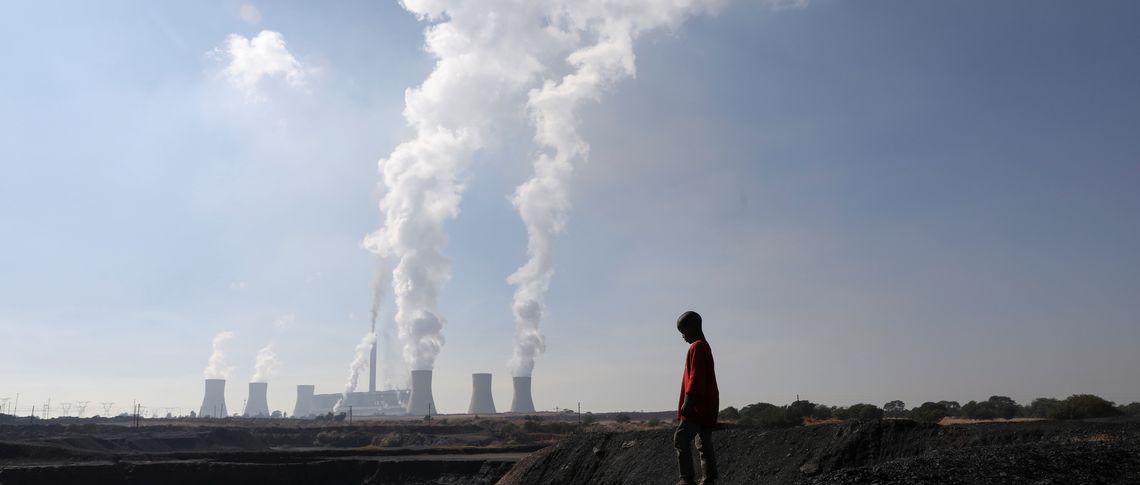
In a bid to fund its “Just Energy Transition Partnership” (JETP), the South African government seeks $500 million in concessional finance from CIF under the Accelerating Coal Transition Investment Program, with further funding anticipated from development finance institutions and private-sector investors. This financial push is pivotal for a nation that relies on coal for 80% of its electricity, positioning South Africa as the 15th-largest greenhouse gas emitter globally. The proposed emissions mitigation measures will reportedly encompass operational coal plants run by Eskom Holdings SOC Ltd, the state utility responsible for much of the nation’s energy supply.
The delayed closure impacts three primary coal stations—Grootvlei, Hendrina, and Camden—plants originally slated for decommissioning as early as next year. However, these stations will now remain operational until 2030. The deferment, as per Joanne Yawitch, head of the JETP project management unit within the presidency, underscores the South African government’s urgent concern over energy reliability after enduring years of rolling blackouts. Eskom’s beleaguered infrastructure has faced sustained challenges in meeting energy demand, with load shedding and power cuts throttling economic growth over the past decade. Although outages have been largely held at bay since March, officials remain wary of a potential relapse into energy deficits should the coal plants be prematurely retired.




Yawitch confirmed the latest proposal, explaining that emissions reduction plans will be enforced across Eskom’s coal power fleet in parallel with eventual closures. The timing and scope of decommissioning have been recalibrated to allow Eskom to sustain energy output while implementing costly emissions control measures, aimed at moderating the health impact of the power stations. Studies have shown that pollutants emitted from these facilities are among the world’s most intense, linked predominantly to respiratory ailments. Pollutant density at these sites is recorded at rates up to 42 times those found in China, which has its own legacy of intensive coal use.
The $9.3 billion climate finance pact, initially formalised in 2021, involved South Africa and a consortium of high-income countries intent on supporting its energy transition. However, the shift in closure timelines reflects a strategic recalibration; while Eskom remains committed to emissions mitigation, the government appears to prioritise operational continuity to ensure economic stability. This strategy seeks to maintain energy security while reducing reliance on the most polluting facilities. Yawitch also indicated that the CIF’s Clean Technology Fund Trust Fund Committee, which will convene on 30 November to review South Africa’s application, may issue decisions within two to four weeks following this session. However, any potential funding disbursement is likely contingent on committee-specific follow-ups and further clarifications.
South Africa’s ongoing energy policy reflects a pragmatic adaptation to shifting local needs, while balancing the international expectations placed on developing economies within the climate finance framework. Observers note that South Africa’s trajectory could provide an early litmus test for other coal-dependent countries in the Global South navigating similar transitions under the pressure of accelerating climate risks.