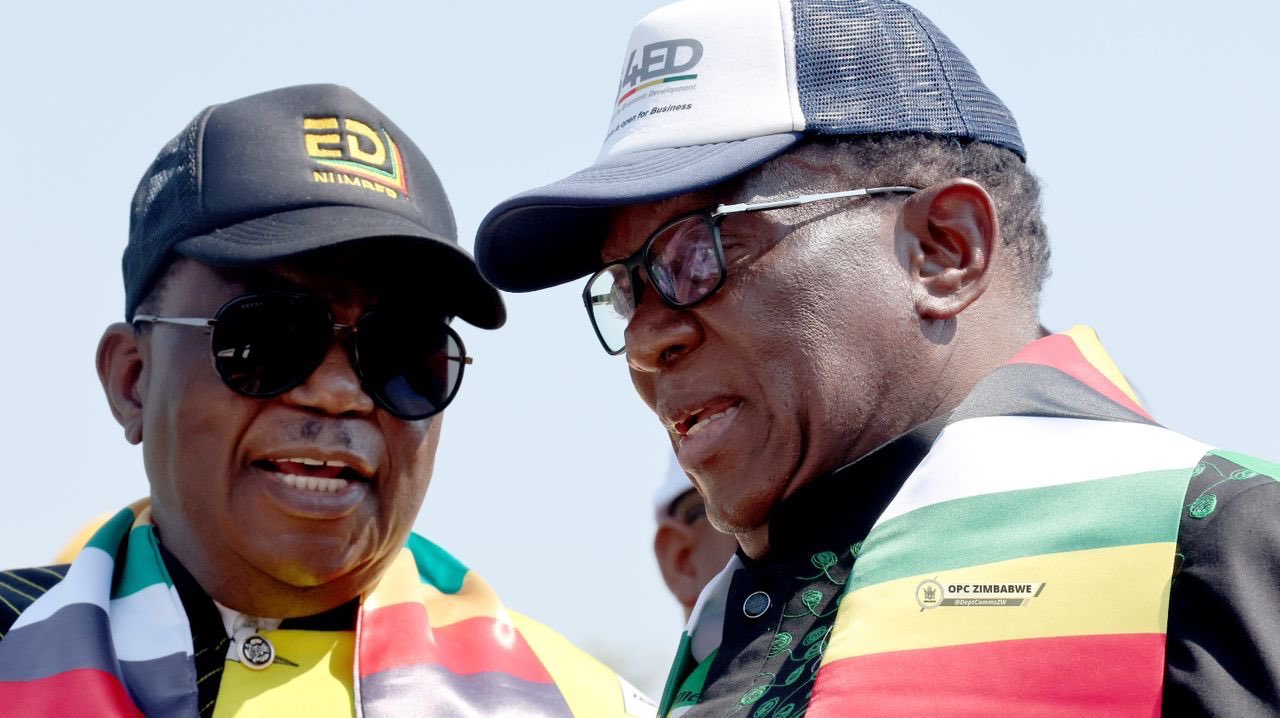
Zimbabwe’s political landscape is set for a significant shift following an announcement from Patrick Chinamasa, head of legal affairs for the ruling Zanu PF party, that President Emmerson Mnangagwa will not seek a third term in office. This announcement, made at the 2024 Zanu PF People’s Conference, signals Mnangagwa’s commitment to respecting the constitutionally mandated two-term limit, providing a potential clear path for leadership succession within the party. This decision could play a central role in shaping Zimbabwe’s governance model, as both domestic and international observers look toward the country’s continued adherence to constitutional order.
Since taking office in 2017 following the resignation of Robert Mugabe, Mnangagwa has voiced his dedication to upholding stability and the rule of law. As one of the contributors to Zimbabwe’s current constitution, Mnangagwa’s decision to adhere to the two-term limit reaffirms his commitment to its principles. Despite discussions within his party about possible amendments to extend his presidency, Mnangagwa has declined these proposals, maintaining his stance over several meetings with Chinamasa that began in August 2024. His position has been consistent: he intends to retire at the end of his second term in 2028, reinforcing his respect for Zimbabwe’s legal framework and constitutional processes.
For Zimbabwe, which experienced 37 years under Mugabe’s leadership, Mnangagwa’s decision sets a crucial precedent, signalling a shift toward democratic continuity and governance. This development is expected to bolster Zimbabwe’s international image, particularly among Western nations that have historically voiced concerns about the nation’s governance and human rights practices. By committing to the two-term limit, Mnangagwa could help foster trust with foreign investors and international bodies, potentially encouraging increased foreign direct investment (FDI) and enhancing global partnerships.



This announcement also suggests an internal shift within Zanu PF toward stability and transparency. Political transitions in Zimbabwe have often been characterized by unpredictability, and Mnangagwa’s decision represents a constructive precedent for future leaders, emphasizing the importance of adhering to Zimbabwe’s constitutional processes. This approach may ease potential leadership disputes within Zanu PF, fostering party unity and a stable path toward succession.
The decision has significant implications for Vice President Constantino Chiwenga, who now appears to be a likely successor. Chiwenga’s influence in Zimbabwe has been notable since his role in “Operation Restore Legacy” in 2017, which culminated in Mugabe’s resignation and facilitated Mnangagwa’s rise to power. Chiwenga’s experience in governance and his position as Vice President make him a prominent figure within Zanu PF and Zimbabwe’s future political landscape, suggesting a potential clear path for leadership succession.
Chiwenga’s transition from his previous military service to a high-ranking civilian role reflects his steady adaptation to Zimbabwe’s governance structures. His current position and expertise have established him as an influential leader, with substantial support among those who see him as a competent choice for Zimbabwe’s next chapter. With his experience in state governance, Chiwenga is anticipated to continue Mnangagwa’s policy directions, prioritising stability within the party and Zimbabwe’s political landscape. This continuity is expected to play a key role in ensuring a smooth and legally compliant transition.
Mnangagwa’s decision to step down attempts to address a central challenge in Zimbabwe’s political history: the potential for power consolidation and reduced accountability. A commitment to constitutional term limits could strengthen Zimbabwe’s governance structures by supporting transparent, rules-based practices across all levels of government. For Zanu PF, Mnangagwa’s decision serves as a sign of respect for established processes and offers a model for future leadership transitions that prioritize Zimbabwe’s legal principles.
From an international perspective, Mnangagwa’s respect for the two-term limit may be seen as a positive step, encouraging diplomatic support and engagement from countries that value political stability and democratic governance. Additionally, it presents Zimbabwe with an opportunity to reinforce its standing as a stable partner within Southern Africa. For organizations like the Southern African Development Community (SADC) and the African Union (AU), Mnangagwa’s example may underscore the importance of peaceful, constitutionally mandated transitions. As term limits continue to gain relevance across Africa, Zimbabwe’s approach could inspire similar commitments from countries where leaders have sought indefinite extensions of their rule. As the country nears 2028, Mnangagwa’s adherence to the constitution could serve as a valuable reference for other African nations seeking to balance political continuity with constitutional compliance.

With Zimbabwe preparing for this significant political transition, Mnangagwa’s decision to retire on schedule provides a solid foundation for the nation’s political environment. This commitment to constitutional integrity highlights Zimbabwe’s dedication to democratic principles and signals Zanu PF’s support for a stable leadership process. For Vice President Chiwenga, the transition presents an opportunity to establish himself as a stabilizing figure, with the experience necessary to guide Zimbabwe through the coming years.
Mnangagwa’s commitment to term limits reinforces public confidence in Zimbabwe’s governance framework, suggesting a pathway toward a more transparent and orderly political environment. Internationally, this decision to honour constitutional guidelines could be viewed favourably, promoting support and diplomatic engagement from countries interested in seeing political stability within Southern Africa. With the 2028 elections on the horizon, Zimbabwe now stands at a pivotal moment, where constitutional compliance and political progression may shape the nation’s stability and growth trajectory for years to come.

Written by Kundai Darlington Vambe is a Legal Consultant, Political Researcher and a Member of the Global Alliance for Justice Education. The article reflects the author’s opinions and not necessarily those of The Southern African Times.1