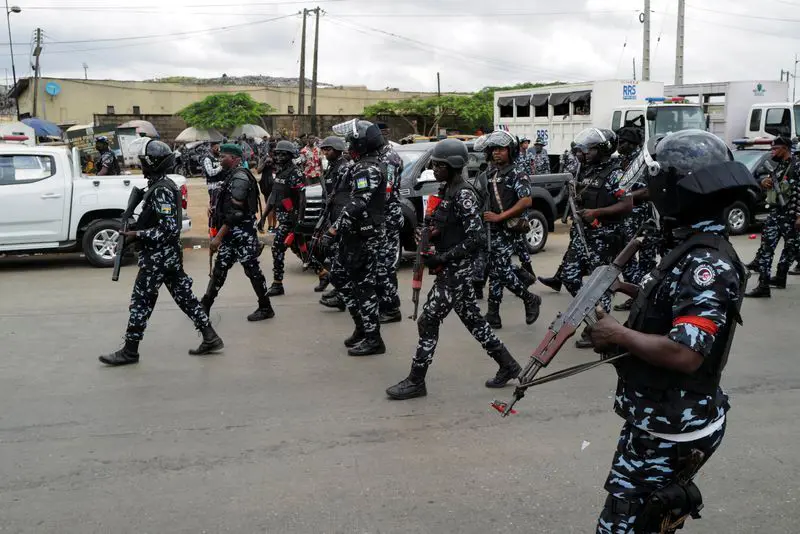
Nearly 100 police officers from the Democratic Republic of Congo (DRC) sought refuge in neighbouring Uganda over the weekend, as clashes between M23 rebels and the Congolese military intensified in the eastern part of the country. According to Major Kiconco Tabaro, a regional spokesperson for the Uganda People’s Defence Forces, the officers crossed into Uganda through the Ishasha border crossing in Kanungu district, located in the southwest of the country.
The officers arrived with 43 firearms and a quantity of ammunition, all of which were subsequently confiscated by Ugandan authorities. Major Tabaro indicated that the officers fled due to escalating violence involving M23 insurgents, other militias, and the Congolese military, compounded by severe food shortages.
In addition to the police officers, the past four days have seen the arrival of at least 2,500 Congolese refugees in Uganda, driven by the worsening violence. The new arrivals include vulnerable groups such as pregnant women, breastfeeding mothers, and young children. Major Tabaro attributed the influx to the deteriorating security situation and growing humanitarian crisis in the DRC.




The M23 rebel group has been mounting a renewed insurgency in the volatile eastern regions of the DRC since 2022. A recent United Nations report has alleged that the Ugandan army has provided support to the Tutsi-led rebels, although Uganda has firmly denied these accusations. The UN has also accused Rwanda of backing the M23, a claim which Rwanda has consistently refuted.
Despite intensified military efforts by the Congolese government, including the deployment of drones and aircraft, the M23 has continued to extend its territorial control. In June, the rebels captured the strategically significant town of Kanyabayonga, a high-ground location that serves as a critical gateway to other parts of North Kivu province.
The protracted conflict in North Kivu has displaced over 1.7 million individuals, contributing to a record total of 7.2 million displaced persons across the DRC, according to UN estimates. This humanitarian crisis underscores the urgent need for a comprehensive and sustainable resolution to the ongoing conflicts in the region