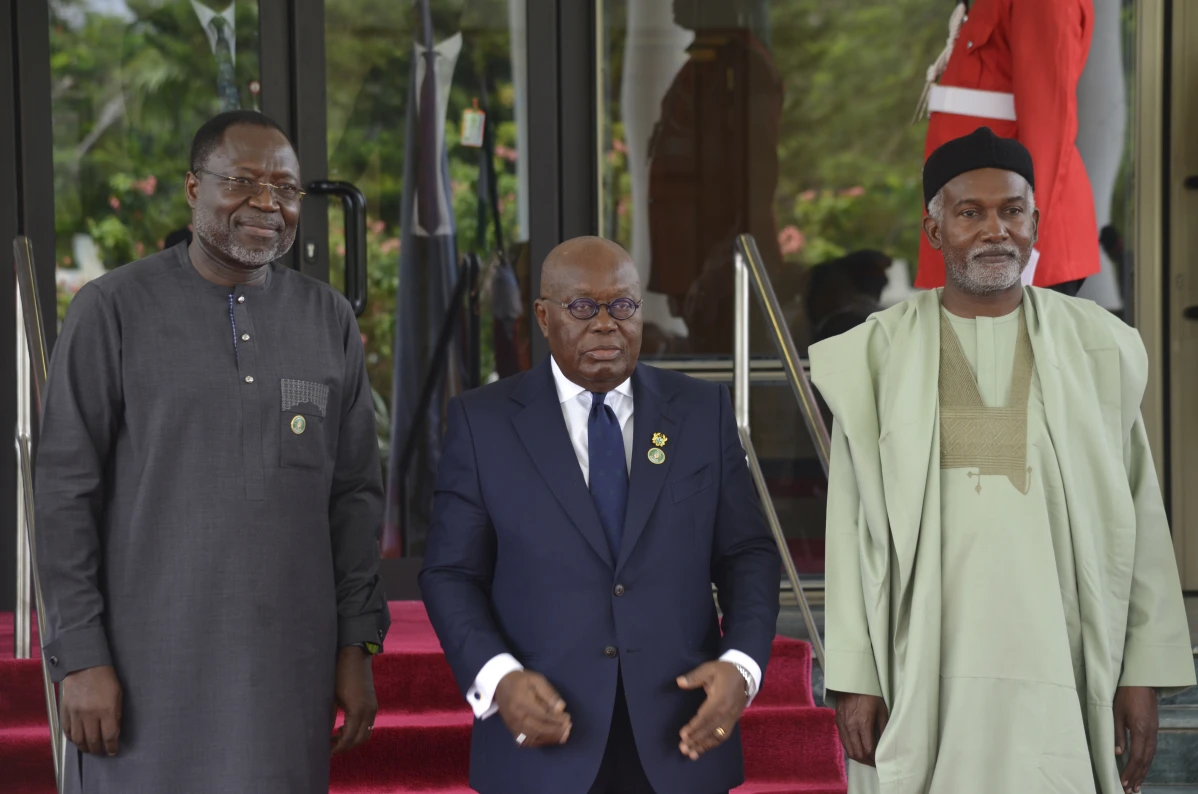
At the recent summit held in Abuja, Nigeria, the Economic Community of West African States (ECOWAS) faced a significant setback as three member states announced their departure from the regional bloc. Mali, Niger, and Burkina Faso, all currently led by military juntas following coups earlier this year, declared their intention to form a separate union, severing ties with ECOWAS effective from January.
The decision marks an unprecedented event in ECOWAS’s nearly 50-year history and comes amidst heightened regional instability. In response to this fracture, ECOWAS has appointed Senegal’s President Basirou Diomaye Faye as a special envoy to engage in dialogue with the dissenting states. Faye, Africa’s youngest leader following his recent election victory, has been tasked with facilitating discussions aimed at reuniting the fragmented region.
Omar Alieu Touray, President of the ECOWAS Commission, acknowledged the gravity of the situation, emphasizing the potential risks of disintegration faced by the region. Analysts, however, remain cautious about the prospects for successful reconciliation in the near term, citing ongoing regional tensions.



“This is the worst crisis the bloc has faced in years,” Touray remarked, highlighting concerns over the economic implications of the member states’ withdrawal. ECOWAS, as a pivotal political and economic authority in West Africa, guarantees free trade and unrestricted movement among its member states. The departure of Mali, Niger, and Burkina Faso could jeopardize these benefits and impact regional economic projects.

President Bola Tinubu of Nigeria, whose tenure as ECOWAS Chairman was extended due to the crisis, called for renewed efforts towards regional development amidst “enormous challenges.” Tinubu emphasized the need for stronger partnerships to confront shared security threats and promote prosperity across West Africa.
The departure of Mali, Niger, and Burkina Faso from ECOWAS also raises concerns about the potential destabilization of neighboring countries and the region at large. Observers fear that the recent coups could embolden other military factions, exacerbating existing security crises in a region already grappling with border conflicts and internal unrest.