For more than a year, AI has been a subject of public discussion and debate, as the world begins to grapple with its potential to impact almost every aspect of our lives. The questions being asked vary from sector to sector and region to region. Across Africa, the types of questions I hear most often are: What is the AI opportunity for Africa? Will there be broad participation in the development and use of AI or will it be limited to a few countries and companies? And what will it take for Africa to capitalise on the opportunity presented by AI?
These are the right questions to ask, and were at the centre of the discussions at the recent UNECA Conference of Ministers. AI is a foundational and transformational technology that represents significant opportunities for people and society everywhere, including and perhaps particularly in Africa, but only if we make it so. I believe African-led innovation and initiatives will be key to capitalising on AI’s opportunities, meeting the challenges, and addressing the gaps.
I see AI opportunities in four categories: assisting people; powering the economy and expanding prosperity; accelerating scientific advances; and helping to address societal challenges and enable development.



AI is already assisting people – from their everyday tasks to their most ambitious, productive and imaginative endeavours – and this will only increase. When Google started using AI to power translation in 2006, it could handle a few languages like English, French, and Spanish. As impressive as that was, it left out much of the world’s population. Today, thanks to progress in AI, Google Translate can now handle 133 languages, including Swahili, Luganda, Twi, Zulu, Kinyarwanda, Shona, Xhosa, and many more, enabling people to more easily communicate and access information – more work is still needed, and should come in partnership with African researchers, innovators, and communities.

AI’s economic potential globally has been estimated to be from $17 to $25 trillion annually in the near future, with generative AI adding as much as $8 trillion. However, such gains will not be automatic – they will require investment, innovation, productivity-enhancing use, diffusion and an enabling policy agenda. One promising aspect is AI’s potential for broadening economic opportunities. Because AI tools are accessible to users without significant expertise, they help bridge the knowledge gap between expert employees and everyone else. In other words, AI creates a “levelling up” opportunity that is important when formal education or training gaps serve as economic mobility barriers.
Over the last two decades, digital technologies have played a critical role in the success of small and medium-sized businesses, like the ones that provide the majority of Africa’s employment. AI can dramatically expand such digital impacts as well as those from its own additive capabilities. Already, African entrepreneurs have begun to leverage cutting-edge AI, fuelling the growth of AI-enabled startups from retail and healthcare to manufacturing.
Because AI is a general-purpose technology, applicable across all sectors, its productivity-enhancing impact will be most significant when it is applied across multiple companies and sectors, especially those large or important to national economies such as manufacturing, the public sector, or agriculture, where for example, AI can help improve crop yields, weather forecasting, development of new crops, and water use.
AI is opening up new areas for development and economic impact by helping to advance scientific discovery. For example, in a matter of weeks, Google’s AlphaFold predicted the structure of all 200 million proteins known to science. From the time we chose to make the AlphaFold database open source, it has been accessed by 1.6 million scientists in 190 countries – most of them in developing countries and many working on neglected diseases. Africa cannot only benefit from such AI-powered scientific advances, but also participate in their development and application to African and global needs.
AI has demonstrated potential to help make progress on the UN’s Sustainable Development Goals, more than 80% of which are off track: AI has shown promising results in climate change adaptation such as enabling forecasting to help people better prepare for floods in 80 countries, 26 in Africa. In health, AI models are being trialled in Kenya that make ultrasounds more accessible to lightly-trained ultrasound operators in under-resourced settings. There are many such African examples in a variety of areas from education, food security, to urban planning.
In addition to opportunities, it is important to highlight the complexities and risks that come with AI. These will continue to evolve as its development and uses progress. At this stage in AI’s development, there are still performance limitations with the potential to cause harm. For example, sometimes outputs from generative AI are hallucinations or not factual. It is also possible for outputs to be biased, often reflecting bias in the data used to train the models, or when training data does not reflect local contexts.
But even when AI works as intended, there are risks from misapplication by users or deliberate misuse by bad actors. Mis- and Dis-information are a particularly timely concern this year, as an estimated 2.5 billion people in more than 60 countries will be voting. Innovations to address this are emerging – Google is currently beta testing SynthID which watermarks AI-generated images. Innovations like this are just a start, there is much more to do to address the risks and challenges of AI, working together with citizens, governments, academia and civil society.
Furthermore, as an early technology, there are gaps in AI’s governance, and in the ability and capacity for all – people, organisations and countries, especially in the Global South – to fully participate in AI’s development, deployment, use, and benefits. The UN Secretary General’s High-Level Advisory Body on AI, on which I serve, in its interim report and draft recommendations not only highlighted opportunities and risks, but also the governance and capacity gaps.
Critical choices
What African leaders, countries, and businesses choose to do in the near future regarding these opportunities, challenges and gaps will be crucial – here are what I see as the key areas to address. The first is establishing AI foundations: the core elements any company, organisation, or region needs, such as compute, data, access to AI models, enabling model and application development by many more players, including in Africa, and AI expertise to drive innovation. Second, because an “AI divide” lurks within a larger and still-persistent digital divide, investing in the right enabling infrastructure, in particular ubiquitous, fast and affordable connectivity, data and devices, and reliable electricity, is critical – without this, nothing else happens. Third is developing robust skills and talent pipelines, starting with education and training to equip students with the right technical knowledge, all the way to skilling programmes for people already in the workforce. Africa has a unique opportunity to tap and enable its rich pipeline of young talent. Fourth, fostering vibrant AI ecosystems that include universities, entrepreneurs and startups, dynamic business partnerships, and venture capital.
Fifth, partnerships at home and abroad will be vital to giving initiatives scale, distribution, infrastructure and financing. Efforts like the Global Africa Business Initiative – which brings together African and global business leaders to highlight opportunities within all sectors of African economies – and UNDP’s Timbuktoo Africa Innovation Fund – which aims to mobilise $1bn to support the African innovation ecosystem – are a good start, but more is needed.
Sixth, it’s essential that Africa adopts a continental-scale view of its opportunity beyond national boundaries. This will help African entrepreneurs and businesses by giving them access to opportunities with market scale, and also to attract financing. African heads of state took an encouraging first step with the adoption of the Digital Protocol of the African Continental Free Trade Area at the recent AU Summit.
Underlying all of this must be affirmative policies that enable the opportunities, while also tackling the risks, challenges and gaps. What we are seeing in Rwanda with its innovative national AI policy, Mauritius and Egypt with their National AI strategies, and Nigeria with the launch of its national AI process, sets a positive precedent for robust AI governance frameworks and regulation. I hope this momentum spreads across Africa so more countries can be positioned to reap the benefits of AI.
AI presents an opportunity too significant to ignore for Africa, offering the potential for big leaps forward on empowering people, broadening and contributing to a shared prosperity, and advancing progress on pressing societal issues. At the same time, we should be clear-eyed on challenges and significant gaps that must be addressed; doing so will require ingenuity, investment and partnership. I took my initial steps into AI research as a student at the University of Zimbabwe in the 1990s, when it was still a speculative area; now students in Harare – and across the continent – are on the precipice of a time of transformational change. Theirs is the talent, potential and future we must enable and unleash – let’s not fail them.

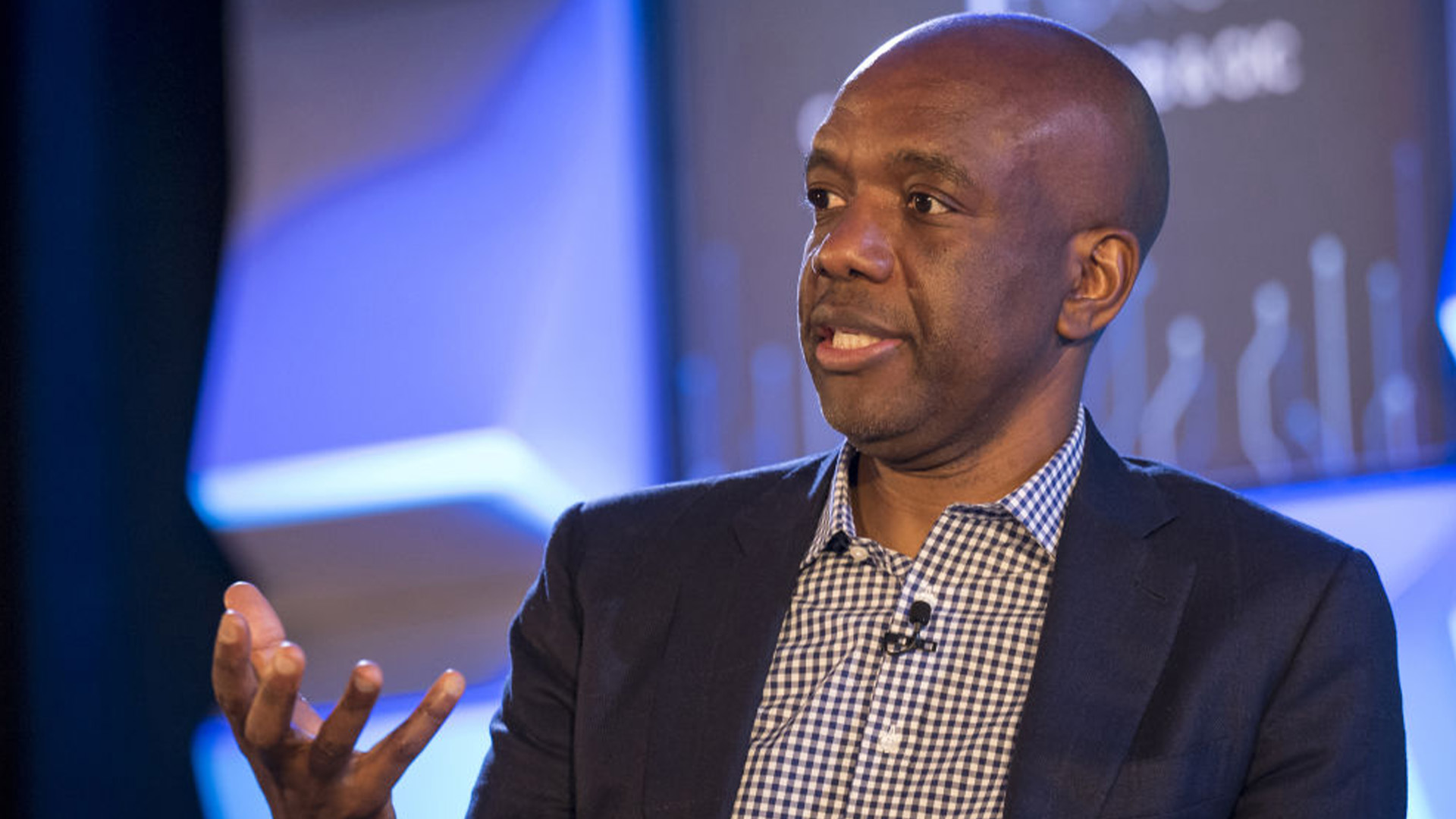
James Manyika is Google’s SVP of Research, Technology & Society. He serves as co-chair of the UN Secretary General’s High-level Advisory Body on Artificial Intelligence.