In a significant move on the international stage, the United States Department of the Treasury’s Office of Foreign Assets Control (OFAC) has officially removed the Zimbabwe Sanctions Regulations from its Code of Federal Regulations. This action comes in the wake of the termination of the national emergency upon which the regulations were initially based.
The decision, outlined in a recent rule published in the Federal Register, marks the culmination of years of diplomatic and political deliberation. The Zimbabwe Sanctions Regulations were initially enacted in response to Executive Order (E.O.) 13288, issued by President George W. Bush on March 6, 2003. The order aimed to block property of individuals undermining democratic processes or institutions in Zimbabwe.
Over the years, subsequent executive orders expanded the scope of the national emergency, with E.O. 13391 in 2005 and E.O. 13469 in 2008. OFAC issued the Zimbabwe Sanctions Regulations in 2004 as an interim measure to implement E.O. 13288, with further updates and amendments in subsequent years.



However, recent developments have prompted a reevaluation of the situation. On March 4, 2024, President of the United States issued E.O. 14118, declaring the termination of the national emergency with respect to Zimbabwe. The President found that the circumstances necessitating the initial declaration of emergency no longer prevailed, leading to the revocation of E.O. 13288, E.O. 13391, and E.O. 13469.
Consequently, OFAC has moved swiftly to remove the Zimbabwe Sanctions Regulations from the Code of Federal Regulations. While this decision reflects a significant shift in U.S. foreign policy towards Zimbabwe, it does not nullify any ongoing actions or proceedings initiated prior to the termination of the national emergency. Rights, duties, and penalties incurred prior to this date remain unaffected.
The removal of the sanctions is expected to have wide-ranging implications, not only for Zimbabwe but also for the broader geopolitical landscape in the southern African region. It signals a potential thawing of relations between the United States and Zimbabwe, opening up opportunities for diplomatic engagement and economic cooperation.

Conversely, the removal of Zimbabwe Sanctions Regulations by the United States Department of the Treasury’s Office of Foreign Assets Control (OFAC) has elicited both praise and criticism from various quarters, shedding light on the complex implications of such actions.

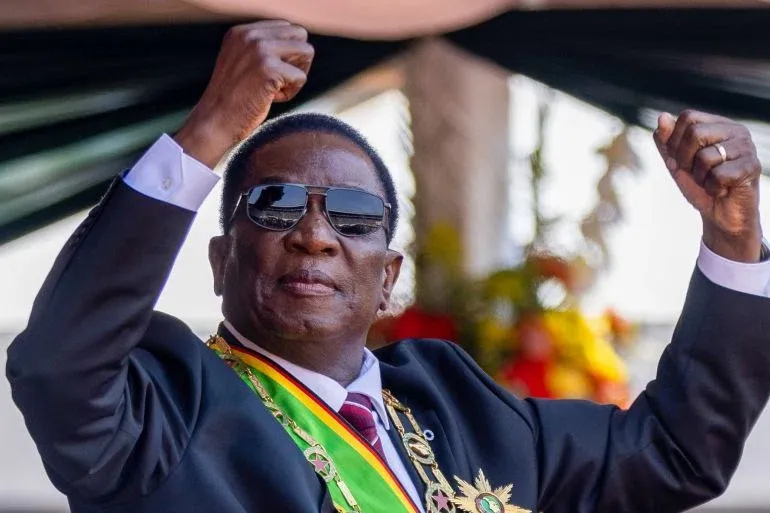
Government spokesman Nick Mangwana hailed the removals as a “great vindication” of President Mnangagwa’s foreign policy. However, he noted that despite this positive step, significant challenges remain as some individuals and companies, including Mnangagwa himself, remain under sanctions, leading to the assertion that Zimbabwe still endures what is deemed as “illegal sanctions.”
Mangwana’s comments underscore the broader debate surrounding the impact of sanctions on Zimbabwe’s economy and society. According to government estimates, Zimbabwe has incurred losses exceeding US$42 billion in revenue over the past nineteen years due to sanctions. These losses encompass various sectors, including lost bilateral donor support, diminished access to international credit markets, and a decline in GDP.
Furthermore, the adverse effects of sanctions extend beyond economic ramifications, affecting social development and regional cooperation. The sanctions have impeded Zimbabwe’s progress towards achieving the United Nations Sustainable Development Goals (SDGs), exacerbating poverty and hindering infrastructure development.
Moreover, the inability to access international credit markets has constrained Zimbabwe’s Balance of Payment position, resulting in a buildup of external debt arrears and diminished creditworthiness. The drying up of traditional sources of external finance from international financial institutions has further exacerbated the country’s economic challenges.
In the financial sector, the sanctions have led to Zimbabwe being branded as high risk, triggering de-risking interventions by lending correspondent banks in the USA and Europe. This has hampered the operations of Zimbabwean banks and money transfer agencies, disrupting Diaspora remittances and hindering financial transactions.
While the lifting of sanctions marks a potential turning point in U.S.-Zimbabwe relations and offers prospects for economic recovery, the nuanced reality underscores the ongoing challenges and complexities facing Zimbabwe’s path to sustainable development. As stakeholders navigate the aftermath of this decision, the need for constructive dialogue and concerted efforts towards addressing underlying issues remains paramount.