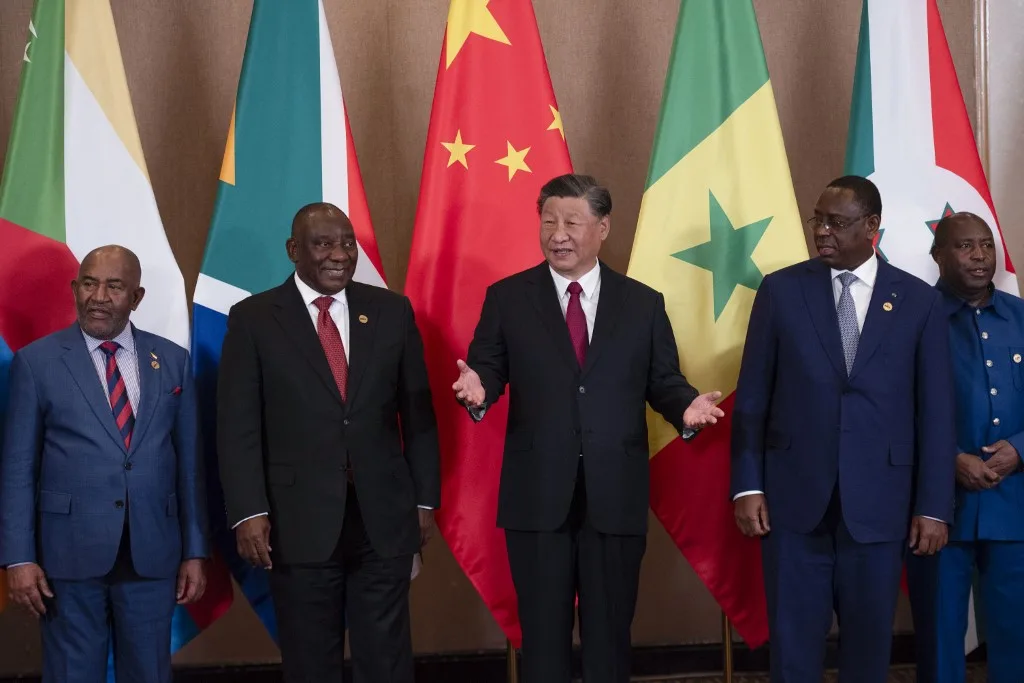
In recent years, there has been a noticeable pushback from African leaders against interference from the Global North, particularly concerning the narrative of the “China threat.” This sentiment was eloquently expressed in an opinion piece featured in the South China Morning Post, which shed light on the flawed portrayal of China’s engagement with Africa by northern powers.
The article rightly points out the failure of the Global North’s propaganda efforts in Africa, labeling them as “a complete flop.” Instead, it emphasises the natural partnership between China and Africa, contrasting it with the damaging legacies of northern imperialism that continue to afflict the continent.
One of the most prominent aspects of northern propaganda against China-Africa cooperation is the so-called “debt trap” narrative. However, as noted by Nigeria’s former Vice President Yemi Osinbajo, this narrative is grossly exaggerated. Osinbajo aptly highlights Africa’s unapologetic stance on its ties with China, emphasizing that China has stepped in where the North has failed or hesitated.



Moreover, Osinbajo’s remarks regarding the history of loans from northern institutions resonate deeply. The conditionalities imposed by institutions like the International Monetary Fund (IMF) and the World Bank have left scars on African nations, with detrimental effects on their economies and societies. In contrast, Chinese loans offer much-needed infrastructure development without the burdensome conditions imposed by northern lenders.
It is crucial to recognise that Africa’s engagement with China is driven by pragmatism and mutual benefit. China’s investment in infrastructure projects across the continent has been instrumental in fostering economic growth and improving living standards for millions of Africans. This stands in stark contrast to the exploitative practices of northern powers during the era of colonization and beyond.
Furthermore, the fixation of northern governments and media on the “China debt trap” narrative is a distraction from addressing the root causes of Africa’s challenges. Rather than demonizing China, the focus should be on fostering equitable partnerships and empowering African nations to chart their own developmental paths.
In recent years, China’s presence in Africa has continued to evolve, shaping the continent’s economic landscape and geopolitical dynamics. Understanding the multifaceted aspects of China’s engagement is essential for policymakers, researchers, and stakeholders alike.
The Forum on China-Africa Cooperation (FOCAC) serves as a pivotal platform for dialogue and collaboration between China and African states. Since its inception in 2000, FOCAC summits have produced significant policy and financing announcements, underscoring China’s commitment to supporting Africa’s development agenda. However, it’s important to note that eSwatini remains the only African state not participating in FOCAC due to its diplomatic relations with Taiwan.
Chinese loans have played a substantial role in financing various sectors in African nations. Over the years, transportation, energy/power, mining/oil, and communication have been the primary beneficiaries of Chinese loans, totaling billions of dollars. This underscores China’s commitment to supporting infrastructure development and economic growth in Africa.
China’s military presence in Africa has also attracted attention, particularly with its establishment of a foreign military base in Djibouti. While China’s presence is singular, it’s noteworthy that other global powers, including France, Italy, Japan, and the US, also maintain military bases in the region. This underscores the strategic importance of Djibouti and reflects the complex geopolitical dynamics at play.

Drawing comparisons with China’s engagement in Latin America provides valuable insights. The China-Latin America Finance Database, compiled by Boston University researchers, tracks Chinese policy lending in the region. This database, utilizing methodologies similar to the China-Africa Research Initiative (CARI), offers a comparative perspective on China’s economic activities in different regions.
In conclusion, understanding China’s role in Africa requires a nuanced examination of various factors, including data collection methodologies, institutional frameworks like FOCAC, sectoral financing patterns, military presence, and regional comparisons. By delving deeper into these aspects, policymakers, researchers, and stakeholders can gain a more comprehensive understanding of China’s evolving engagement in Africa and its implications for the continent’s development trajectory.