Friday, April 17, 2026
  • Login
The Southern African Times
  • Home
  • Southern Africa
  • Business
    • African Start ups
    • African Continental Free Trade Area
  • Technology
    • Lifestyle
      • Health
      • Culture
      • Food and Drink
      • Entertainment
  • Opinion
  • Sports
  • SAT Jobs
    • Events
  • About Us
    • Advertise with Us
    • Contact Us
No Result
View All Result
  • Home
  • Southern Africa
  • Business
    • African Start ups
    • African Continental Free Trade Area
  • Technology
    • Lifestyle
      • Health
      • Culture
      • Food and Drink
      • Entertainment
  • Opinion
  • Sports
  • SAT Jobs
    • Events
  • About Us
    • Advertise with Us
    • Contact Us
No Result
View All Result
The Southern African Times
No Result
View All Result
Home Opinion

Biden investment curbs more likely to hurt the U.S. than China

by SAT Reporter
August 11, 2023
in Opinion
0
Biden investment curbs more likely to hurt the U.S. than China

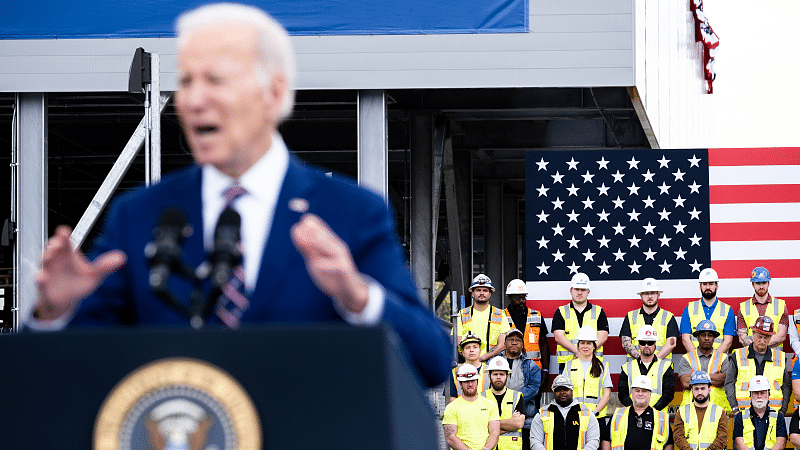
The administration of U.S. President Joe Biden is expected soon to unveil an executive order that will screen outbound investment into sensitive technologies in China. The order’s purpose is to prevent U.S. capital and expertise from helping move forward the development of technologies that will modernize Beijing’s military and threaten U.S. national security. But these executive orders will hurt the U.S. as a global financial hub, deteriorate bilateral relations further and add pressure to the worldwide supply chain.

For starters, it should be said that these sectors – specifically semiconductors, quantum computing and artificial intelligence – are the fast-growing sectors in China’s economy. Screening or stopping investments in the country from the U.S. will leave American investors out of one of the most dynamic sectors today while doing little to address the root causes of America’s falling tech dominance. And this will only encourage people to move their money to new financial centers where they can invest freely.

Around this same time two years ago, Biden unveiled an executive order that essentially blacklisted 59 Chinese companies deemed a national security threat for ties to the Chinese military, without evidence. Former Treasury Secretary Hank Paulson made the point in an op-ed for the Wall Street Journal published on December 9, 2020, a day before the S&P Dow Jones Indices removed some Chinese companies from its index products following a similar executive order from U.S. former President Donald Trump, that America’s financial leadership “is increasingly being challenged by fierce competition from abroad and by shortsighted and counterproductive policies at home.”


ADVERTISEMENT

One of the U.S.’s primary advantages as a financial center is the fact that capital can flow in and out of the country without any strings attached, which is opposed to the policies of most other countries. The U.S. had little to fear in terms of capital flight because, after all, the U.S. was (and still is) the world’s largest economy, had a serious technological edge over its competition and maintained unilateral global hegemony over the global security situation.

All of these advantages are being squandered and Washington imposing such restrictions should be taken as a sign of insecurity on these fronts, not as a genuine national security concern. After all, the U.S. also has a Committee on Foreign Investment in the United States (CFIUS) that places screening on foreigners, especially Chinese people and firms, that want to invest in “critical” U.S. firms (such as the military-industrial complex). If supporting a firm’s development was as simple as giving it money, wouldn’t the American government welcome Chinese investment among its military contractors? 

There’s also the fact that global supply chains in these industries could be hurt and end up having a stifling effect on global development in these sectors, rather than one targeted against China. Take AI as just one example. In 2022, Chinese researchers published three times as many papers on artificial intelligence as U.S. researchers; in the top 1 percent most cited AI research, Chinese papers outnumbered U.S. papers by a 2-to-1 ratio. Global know-how for sensitive technologies is so skewed toward China that if the U.S., which happens to control global finance, starts to restrict China then necessarily everyone else will suffer. This discrepancy is only growing.

As you may have guessed, many of the U.S. policies surrounding China, and the latter’s growing technological advantage, have little logic. There is only a narrow political appeal to American nativism meant to appear like Washington is doing something while, in fact, doing very little. The real issue, as has long been the case, is the fact that the U.S. is not supporting domestic streams of talent and is shooing away immigrants, who are a key resource for domestic technological development. 

The U.S. has a locally-funded basic education system that mostly relies on local tax revenue, meaning that high-income areas receive better resources while low-income ones receive worse. This has led to massive inequality in educational attainment. The latest National Assessment of Educational Progress found that roughly 40 percent of eighth graders scored below the basic level in U.S. history while roughly 13 percent are “proficient.” 

America’s higher education dominance is also slipping. According to the 2022 edition of the World University Rankings, released by Times Higher Education, between 2018 and 2022, the number of U.S. top 100 universities fell to 34 from 43. Meanwhile, China rose from two to seven. This puts China on pace to outperform the U.S. in just a few years. Meanwhile, the share of foreigners applying to U.S. universities has fallen in recent years due in part to discrimination against Chinese people, the largest share of foreign students in America.

China will continue to develop in these critical sectors regardless of the presence of American capital. That is not the question. The important question for Washington should be, will these investment restrictions hurt America or not? The answer to that is most likely yes.

Bradley Blankenship, a special commentator on current affairs for CGTN, is a Prague-based American journalist, political analyst, and freelance reporter. The article reflects the author’s opinions and not necessarily the views of The Southern African Times.

Previous Post

Rwandan Artistry Shines at Trade Fair: Tradition and Creativity Converge

Next Post

Submarine Cable Outage Disrupts West Africa-Europe Communications

SAT Reporter

Related Posts

Zambia’s Copper and the Social Cost of Extraction Deals
The Editorial Board

Zambia’s Copper and the Social Cost of Extraction Deals

by Nothando Ndlovu
April 17, 2026
Op-Ed by Yemi Osinbajo, Former Vice President of Nigeria: Africa Is Losing the Iran War
Opinion

Op-Ed by Yemi Osinbajo, Former Vice President of Nigeria: Africa Is Losing the Iran War

by SAT Reporter
April 13, 2026
A Superpower Under Strain: Iran and the Limits of American Power
Opinion

A Superpower Under Strain: Iran and the Limits of American Power

by Kundai Vambe
April 8, 2026
South Africa Seeks to Tighten Immigration Rules in Policy Shift
Opinion

South Africa Seeks to Tighten Immigration Rules in Policy Shift

by Kundai Vambe
April 8, 2026
OPINION | Africa Isn’t Failing Democracy — The Narrative Is
Opinion

OPINION | Africa Isn’t Failing Democracy — The Narrative Is

by The Editorial Board
April 6, 2026
Next Post
Submarine Cable Outage Disrupts West Africa-Europe Communications

Submarine Cable Outage Disrupts West Africa-Europe Communications

Browse by Category

  • Africa AI
  • African Continental Free Trade Area
  • African Debt
  • African Start ups
  • Agriculture
  • AI Africa
  • Algeria
  • All News
  • Analysis
  • Angola
  • Arts / Culture
  • Asia
  • Botswana
  • BOTSWANA
  • BREAKING NEWS
  • BRICS
  • Burkina Faso
  • Burundi
  • Business
  • Business
  • Business Wire
  • Cameroon
  • Central Africa
  • Chad
  • China
  • Climate Change
  • Climate Changev
  • Community
  • Congo Republic
  • Conservation
  • Côte d’Ivoire
  • COVID 19
  • CRYPTOCURRENCY
  • Culture
  • Democratic Republic of Congo
  • Diplomacy
  • Eastern Africa
  • Economic Development
  • Economy
  • Education
  • Egypt
  • Elections 2024
  • Energy
  • Entertainment
  • Environment
  • Eritrea
  • Ethiopia
  • Europe
  • Fashion
  • Feature
  • Finance
  • Financial Inclusion
  • Food
  • Food and Drink
  • Foods
  • GABON
  • Ghana
  • Global
  • Global Africa
  • Guinea
  • Health
  • Immigration
  • in Southern Africa
  • International news
  • International Relations
  • Ivory Coast
  • Just In
  • Kenya
  • Lesotho
  • Libya
  • Life Style
  • Lifestyle
  • Literature
  • Malawi
  • Malawi
  • Mali
  • Markets
  • Mauritius
  • Middle East
  • Mining in Africa
  • Morocco
  • Mozambique
  • Namibia
  • Niger
  • niger
  • Nigeria
  • North Africa
  • North-Eastern Africa
  • Obituaries
  • Obituary
  • Opinion
  • PARTNER CONTENT
  • Politics
  • Property
  • Racism
  • Rwanda
  • Rwanda
  • SADC
  • SAT Interviews
  • SAT Investigation
  • SAT Jobs
  • Saudi Arabia
  • Senegal
  • Seychelles
  • South Africa
  • South Sudan
  • Sports
  • Startup Africa
  • STOCK EXCHANGE
  • Sudan
  • Sustainability
  • Sustainablity
  • Tanzania
  • Technology
  • Telecommunications
  • The Editorial Board
  • The Power Of She
  • Togo
  • Trade
  • Travel
  • Travel
  • Tunisia
  • Uganda
  • Uncategorized
  • Wealth
  • West Africa
  • World
  • World
  • ZAMBIA
  • Zambia
  • Zimbabwe
  • ZIMBABWE

Browse by Tags

#NewsUpdate #SouthAfrica #SouthernAfricanTimes #TheSouthernAfricanTimes AfCFTA africa African Continental Free Trade Area African development African Development Bank African economies African economy African Union Agriculture Angola Botswana Business China Climate change Cyril Ramaphosa Economic Development economic growth energy transition fiscal policy food security industrialisation Inflation Infrastructure Development International relations Investment Kenya Mozambique Namibia news Nigeria Regional Integration renewable energy Rwanda SADC South Africa Southern Africa sustainable development Tanzania United States Zambia Zimbabwe
ADVERTISEMENT

WHO WE ARE

The Southern African Times is a regional bloc digital newspaper that covers Southern African and world news. The paper also gives a nuanced analysis on news and covers a wide range of reporting which include sports, entertainment, foreign affairs, arts and culture.

Welcome Back!

Login to your account below

Forgotten Password?

Retrieve your password

Please enter your username or email address to reset your password.

Log In

  • Home
  • Southern Africa
  • Business
    • African Start ups
    • African Continental Free Trade Area
  • Technology
    • Lifestyle
      • Health
      • Culture
      • Food and Drink
      • Entertainment
  • Opinion
  • Sports
  • SAT Jobs
    • Events
  • About Us
    • Advertise with Us
    • Contact Us
Are you sure want to unlock this post?
Unlock left : 0
Are you sure want to cancel subscription?