Tuesday, June 2, 2026
  • Login
The Southern African Times
  • Home
  • Southern Africa
  • Business
    • African Start ups
    • African Continental Free Trade Area
  • Technology
    • Lifestyle
      • Health
      • Culture
      • Food and Drink
      • Entertainment
  • Opinion
  • Sports
  • SAT Jobs
    • Events
  • About Us
    • Advertise with Us
    • Contact Us
No Result
View All Result
  • Home
  • Southern Africa
  • Business
    • African Start ups
    • African Continental Free Trade Area
  • Technology
    • Lifestyle
      • Health
      • Culture
      • Food and Drink
      • Entertainment
  • Opinion
  • Sports
  • SAT Jobs
    • Events
  • About Us
    • Advertise with Us
    • Contact Us
No Result
View All Result
The Southern African Times
No Result
View All Result
Home Opinion

Africa’s most consequential president?

by SAT Reporter
July 18, 2023
in Opinion
0
Africa’s most consequential president?

Shortly after taking office on May 29, Nigeria’s President Bola Tinubu surprised many observers by implementing a series of bold reforms. In addition to scrapping costly fuel subsidies and various taxes, he suspended the country’s central bank governor, which immediately removed trading restrictions that propped up the value of the naira. And to curry favor with Nigeria’s huge population of young people, Tinubu introduced interest-free loans to help students fund higher education.

But while these rapid reforms signal Tinubu’s adherence to economic orthodoxy and may restore the confidence of Nigerians, international investors, and financial markets in the short term, they will not affect lasting change by themselves.

Nigeria’s economy – Africa’s largest – is in dire straits, and transforming it will not be easy. Inflation recently hit an 18-year high, and large fiscal deficits are adding to already-soaring debt levels. The economy has been hit hard by the fallout from the war in Ukraine, partly because Nigeria depends on food imports, but also because the country – despite being Africa’s biggest oil producer – is largely incapable of refining crude and thus imports petroleum. Mismanagement, security issues, and underinvestment in infrastructure have hobbled the oil industry, which generates around 80 percent of government revenues, while inconsistent official policies have prevented the agriculture sector, which employs about a third of Nigerians, from reaching its full potential.


ADVERTISEMENT
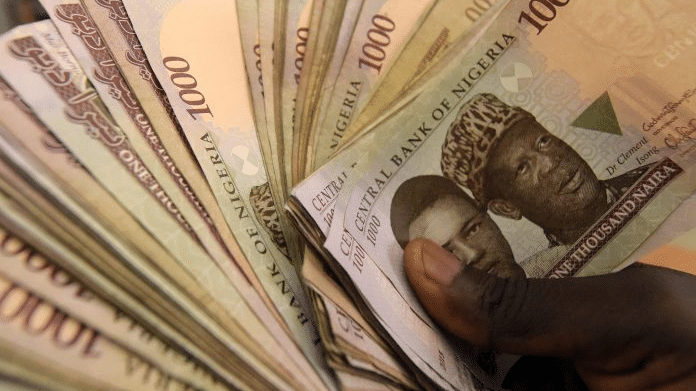
Nigerian currency, naira banknotes. /Getty Images

That said, Tinubu’s move away from interventionism is a step in the right direction, and he could further harness the demographic potential of Africa’s most populous country by securing international investments and reducing bureaucratic red tape. But, most important, Tinubu will need to address broader security, energy, and governance challenges, which are often intertwined.

Security risks, which largely preoccupied Tinubu’s predecessor, Muhammadu Buhari, threaten to derail the push for rapid reforms. But a growing economy could deter would-be militants from taking up arms by creating employment opportunities, especially if Tinubu can root out corruption, prevent monopolization, and reform the security sector.

Nigeria’s oil-sector woes should also be a top priority. The fuel-subsidy reform will help restore fiscal discipline, given that Nigeria’s state-owned oil company spent $10 billion on subsidizing petrol in 2022. Moreover, Aliko Dangote’s $20 billion oil refinery, where production is set to begin in July, could help reduce the country’s dependence on petroleum imports, assuming that it does not become a private monopoly.

Tinubu has demonstrated little patience for firms cornering the market. While the monopolization of exports has typically been the focus of government regulation, import monopolies in oil-rich countries like Nigeria are also a significant obstacle to economic diversification and must be addressed. (It is worth noting that Tinubu suspended Nigeria’s anti-corruption head for “abuse of office,” although previous agency leaders have also been removed after facing similar allegations.)

To diversify the economy in the long term, the government will need to expand access to electricity, which only around 55 percent of Nigerians currently have. Fortunately, the potential for clean energy is enormous. Development partners like the World Bank can help with funding and guarantees to boost private investment in electricity distribution and renewables. But Tinubu’s team will first need to improve the governance of the electricity sector, ensure a stable macroeconomic framework, and establish a conducive financial system.

Nigeria’s vibrant tech ecosystem illustrates the potential that Tinubu could unlock. Hundreds of startups have emerged, particularly in the fintech sector, with Nigeria accounting for five of Africa’s seven tech “unicorns” (private startups with a valuation of at least $1 billion). The multiple-exchange-rate regime that prevailed before Tinubu took office drained foreign reserves and gave importers an unfair advantage. Fewer exchange-rate restrictions will facilitate financial inflows, to the benefit of startups, which could in turn help transform the agriculture and transport sectors and empower millions of Nigerians.

If Tinubu stays the course on energy, security, and governance reforms, his agenda could ultimately benefit all of Africa – much like Saudi Arabia’s economic experiment could transform the Middle East. But, unlike the Saudis, the Nigerian government does not have vast coffers to draw from and will need to rely more heavily on foreign and domestic private investment, coupled with the support of development partners. If given enough backing, Tinubu could remake the country – and even help remake the continent.


Rabah Arezki, a director of research at the French National Center for Scientific Research (CNRS), is a senior fellow at the Foundation for Studies and Research on International Development (FERDI) and Harvard Kennedy School. The article reflects the author’s opinions, and not necessarily the views of The Southern African Times. 

Previous Post

Egypt overtakes Nigeria in start-up capital as Africa tech funding slows

Next Post

Op-Ed by President Ramaposa: Let Us Remembber Madiba by Working for Peace

SAT Reporter

Related Posts

The Southern African Times Announces 2026 Editorial Recognition List (Shortlist Phase)
The Editorial Board

The Southern African Times Announces 2026 Editorial Recognition List (Shortlist Phase)

by The Editorial Board
June 2, 2026
Education and the Making of Responsible Citizens
Opinion

Education and the Making of Responsible Citizens

by Brendan Amadi
June 2, 2026
LONG READ | Zimbabwe Is Open for Business. But at What Price?
Opinion

LONG READ | Zimbabwe Is Open for Business. But at What Price?

by SAT Reporter
June 2, 2026
As Cuba Suffocates Under Siege, Why Is Africa Silent?
Opinion

As Cuba Suffocates Under Siege, Why Is Africa Silent?

by The Editorial Board
June 1, 2026
AI Needs Oversight, Not Faith: Lessons from South Africa’s Policy Reversal
Opinion

AI Needs Oversight, Not Faith: Lessons from South Africa’s Policy Reversal

by Sonny Iroche
May 27, 2026
Next Post
Op-Ed by President Ramaposa: Let Us Remembber Madiba by Working for Peace

Op-Ed by President Ramaposa: Let Us Remembber Madiba by Working for Peace

Browse by Category

  • Africa AI
  • African Continental Free Trade Area
  • African Debt
  • African Start ups
  • Agriculture
  • AI Africa
  • Algeria
  • All News
  • Analysis
  • Angola
  • Arts / Culture
  • Asia
  • Botswana
  • BOTSWANA
  • BREAKING NEWS
  • BRICS
  • Burkina Faso
  • Burundi
  • Business
  • Business
  • Business Wire
  • Cameroon
  • Central Africa
  • Chad
  • China
  • Climate Change
  • Climate Changev
  • Community
  • Congo Republic
  • Conservation
  • Côte d’Ivoire
  • COVID 19
  • CRYPTOCURRENCY
  • Culture
  • Democratic Republic of Congo
  • Diplomacy
  • Eastern Africa
  • Economic Development
  • Economy
  • Education
  • Egypt
  • Elections 2024
  • Energy
  • Entertainment
  • Environment
  • Eritrea
  • Ethiopia
  • Europe
  • Fashion
  • Feature
  • Finance
  • Financial Inclusion
  • Food
  • Food and Drink
  • Foods
  • GABON
  • Ghana
  • Global
  • Global Africa
  • Guinea
  • Health
  • Humanitarian Aid
  • Immigration
  • in Southern Africa
  • International news
  • International Relations
  • Investment
  • Ivory Coast
  • Just In
  • Kenya
  • Lesotho
  • Libya
  • Life Style
  • Lifestyle
  • Literature
  • Malawi
  • Malawi
  • Mali
  • Markets
  • Mauritius
  • Middle East
  • Mining in Africa
  • Morocco
  • Mozambique
  • Namibia
  • Niger
  • niger
  • Nigeria
  • North Africa
  • North-Eastern Africa
  • Obituaries
  • Obituary
  • Opinion
  • PARTNER CONTENT
  • Politics
  • Property
  • Racism
  • Rwanda
  • Rwanda
  • SADC
  • SAT Interviews
  • SAT Investigation
  • SAT Jobs
  • Saudi Arabia
  • Senegal
  • Seychelles
  • Somaliland
  • South Africa
  • South Sudan
  • Sports
  • Startup Africa
  • STOCK EXCHANGE
  • Sudan
  • Sustainability
  • Sustainablity
  • Tanzania
  • Technology
  • Telecommunications
  • The Editorial Board
  • The Power Of She
  • Togo
  • Trade
  • Travel
  • Travel
  • Tunisia
  • Uganda
  • Uncategorized
  • Wealth
  • West Africa
  • World
  • World
  • Zambia
  • ZAMBIA
  • ZIMBABWE
  • Zimbabwe

Browse by Tags

#NewsUpdate #SouthAfrica #SouthernAfricanTimes #TheSouthernAfricanTimes AfCFTA africa African Continental Free Trade Area African development African Development Bank African economies African economy African Union Agriculture Angola Botswana China Climate change Cyril Ramaphosa Economic Development economic growth energy transition governance IMF industrialisation Inflation Infrastructure Infrastructure Development International relations Investment Kenya Mozambique Namibia news Nigeria Regional Integration renewable energy Rwanda SADC South Africa Southern Africa sustainable development Tanzania United States Zambia Zimbabwe
ADVERTISEMENT

WHO WE ARE

The Southern African Times is a regional bloc digital newspaper that covers Southern African and world news. The paper also gives a nuanced analysis on news and covers a wide range of reporting which include sports, entertainment, foreign affairs, arts and culture.

Welcome Back!

Login to your account below

Forgotten Password?

Retrieve your password

Please enter your username or email address to reset your password.

Log In
  • Home
  • Southern Africa
  • Business
    • African Start ups
    • African Continental Free Trade Area
  • Technology
    • Lifestyle
      • Health
      • Culture
      • Food and Drink
      • Entertainment
  • Opinion
  • Sports
  • SAT Jobs
    • Events
  • About Us
    • Advertise with Us
    • Contact Us
Not enough quota to unlock this post
Unlock left : 0
Are you sure want to cancel subscription?