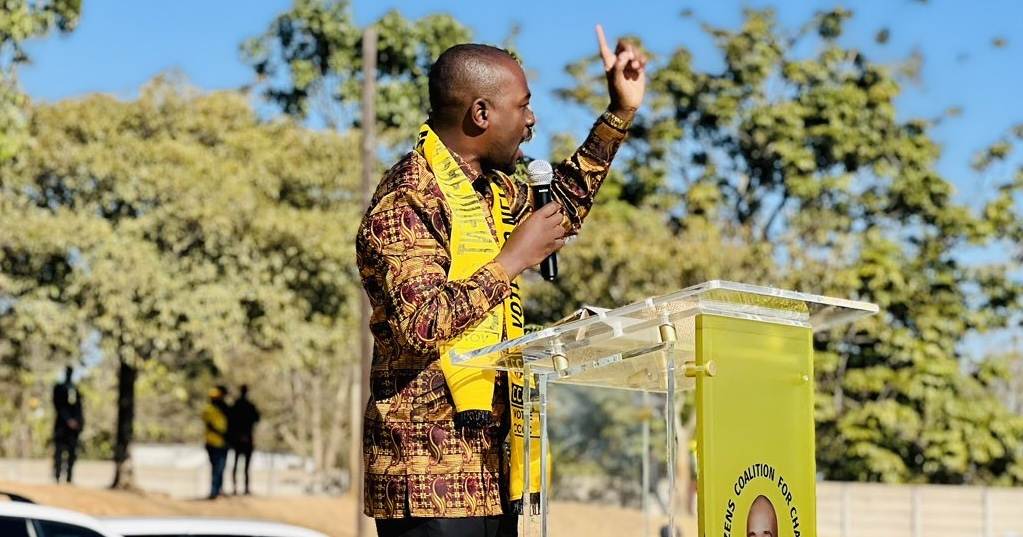
Nelson Chamisa, the leader of the opposition Citizens Coalition for Change (CCC), launched his “For Everyone” campaign in Gweru on Sunday. The 45-year-old politician, lawyer, and pastor vowed to tackle the country’s persistent economic crises and put an end to corruption that has plagued Zimbabwe for years.
Chamisa criticized the lack of progress and development in the country, expressing disappointment in the state of affairs after 43 years of democracy. “All we see is poverty, unemployment, and millions going to the diaspora,” he declared to thousands of supporters gathered at a stadium in Gweru, who braved chilly weather to attend the rally despite efforts by the authorities to ban opposition party gatherings.
One of Chamisa’s key promises is to confront corruption and the supposed mismanagement of the country’s resources by the ruling elite, asserting that the wealth generated from Zimbabwe’s mineral-rich reserves should benefit all citizens.



Chamisa’s campaign message resonated with some citizens who have grown disillusioned with the pace of development and the country’s ongoing economic challenges. He decried the perceived lack of progress in the nation, pointing to poverty, unemployment, and the migration of millions abroad as indicators of the government’s failures.

Critics, however, caution against embracing Chamisa’s ambitious promises without a thorough evaluation of their feasibility. They argue that while addressing corruption is crucial, sweeping changes may lead to unintended consequences and disruption of established systems. Some express concern that the proposed reforms might not lead to the desired outcomes and could potentially exacerbate the country’s economic challenges.
President Mnangagwa’s government has been contending with numerous challenges since coming into power after the 2017 ousting of Robert Mugabe. Critics have accused the government of not doing enough to address human rights concerns and have raised questions about electoral transparency.
On the economic front, Mnangagwa’s administration has been working to attract foreign investment and implement policies aimed at rejuvenating the economy. While progress has been made, significant obstacles remain, and critics contend that resolving decades-long issues cannot be achieved overnight.
As the election approaches, the incumbent President Mnangagwa is expected to leverage his experience and highlight the strides made under his leadership. He is likely to emphasise the importance of continuity and stability in the face of global economic uncertainties.
Both candidates enjoy widespread support across the country, and the upcoming election is expected to be closely contested. Chamisa’s decision to appeal to historically Zanu-PF voters in rural areas adds an interesting dynamic to the race, as he seeks to sway voters who have traditionally supported the ruling party.
Ultimately, the outcome of the election will be determined by the voters’ assessment of each candidate’s plans and ability to lead the nation toward prosperity and stability. Zimbabweans are looking for pragmatic solutions that can address their pressing challenges and pave the way for a brighter future. As the campaign intensifies, citizens’ engagement and thoughtful consideration of the issues at hand will be crucial in shaping the country’s path forward.