Sunday, July 5, 2026
  • Login
The Southern African Times
  • Home
  • Southern Africa
  • Business
    • African Start ups
    • African Continental Free Trade Area
  • Technology
    • Lifestyle
      • Health
      • Culture
      • Food and Drink
      • Entertainment
  • Opinion
  • Sports
  • SAT Jobs
    • Events
  • About Us
    • Advertise with Us
    • Contact Us
No Result
View All Result
  • Home
  • Southern Africa
  • Business
    • African Start ups
    • African Continental Free Trade Area
  • Technology
    • Lifestyle
      • Health
      • Culture
      • Food and Drink
      • Entertainment
  • Opinion
  • Sports
  • SAT Jobs
    • Events
  • About Us
    • Advertise with Us
    • Contact Us
No Result
View All Result
The Southern African Times
No Result
View All Result
Home Opinion

South Africa has been grey-listed, what does this mean?

by SAT Reporter
February 27, 2023
in Opinion
0
South Africa has been grey-listed, what does this mean?

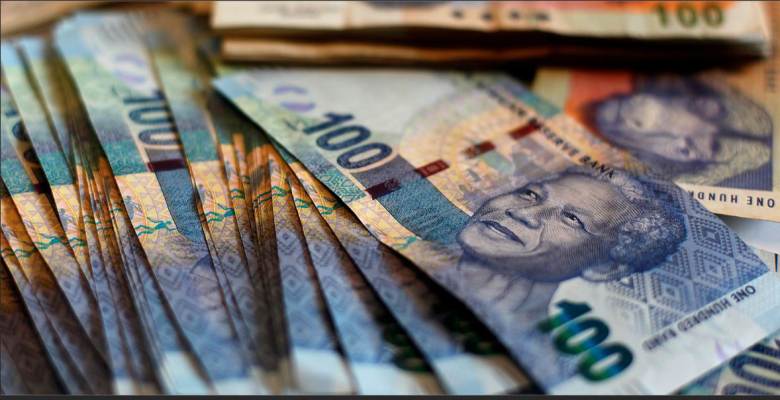
The Financial Action Task Force has placed South Africa on a list of countries under increased monitoring, commonly known as the grey list, after it failed to address all of the shortcomings on money laundering and the financing of terrorism that the task force identified in its 2019 evaluation of the country. The decision has serious implications for the country, more specifically its financial services sector as well as its ability to attract investment. The Conversation Africa’s political editor Thabo Leshilo talks to Philippe Burger, an economics professor and the dean of the Faculty of Economic and Management Sciences at the University of the Free State, about what the grey listing means for South Africa and have syndicated this  interview to The Southern African Times. 

What does grey listing mean?

Grey listing refers to a country being placed on a list of countries under increased monitoring by the Financial Action Task Force (FATF), the global money laundering and terrorist financing watchdog. The FATF evaluates each member country’s implementation and effectiveness of measures to combat money laundering and the financing of terrorism.

South Africa has been placed on FATF’s grey list because it does not have sufficient mechanisms in place to monitor and combat money laundering and terrorist financing activities.


ADVERTISEMENT

The country undertook to work with the FATF to identify strategies and time frames to improve its monitoring mechanisms. Specifically, it undertook to work with the FATF on eight specific topics. These include increased investigation and prosecution of money laundering and terrorist financing activities. It’ll also enhance its capacity to identify, seize and confiscate the proceeds of such crimes.

South Africa also needs to improve its terrorist financing risk assessment to inform its strategy to counter the financing of terrorism activities. In addition, it needs to ensure the effective implementation of targeted financial sanctions, and create effective mechanism to identify individuals and entities targeted by such sanctions.

What are the implications?

Though the FATF does not explicitly require increased due diligence, grey listing will nevertheless in effect require increased due diligence. Banks dealing with cross-border financial flows and companies wanting to invest in South Africa will have to vet their clients and the sources of client income better before they invest. This can be costly and, therefore, discourage investment. The increased risk associated with South Africa could also result in higher interest rates and cost of capital.

The higher costs that domestic and international companies will incur when they trade or invest across South African borders will put upward pressure on the cost of living of ordinary South Africans. However, of probably even more significance to ordinary South Africans is that the grey listing will likely deter foreign investment, which is needed to stimulate economic growth and job creation.

Which other countries are grey listed?

In being grey listed South Africa joins a list of countries, none of which are known as paragons of governance. Some, such as the Cayman Islands and Panama, are known tax havens that potentially attract laundered money. Others are known as war zones or countries with jihadist and Islamist terror groupings operating on their land. These include Syria, Yemen, Mali, Nigeria, and Mozambique. The list also includes countries with very weak governments, such as Haiti and the Democratic Republic of the Congo.

What needs to happen for the grey listing to be lifted?

South Africa needs to work with the FATF to identify strategies and time frames to improve its monitoring mechanisms. It must then implement these improvements at the latest by January 2025. This might require improved legislation and better monitoring mechanisms to red-flag potential money laundering and terrorist funding flows.

Although the country recently made a belated effort to improve its legislation to avert being grey listed, it will need to do more. Doing so will require a dedicated focus from the government to

  • pass additional relevant legislation,
  • fund the investigative authorities to combat money laundering and terrorist financing activities, and
  • ensure the effective and speedy prosecution of individuals and institutions undertaking such crimes.

With the recent history in South Africa of state capture for private gain by individuals, some of whom are themselves probably guilty of money laundering, the onus will be on the government to show that it is serious about implementing effective legislation and mechanisms to combat money laundering and terrorist funding. Thus, to get out of the rut of grey listing the country will have to fight the rot of money laundering and terrorist funding. The jury, or in this case the Financial Action Task Force, is still out on whether it will succeed in doing so.


Philippe Burger is a Non-Resident Senior Research Fellow, United Nations University World Institute for Development Economics Research (UNU-WIDER), in which capacity he is the lead for the Macro-Fiscal workstream for the SA-TIED II project. He is also a 2016/17 Fulbright Exchange Scholar. The article reflects the author’s opinions and not necessarily the views of The Southern African Times.


Previous Post

What can next president of World Bank learn from AfDB and AIIB?

Next Post

UK and EU agree to crucial Northern Ireland trade deal in Brexit breakthrough

SAT Reporter

Related Posts

The Algorithm Didn’t Create Xenophobia. It Made It Impossible to Ignore
Opinion

The Algorithm Didn’t Create Xenophobia. It Made It Impossible to Ignore

by Kundai Vambe
July 4, 2026
LONG READ | The Oldest Alibi: South Africa’s Xenophobia and the Economic Ruin It Presages
Opinion

LONG READ | The Oldest Alibi: South Africa’s Xenophobia and the Economic Ruin It Presages

by Times Reporter
June 30, 2026
President Cyril Ramaphosa’s Opinion: How South Africa’s Natural Splendour Can Drive Inclusive Growth
Opinion

Op-Ed by President Ramaphosa | Protest Is Both a Right and a Responsibility

by Times Reporter
June 29, 2026
The Insurance Hack More Drivers Should Know
Opinion

The Insurance Hack More Drivers Should Know

by Times Reporter
June 22, 2026
Southern African Times Announces Brendan Amadi as Recipient of the 2026 Editorial Recognition of the Year Award
The Editorial Board

Southern African Times Announces Brendan Amadi as Recipient of the 2026 Editorial Recognition of the Year Award

by The Editorial Board
June 19, 2026
Next Post
UK and EU agree to crucial Northern Ireland trade deal in Brexit breakthrough

UK and EU agree to crucial Northern Ireland trade deal in Brexit breakthrough

Browse by Category

  • Africa AI
  • African Continental Free Trade Area
  • African Debt
  • African Start ups
  • Agriculture
  • AI Africa
  • Algeria
  • All News
  • Analysis
  • Angola
  • Arts / Culture
  • Asia
  • BOTSWANA
  • Botswana
  • BREAKING NEWS
  • BRICS
  • Burkina Faso
  • Burundi
  • Business
  • Business
  • Business Wire
  • Cameroon
  • Central Africa
  • Chad
  • China
  • Climate Change
  • Climate Changev
  • Community
  • Congo Republic
  • Conservation
  • Côte d’Ivoire
  • COVID 19
  • CRYPTOCURRENCY
  • Culture
  • Democratic Republic of Congo
  • Diplomacy
  • Eastern Africa
  • Economic Development
  • Economy
  • Education
  • Egypt
  • Elections 2024
  • Energy
  • Entertainment
  • Environment
  • Eritrea
  • Ethiopia
  • Europe
  • Fashion
  • Feature
  • Finance
  • Financial Inclusion
  • Food
  • Food and Drink
  • Foods
  • GABON
  • Ghana
  • Global
  • Global Africa
  • Guinea
  • Health
  • Humanitarian Aid
  • Immigration
  • in Southern Africa
  • International news
  • International Relations
  • Investment
  • Ivory Coast
  • Just In
  • Kenya
  • Lesotho
  • Libya
  • Life Style
  • Lifestyle
  • Literature
  • Malawi
  • Malawi
  • Mali
  • Markets
  • Mauritius
  • Middle East
  • Mining in Africa
  • Morocco
  • Mozambique
  • Namibia
  • Niger
  • niger
  • Nigeria
  • North Africa
  • North-Eastern Africa
  • Obituaries
  • Obituary
  • Opinion
  • PARTNER CONTENT
  • Politics
  • Property
  • Racism
  • Rwanda
  • Rwanda
  • SADC
  • SAT Interviews
  • SAT Investigation
  • SAT Jobs
  • Saudi Arabia
  • Senegal
  • Seychelles
  • Somaliland
  • South Africa
  • South Sudan
  • Sports
  • Startup Africa
  • STOCK EXCHANGE
  • Sudan
  • Sustainability
  • Sustainablity
  • Tanzania
  • Technology
  • Telecommunications
  • The Editorial Board
  • The Power Of She
  • Togo
  • Trade
  • Travel
  • Travel
  • Tunisia
  • Uganda
  • Uncategorized
  • Wealth
  • West Africa
  • World
  • World
  • Zambia
  • ZAMBIA
  • Zimbabwe
  • ZIMBABWE

Browse by Tags

#NewsUpdate #SouthAfrica #SouthernAfricanTimes #TheSouthernAfricanTimes AfCFTA africa African Continental Free Trade Area African development African Development Bank African economies African economy African Union Agriculture Angola Botswana China Climate change Cyril Ramaphosa Economic Development economic growth energy transition fiscal policy governance industrialisation Inflation Infrastructure Infrastructure Development International relations Investment Kenya Mozambique Namibia news Nigeria Regional Integration renewable energy Rwanda SADC South Africa Southern Africa sustainable development Tanzania United States Zambia Zimbabwe
ADVERTISEMENT

WHO WE ARE

The Southern African Times is a regional bloc digital newspaper that covers Southern African and world news. The paper also gives a nuanced analysis on news and covers a wide range of reporting which include sports, entertainment, foreign affairs, arts and culture.

Welcome Back!

Login to your account below

Forgotten Password?

Retrieve your password

Please enter your username or email address to reset your password.

Log In
  • Home
  • Southern Africa
  • Business
    • African Start ups
    • African Continental Free Trade Area
  • Technology
    • Lifestyle
      • Health
      • Culture
      • Food and Drink
      • Entertainment
  • Opinion
  • Sports
  • SAT Jobs
    • Events
  • About Us
    • Advertise with Us
    • Contact Us
Not enough quota to unlock this post
Unlock left : 0
Are you sure want to cancel subscription?