Saturday, April 25, 2026
  • Login
The Southern African Times
  • Home
  • Southern Africa
  • Business
    • African Start ups
    • African Continental Free Trade Area
  • Technology
    • Lifestyle
      • Health
      • Culture
      • Food and Drink
      • Entertainment
  • Opinion
  • Sports
  • SAT Jobs
    • Events
  • About Us
    • Advertise with Us
    • Contact Us
No Result
View All Result
  • Home
  • Southern Africa
  • Business
    • African Start ups
    • African Continental Free Trade Area
  • Technology
    • Lifestyle
      • Health
      • Culture
      • Food and Drink
      • Entertainment
  • Opinion
  • Sports
  • SAT Jobs
    • Events
  • About Us
    • Advertise with Us
    • Contact Us
No Result
View All Result
The Southern African Times
No Result
View All Result
Home Opinion

The biggest cause of South Africa’s education and skills crisis

by SAT Reporter
December 30, 2022
in Opinion
0
The biggest cause of South Africa’s education and skills crisis

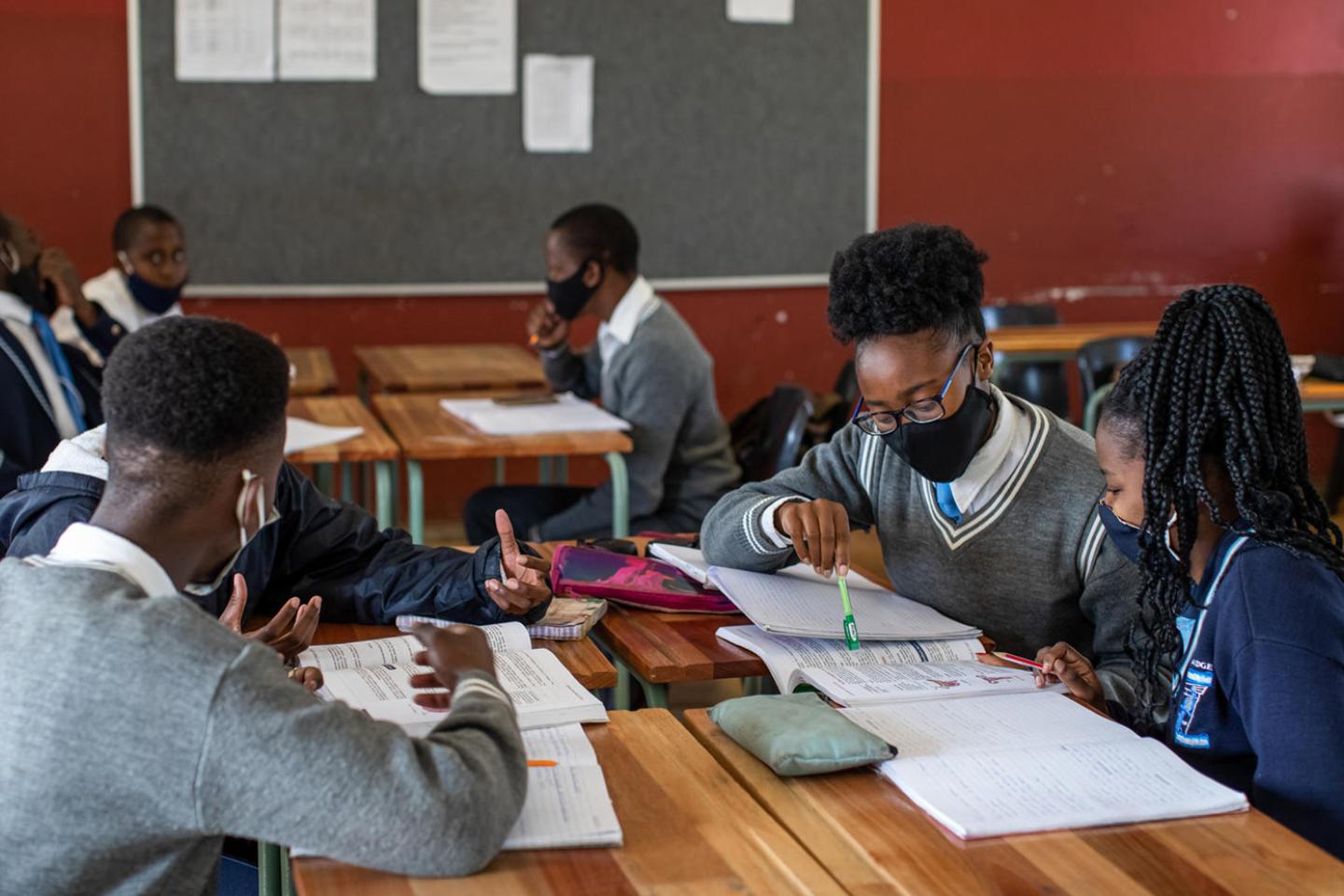
Many South Africans argue that the country has a skills crisis. An equal number questions why it can’t sort this out by “adopting the German or Swiss approach”.

The reason the country isn’t getting the right skills to grow its economy is because of the way it thinks about both the problem – and solutions.

There are two aspects to this.

ADVERTISEMENT

First, in relation to the notion of “skill”, we see it as expertise embedded in bodies of knowledge, as well as gained through practical experience. Expertise is used for and developed at work, but acquired through schools, vocational institutions, universities, short courses or workplace training.

But this is misguided. A dominant idea is that if we just figure out exactly what it is we want learners to be able to do, designing education that enables them to do it will be relatively easy.

Unfortunately, this is only the case for very specific practical skills like riding a bicycle.

Second, we need to understand skill formation happens through a set of systems which are shaped by, and which shape, economies, institutions and social relations. “Skills” are not a variable that can be changed on their own to create desired changes in the economy. If we want to make changes to skill formation systems and get the right skills, we have to understand this complexity.

Our research at the Centre for Researching Education and Labour suggests that:

  • Seeing skill as something to be separated from the knowledge and practice in which it is located leads to misguided and often destructive curriculum reforms. For example, the idea that “problem solving” can be taught as a standalone skill is nonsense.
  • Education institutions are not the best or only places for learning skills like social skills
  • Education institutions are the best, and perhaps only places for learning theories, concepts and practices that are very difficult to learn outside structured programmes
  • Education institutions and systems are complex, difficult to build, require deliberate and extended support and focused cultivation, and are easy to destroy.

The gaps

Where work requires expertise, it depends on education programmes that are broadly, not narrowly, vocational. These are based on bodies of knowledge in occupational areas, as opposed to teaching the narrow and specific tasks of a particular workplace.

Providing training to do specific tasks through formal education is usually a waste of valuable resources.

A second flaw in the current approach revolves around skill formation systems. Many interventions in skill formation assume that changing one ingredient – the skills of a group of individuals – will change economies and societies. This follows the logic of human capital theory, a simple input/output model which creates a virtuous cycle of more skills, more productivity and higher wages.

From a policy viewpoint, this leads to flawed interventions because it only looks at individuals and assumes individual effects can be aggregated up. Even institutions are theorised as individuals to be incentivised.

What’s needed

What we need instead of a neat causal system in which x causes y, and therefore if we incentivise x, we will achieve y, we need to visualise a complex system in which changing any one part will have an effect on all the others.

The education system is part of society and the economy. It doesn’t exist outside of them, producing knowledge, expertise and skills in a vacuum. Societies, nationally and globally, are webs of institutions and institutional relationships that shape each other.

Research shows huge differences across wealthy countries in terms of the overall patterns of skill formation. These differences are not simple policy options or models to be selected and adopted as education reforms because they are intrinsic to different types of economies. Economic factors that shape skill formation systems include labour market regulation, collective bargaining, welfare and industrial policy and production regimes, political factors including degrees of federalisation, and election systems.

In low and middle-income countries, we see complex multi-directional relationships between education, poverty and inequality. All the evidence, even from those arguing that fixing schools is key to rupturing inequality, shows that poverty is the biggest cause of educational failure in South Africa.

Of course South Africa has problems with our curriculum, teacher training and other aspects of our schooling system. However, poverty is a factor constraining teaching, affecting who becomes a teacher and how teachers are trained, how schools function, and the ability of individuals to learn.

This complex multi-directional set of relationships then shapes what is possible in the rest of the education and training system. Education can’t make up for inadequacies in other policy domains that have and continue to cause mass unemployment and underemployment. The country has to look much more systematically at the different pieces of the system needed to support both the demand for and the development and utilisation of skills, and most importantly, we need policies for structural economic change.

South Africa will improve its chances of skill formation success if it can identify potential key policy levers, and look at how they interact with each other.


By Stephanie Allais, Faculty member, Centre for Researching Education and Labour, University of the Witwatersrand. The article reflects the author’s opinions and not necessarily the views of The Southern African Times. 


Previous Post

The coming battle for the racist vote in America

Next Post

Botswana issues arrest warrant for its former president Ian Khama

SAT Reporter

Related Posts

Feeding the Future: Why AI and Agriculture Must Work Together
Opinion

Feeding the Future: Why AI and Agriculture Must Work Together

by Sonny Iroche
April 19, 2026
Julius Malema Sentenced to Five Years in Firearm discharge case
Opinion

Malema’s Sentence: A Test of South Africa’s Rule of Law in a Polarized Age

by Kundai Vambe
April 18, 2026
Zambia’s Copper and the Social Cost of Extraction Deals
The Editorial Board

Zambia’s Copper and the Social Cost of Extraction Deals

by Nothando Ndlovu
April 17, 2026
Op-Ed by Yemi Osinbajo, Former Vice President of Nigeria: Africa Is Losing the Iran War
Opinion

Op-Ed by Yemi Osinbajo, Former Vice President of Nigeria: Africa Is Losing the Iran War

by SAT Reporter
April 13, 2026
A Superpower Under Strain: Iran and the Limits of American Power
Opinion

A Superpower Under Strain: Iran and the Limits of American Power

by Kundai Vambe
April 8, 2026
Next Post
Botswana issues arrest warrant for its former president Ian Khama

Botswana issues arrest warrant for its former president Ian Khama

Browse by Category

  • Africa AI
  • African Continental Free Trade Area
  • African Debt
  • African Start ups
  • Agriculture
  • AI Africa
  • Algeria
  • All News
  • Analysis
  • Angola
  • Arts / Culture
  • Asia
  • Botswana
  • BOTSWANA
  • BREAKING NEWS
  • BRICS
  • Burkina Faso
  • Burundi
  • Business
  • Business
  • Business Wire
  • Cameroon
  • Central Africa
  • Chad
  • China
  • Climate Change
  • Climate Changev
  • Community
  • Congo Republic
  • Conservation
  • Côte d’Ivoire
  • COVID 19
  • CRYPTOCURRENCY
  • Culture
  • Democratic Republic of Congo
  • Diplomacy
  • Eastern Africa
  • Economic Development
  • Economy
  • Education
  • Egypt
  • Elections 2024
  • Energy
  • Entertainment
  • Environment
  • Eritrea
  • Ethiopia
  • Europe
  • Fashion
  • Feature
  • Finance
  • Financial Inclusion
  • Food
  • Food and Drink
  • Foods
  • GABON
  • Ghana
  • Global
  • Global Africa
  • Guinea
  • Health
  • Immigration
  • in Southern Africa
  • International news
  • International Relations
  • Ivory Coast
  • Just In
  • Kenya
  • Lesotho
  • Libya
  • Life Style
  • Lifestyle
  • Literature
  • Malawi
  • Malawi
  • Mali
  • Markets
  • Mauritius
  • Middle East
  • Mining in Africa
  • Morocco
  • Mozambique
  • Namibia
  • Niger
  • niger
  • Nigeria
  • North Africa
  • North-Eastern Africa
  • Obituaries
  • Obituary
  • Opinion
  • PARTNER CONTENT
  • Politics
  • Property
  • Racism
  • Rwanda
  • Rwanda
  • SADC
  • SAT Interviews
  • SAT Investigation
  • SAT Jobs
  • Saudi Arabia
  • Senegal
  • Seychelles
  • Somaliland
  • South Africa
  • South Sudan
  • Sports
  • Startup Africa
  • STOCK EXCHANGE
  • Sudan
  • Sustainability
  • Sustainablity
  • Tanzania
  • Technology
  • Telecommunications
  • The Editorial Board
  • The Power Of She
  • Togo
  • Trade
  • Travel
  • Travel
  • Tunisia
  • Uganda
  • Uncategorized
  • Wealth
  • West Africa
  • World
  • World
  • ZAMBIA
  • Zambia
  • ZIMBABWE
  • Zimbabwe

Browse by Tags

#NewsUpdate #SouthAfrica #SouthernAfricanTimes #TheSouthernAfricanTimes AfCFTA africa African Continental Free Trade Area African development African Development Bank African economies African economy African Union Agriculture Angola Botswana Business China Climate change Cyril Ramaphosa Economic Development economic growth energy transition fiscal policy food security industrialisation Inflation Infrastructure Development International relations Investment Kenya Mozambique Namibia news Nigeria Regional Integration renewable energy Rwanda SADC South Africa Southern Africa sustainable development Tanzania United States Zambia Zimbabwe
ADVERTISEMENT

WHO WE ARE

The Southern African Times is a regional bloc digital newspaper that covers Southern African and world news. The paper also gives a nuanced analysis on news and covers a wide range of reporting which include sports, entertainment, foreign affairs, arts and culture.

Welcome Back!

Login to your account below

Forgotten Password?

Retrieve your password

Please enter your username or email address to reset your password.

Log In

  • Home
  • Southern Africa
  • Business
    • African Start ups
    • African Continental Free Trade Area
  • Technology
    • Lifestyle
      • Health
      • Culture
      • Food and Drink
      • Entertainment
  • Opinion
  • Sports
  • SAT Jobs
    • Events
  • About Us
    • Advertise with Us
    • Contact Us
Are you sure want to unlock this post?
Unlock left : 0
Are you sure want to cancel subscription?