Tuesday, June 30, 2026
  • Login
The Southern African Times
  • Home
  • Southern Africa
  • Business
    • African Start ups
    • African Continental Free Trade Area
  • Technology
    • Lifestyle
      • Health
      • Culture
      • Food and Drink
      • Entertainment
  • Opinion
  • Sports
  • SAT Jobs
    • Events
  • About Us
    • Advertise with Us
    • Contact Us
No Result
View All Result
  • Home
  • Southern Africa
  • Business
    • African Start ups
    • African Continental Free Trade Area
  • Technology
    • Lifestyle
      • Health
      • Culture
      • Food and Drink
      • Entertainment
  • Opinion
  • Sports
  • SAT Jobs
    • Events
  • About Us
    • Advertise with Us
    • Contact Us
No Result
View All Result
The Southern African Times
No Result
View All Result
Home Opinion

Is China helping make Africa’s COP an implementation COP?

by SAT Reporter
November 17, 2022
in Opinion
0
Is China helping make Africa’s COP an implementation COP?

The 27th session of the Conference of the Parties to the United Nations Framework Convention on Climate Change (COP27) in Egypt is over halfway through, and it is proving difficult. However, even before the tense negotiations, copious side events and challenging press briefings began, sleepless nights had begun. Negotiators were huddling to decide if and how the issue of “loss and damage financing” – the question of reparations for already committed climate change – would be reflected on the two-week-long agenda.

After a “yes” was agreed, COP27 officially opened. Since then we have seen several African leaders as well as China’s special climate envoy Xie Zhenhua share their aspirations from this COP, as well as launch various initiatives. China’s UN Ambassador Dai Bing also set out a number of areas of overlap with African climate negotiation positions. While generally supporting the loss and damage position of African and many other low- and middle-income countries, Xie said it’s not China’s responsibility, but still willing to finance it.

There have been remarks in Western media outlets saying that calls are growing for large developing nations such as China to also be made liable to pay for the costs of climate impacts alongside developed countries, and that China and the African continent do not prioritize each other when it comes to climate change.


ADVERTISEMENT

But in fact, they do prioritize each other – in both directions, but often in more practical, implementable ways outside negotiations.

In many ways, implementation – the theme of Egypt’s COP – tends to come first in the China-Africa relationship before political expressions.

Let me explain.

While China and African countries officially coordinate negotiating positions through the Group of 77 and China, direct coordination on China-Africa climate action takes place via the triennial Forum on China Africa Cooperation (FOCAC). Over time, as a recent report my firm Development Reimagined explained, since the first FOCAC in 2000, commitments in this area have ramped up, with the most recent forum in 2021 producing a special joint declaration on climate cooperation.
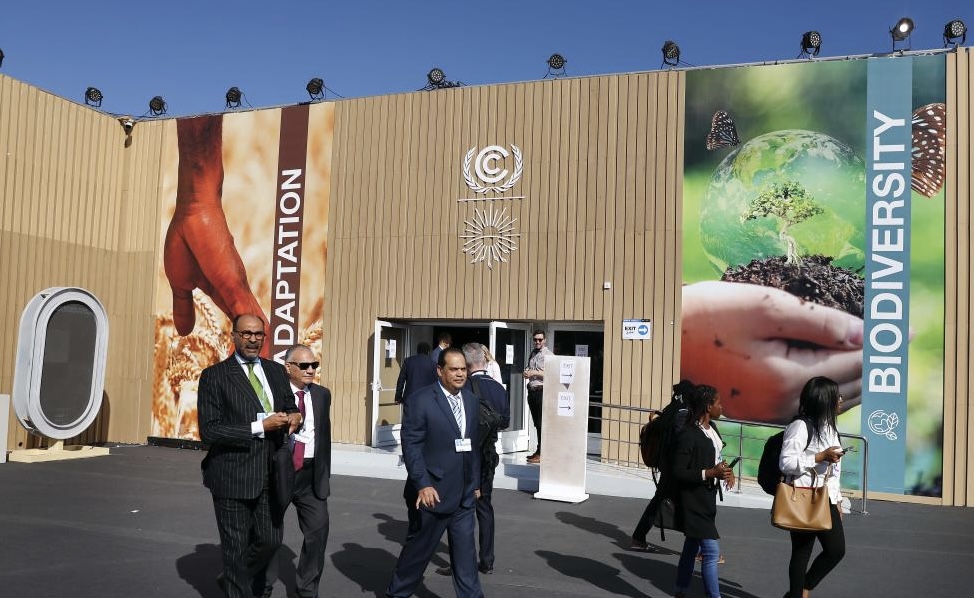
Participants walk past posters during the ongoing COP27 in Sharm El-Sheikh, Egypt, November 7, 2022.

Indeed, implementation of the China-Africa partnership has had some major successes when it comes to climate action to date, with mitigation as a major focus. For instance, we estimate that African governments have borrowed approximately $25 billion from Chinese banks to fund clean energy on the continent since 2000, and even more if we add in rail investment. Chinese firms have also made climate-related investments in African countries – for instance, worth $7.5 billion for hydroelectric power and other renewable energy since 2005.

However, the proportion of all Chinese finance dedicated to climate-friendly energy and growth has increased since 2014, and this trend can be expected to increase for several reasons. First, African countries’ own ambitions – for instance, 25 percent of African countries have made net-zero pledges, and 70 percent have clear renewable energy targets; second, China’s 2021 pledge not to finance coal overseas as well as China’s guidelines aimed at encouraging Chinese firms to do better in terms of Environmental, Social, and Governance impacts; and third, the impact of Chinese finance channelled to African and other new multilateral development banks such as the Asian Infrastructure Investment Bank. These banks are also eager to make more green marks on the continent.

So what next for the future? Is this implementation enough?

Certainly, there is more that can be done. For example, in the above-mentioned report, my colleagues propose that targets for renewable or other climate-friendly projects or financing could be very useful to consider in future FOCAC negotiations. These could drive lending as well as private sector flows. In addition, China, now having its own emissions trading scheme can do a great deal to shape and support Africa’s carbon market engagement, which has also been seen as a major priority at Egypt’s COP27. And of course, China as one of the world’s largest consumers and producers of environmental goods, also could support Africa’s industrialization aspirations by creating incentives for manufacturers of goods from solar panels to electric vehicle batteries to offshore their factories to the continent.

However, and coming back to COP27 – does this kind of further implementation need the UN negotiations to progress?

Not really.

On the other hand, it is important that both African countries and China use the UN as well as their own bilateral and plurilateral tracks to listen carefully to each other, to ensure they remain in touch and understand their varying perspectives in depth. For instance, the current FOCAC climate declaration does not explore key global negotiation issues such as just transition. This is a gap that could be filled in future, and therefore ensure all contribute more actively to UN processes.

The corollary of this, however, is that international organizations such as the UNFCCC should be tracking and comparing the results of the China-Africa and other bilateral and plurilateral relationships to ensure journalists, other international organizations and other countries properly take account of them. Ultimately, the goal of Africans is to encourage and engage China and others in a race to the top to deliver for our countries and our future generations.



Hannah Ryder is the CEO of Development Reimagined, an international development consultancy based in Beijing. The article reflects the author’s opinion, and not necessarily the views of The Southern African Times. 

Previous Post

Innovation Africa summit opens in Zambia with focus on education

Next Post

EU announces €1 billion for climate adaptation in Africa

SAT Reporter

Related Posts

LONG READ | The Oldest Alibi: South Africa’s Xenophobia and the Economic Ruin It Presages
Opinion

LONG READ | The Oldest Alibi: South Africa’s Xenophobia and the Economic Ruin It Presages

by Times Reporter
June 30, 2026
President Cyril Ramaphosa’s Opinion: How South Africa’s Natural Splendour Can Drive Inclusive Growth
Opinion

Op-Ed by President Ramaphosa | Protest Is Both a Right and a Responsibility

by Times Reporter
June 29, 2026
The Insurance Hack More Drivers Should Know
Opinion

The Insurance Hack More Drivers Should Know

by Times Reporter
June 22, 2026
Southern African Times Announces Brendan Amadi as Recipient of the 2026 Editorial Recognition of the Year Award
The Editorial Board

Southern African Times Announces Brendan Amadi as Recipient of the 2026 Editorial Recognition of the Year Award

by The Editorial Board
June 19, 2026
LONG READ | No Longer the World’s Dustbin: China’s Waste Ban and Africa’s Circular Economy Moment
Opinion

LONG READ | No Longer the World’s Dustbin: China’s Waste Ban and Africa’s Circular Economy Moment

by Times Reporter
June 12, 2026
Next Post
EU announces €1 billion for climate adaptation in Africa

EU announces €1 billion for climate adaptation in Africa

Browse by Category

  • Africa AI
  • African Continental Free Trade Area
  • African Debt
  • African Start ups
  • Agriculture
  • AI Africa
  • Algeria
  • All News
  • Analysis
  • Angola
  • Arts / Culture
  • Asia
  • Botswana
  • BOTSWANA
  • BREAKING NEWS
  • BRICS
  • Burkina Faso
  • Burundi
  • Business
  • Business
  • Business Wire
  • Cameroon
  • Central Africa
  • Chad
  • China
  • Climate Change
  • Climate Changev
  • Community
  • Congo Republic
  • Conservation
  • Côte d’Ivoire
  • COVID 19
  • CRYPTOCURRENCY
  • Culture
  • Democratic Republic of Congo
  • Diplomacy
  • Eastern Africa
  • Economic Development
  • Economy
  • Education
  • Egypt
  • Elections 2024
  • Energy
  • Entertainment
  • Environment
  • Eritrea
  • Ethiopia
  • Europe
  • Fashion
  • Feature
  • Finance
  • Financial Inclusion
  • Food
  • Food and Drink
  • Foods
  • GABON
  • Ghana
  • Global
  • Global Africa
  • Guinea
  • Health
  • Humanitarian Aid
  • Immigration
  • in Southern Africa
  • International news
  • International Relations
  • Investment
  • Ivory Coast
  • Just In
  • Kenya
  • Lesotho
  • Libya
  • Life Style
  • Lifestyle
  • Literature
  • Malawi
  • Malawi
  • Mali
  • Markets
  • Mauritius
  • Middle East
  • Mining in Africa
  • Morocco
  • Mozambique
  • Namibia
  • Niger
  • niger
  • Nigeria
  • North Africa
  • North-Eastern Africa
  • Obituaries
  • Obituary
  • Opinion
  • PARTNER CONTENT
  • Politics
  • Property
  • Racism
  • Rwanda
  • Rwanda
  • SADC
  • SAT Interviews
  • SAT Investigation
  • SAT Jobs
  • Saudi Arabia
  • Senegal
  • Seychelles
  • Somaliland
  • South Africa
  • South Sudan
  • Sports
  • Startup Africa
  • STOCK EXCHANGE
  • Sudan
  • Sustainability
  • Sustainablity
  • Tanzania
  • Technology
  • Telecommunications
  • The Editorial Board
  • The Power Of She
  • Togo
  • Trade
  • Travel
  • Travel
  • Tunisia
  • Uganda
  • Uncategorized
  • Wealth
  • West Africa
  • World
  • World
  • ZAMBIA
  • Zambia
  • ZIMBABWE
  • Zimbabwe

Browse by Tags

#NewsUpdate #SouthAfrica #SouthernAfricanTimes #TheSouthernAfricanTimes AfCFTA africa African Continental Free Trade Area African development African Development Bank African economies African economy African Union Agriculture Angola Botswana China Climate change critical minerals Cyril Ramaphosa Economic Development economic growth energy transition governance industrialisation Inflation Infrastructure Infrastructure Development International relations Investment Kenya Mozambique Namibia news Nigeria Regional Integration renewable energy Rwanda SADC South Africa Southern Africa sustainable development Tanzania United States Zambia Zimbabwe
ADVERTISEMENT

WHO WE ARE

The Southern African Times is a regional bloc digital newspaper that covers Southern African and world news. The paper also gives a nuanced analysis on news and covers a wide range of reporting which include sports, entertainment, foreign affairs, arts and culture.

Welcome Back!

Login to your account below

Forgotten Password?

Retrieve your password

Please enter your username or email address to reset your password.

Log In
  • Home
  • Southern Africa
  • Business
    • African Start ups
    • African Continental Free Trade Area
  • Technology
    • Lifestyle
      • Health
      • Culture
      • Food and Drink
      • Entertainment
  • Opinion
  • Sports
  • SAT Jobs
    • Events
  • About Us
    • Advertise with Us
    • Contact Us
Not enough quota to unlock this post
Unlock left : 0
Are you sure want to cancel subscription?