Thursday, April 30, 2026
  • Login
The Southern African Times
  • Home
  • Southern Africa
  • Business
    • African Start ups
    • African Continental Free Trade Area
  • Technology
    • Lifestyle
      • Health
      • Culture
      • Food and Drink
      • Entertainment
  • Opinion
  • Sports
  • SAT Jobs
    • Events
  • About Us
    • Advertise with Us
    • Contact Us
No Result
View All Result
  • Home
  • Southern Africa
  • Business
    • African Start ups
    • African Continental Free Trade Area
  • Technology
    • Lifestyle
      • Health
      • Culture
      • Food and Drink
      • Entertainment
  • Opinion
  • Sports
  • SAT Jobs
    • Events
  • About Us
    • Advertise with Us
    • Contact Us
No Result
View All Result
The Southern African Times
No Result
View All Result
Home Opinion

China and Uganda: A mutually beneficial six decades

by SAT Reporter
October 19, 2022
in Opinion
0
China and Uganda: A mutually beneficial six decades

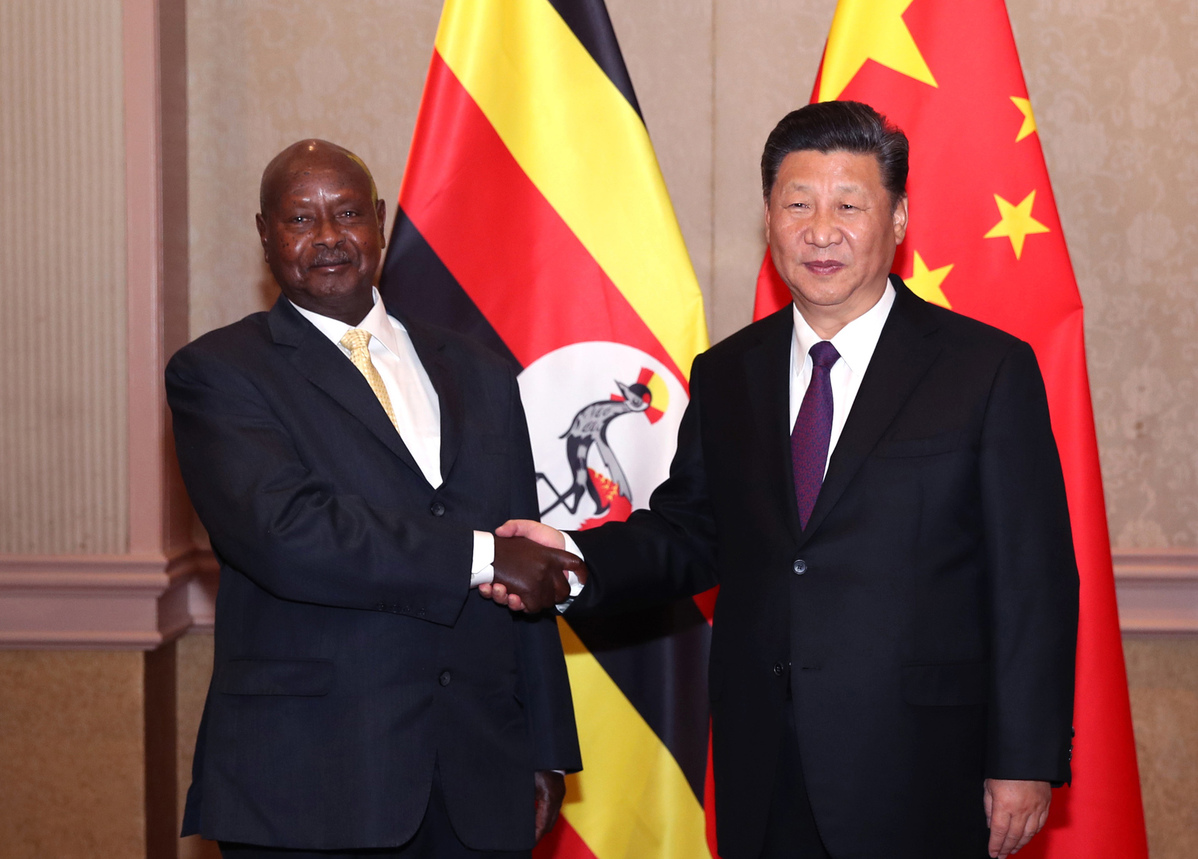
Chinese President Xi Jinping and Ugandan President Yoweri Museveni on October 18, 2022, congratulated each other on the 60th anniversary of diplomatic relations between the two countries. China was among the very first countries to establish diplomatic relations with the newly independent Uganda from the British colonialists.

Although the relations flourished since independence, it deepened more when incumbent President Museveni ascended on to power in 1986. A number of cultural cooperation agreements and exchange programs for students and medical teams have featured this journey.

Uganda has not only benefited from the bilateral arrangements, but also from the Forum on China-Africa Cooperation (FOCAC) and the Belt and Road Initiative. The mutually beneficial bilateral relations have enabled Uganda start tackling underlying bottlenecks limiting Africa’s potential for economic and social transformation.


ADVERTISEMENT

In the early 1990s, President Museveni disagreed with the World Bank officials on infrastructural funding. The World Bank officials refused to finance Uganda’s railway arguing that countries do so using their own money.

According to the African Development Bank, Africa generally needs between $130-$170 billion every year to finance its infrastructure. Uganda remained with no option of securing funding for these projects until the Chinese government came to its help. In the past 60 years, Uganda has had many reasons to celebrate this journey looking at the various infrastructure and related development projects in place.

Uganda had inadequate electricity for both industrial and domestic use in the 1990s. It was not easy for the country to have electricity through seven days of the week without a general blackout. The Exim Bank of China financed two mega electricity stations and improved the situation.

China funded the 60 megawatts (MW) electricity station project Isimba Hydropower Dam worth $567 million which was completed in 2019. Uganda has since generated surplus electricity and the excess exported to neighboring countries.

The 600 MW Karuma Hydroelectric Dam is also under construction, likewise funded by loan from Exim Bank of China. This $1.7 billion project is expected to be commissioned early next year.

These two power stations do not only increase Uganda’s electricity generation but freeing up electricity for Uganda’s national development plan that seeks to reduce the cost of doing business.

China also funded road projects in the country including the $476million Kampala-Entebbe expressway. This 51 kilometers highway connects the only international airport to the capital city. Exim Bank of China also extended a $200 million loan to Uganda for the funding of the upgrade and expansion of Entebbe International Airport. These mega projects would not be funded going by World Bank officials’ arguments then.

Another successful project which has benefited Uganda is the “Access to Satellite TV for 10,000 African Villages,” a China-Africa cooperation project intended to reduce the digital divide in Africa’s rural places and giving Uganda access to digital television. Implemented by StarTimes Group in Africa, Uganda benefitted immensely from this Chinese government’s promise made during the 2015 FOCAC Summit held in Johannesburg, South Africa.
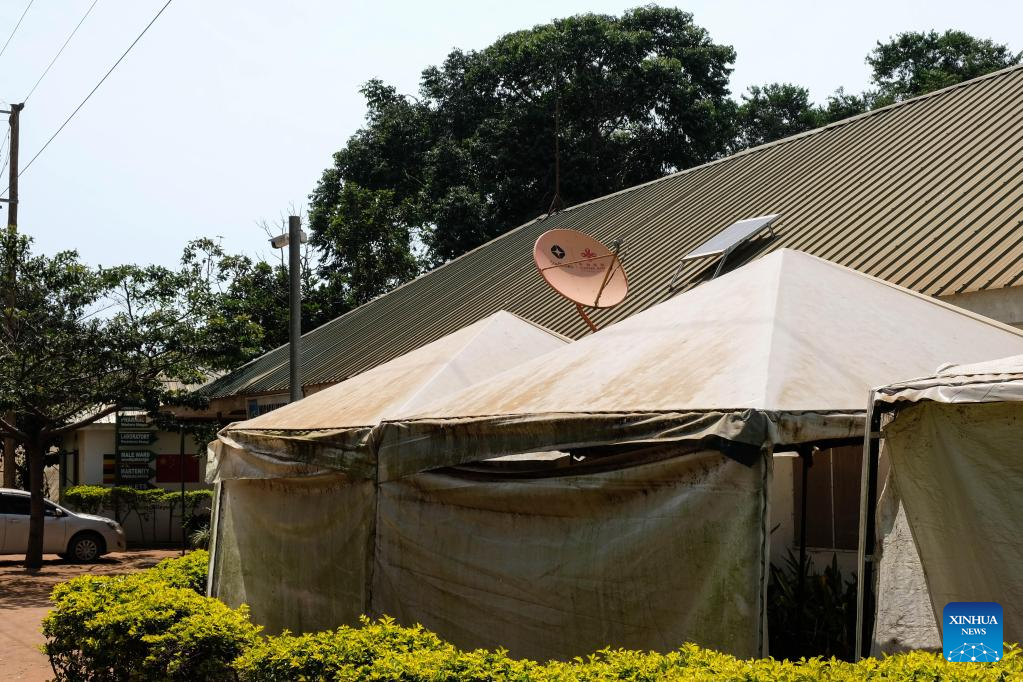
A satellite dish provided by Chinese satellite television StarTimes is seen at Wagagai Health Center in Katabi, Uganda, October 13, 2022. /Xinhua

Testimonies of Ugandan local communities show how this project has supported rural schools, health centers and remote villages’ access to news and information about government development programs.

According to StarTimes Group Uganda, the project was extended to over 18,000 households with special considerations to strategic schools, churches and health facilities. Even with Uganda’s supportive legal framework which provides for all citizens’ right of access to information, it is still a challenge due to high cost of internet and low TV penetration.

All the above interventions show successful and excellent China-Uganda relations over the past 60 years. As a mutually beneficial relationship, China has equally benefited.

Uganda remains one of the important markets for Chinese products. A number of industrial parks have been established in the various parts of the country. Although these parks improve Ugandans’ manufacturing and production potential, Chinese investors equally improve their businesses and widen their markets.

China is Uganda’s source of Foreign Direct Investment (FDI) today and according to Comtrade figures, trade volumes between the two countries stands at $558 million making China Uganda’s largest trading partner.

As Uganda is currently developing its oil and gas sector, China National Offshore Oil Corporation (CNOOC) is operating one of the biggest oil wells at Hoima and Kikuube districts in western Uganda. It is equally leading the construction of the 1,445 km Uganda-Tanzania crude oil pipeline.

The two countries are still benefiting from the cooperation amidst smear from Western countries intended to undermine China. Fortunately, President Museveni in March this year revealed that China-style diplomacy is better than the double standard diplomacy of the West.

For the past 60 years, China and Uganda have had one of the best diplomatic, economic and political relationships guided by the mostly acceptable principles of peaceful coexistence on the African continent.




Mubarak Mugabo is a Ugandan journalist and a fellow at the China Africa Press Centre. The article reflects the author’s opinions and not necessarily the views of The Southern African Times. 

Previous Post

Kenya’s proposed finance minister says to re-profile debt load

Next Post

UK inflation jumps back to 10.1 pct as food costs surge

SAT Reporter

Related Posts

South Africa Cannot Turn on Africa and Expect to Stand Tall
Opinion

South Africa Cannot Turn on Africa and Expect to Stand Tall

by SAT Reporter
April 27, 2026
Feeding the Future: Why AI and Agriculture Must Work Together
Opinion

Feeding the Future: Why AI and Agriculture Must Work Together

by Sonny Iroche
April 19, 2026
Julius Malema Sentenced to Five Years in Firearm discharge case
Opinion

Malema’s Sentence: A Test of South Africa’s Rule of Law in a Polarized Age

by Kundai Vambe
April 18, 2026
Zambia’s Copper and the Social Cost of Extraction Deals
The Editorial Board

Zambia’s Copper and the Social Cost of Extraction Deals

by Nothando Ndlovu
April 17, 2026
Op-Ed by Yemi Osinbajo, Former Vice President of Nigeria: Africa Is Losing the Iran War
Opinion

Op-Ed by Yemi Osinbajo, Former Vice President of Nigeria: Africa Is Losing the Iran War

by SAT Reporter
April 13, 2026
Next Post
UK inflation jumps back to 10.1 pct as food costs surge

UK inflation jumps back to 10.1 pct as food costs surge

Browse by Category

  • Africa AI
  • African Continental Free Trade Area
  • African Debt
  • African Start ups
  • Agriculture
  • AI Africa
  • Algeria
  • All News
  • Analysis
  • Angola
  • Arts / Culture
  • Asia
  • Botswana
  • BOTSWANA
  • BREAKING NEWS
  • BRICS
  • Burkina Faso
  • Burundi
  • Business
  • Business
  • Business Wire
  • Cameroon
  • Central Africa
  • Chad
  • China
  • Climate Change
  • Climate Changev
  • Community
  • Congo Republic
  • Conservation
  • Côte d’Ivoire
  • COVID 19
  • CRYPTOCURRENCY
  • Culture
  • Democratic Republic of Congo
  • Diplomacy
  • Eastern Africa
  • Economic Development
  • Economy
  • Education
  • Egypt
  • Elections 2024
  • Energy
  • Entertainment
  • Environment
  • Eritrea
  • Ethiopia
  • Europe
  • Fashion
  • Feature
  • Finance
  • Financial Inclusion
  • Food
  • Food and Drink
  • Foods
  • GABON
  • Ghana
  • Global
  • Global Africa
  • Guinea
  • Health
  • Immigration
  • in Southern Africa
  • International news
  • International Relations
  • Investment
  • Ivory Coast
  • Just In
  • Kenya
  • Lesotho
  • Libya
  • Life Style
  • Lifestyle
  • Literature
  • Malawi
  • Malawi
  • Mali
  • Markets
  • Mauritius
  • Middle East
  • Mining in Africa
  • Morocco
  • Mozambique
  • Namibia
  • Niger
  • niger
  • Nigeria
  • North Africa
  • North-Eastern Africa
  • Obituaries
  • Obituary
  • Opinion
  • PARTNER CONTENT
  • Politics
  • Property
  • Racism
  • Rwanda
  • Rwanda
  • SADC
  • SAT Interviews
  • SAT Investigation
  • SAT Jobs
  • Saudi Arabia
  • Senegal
  • Seychelles
  • Somaliland
  • South Africa
  • South Sudan
  • Sports
  • Startup Africa
  • STOCK EXCHANGE
  • Sudan
  • Sustainability
  • Sustainablity
  • Tanzania
  • Technology
  • Telecommunications
  • The Editorial Board
  • The Power Of She
  • Togo
  • Trade
  • Travel
  • Travel
  • Tunisia
  • Uganda
  • Uncategorized
  • Wealth
  • West Africa
  • World
  • World
  • ZAMBIA
  • Zambia
  • Zimbabwe
  • ZIMBABWE

Browse by Tags

#NewsUpdate #SouthAfrica #SouthernAfricanTimes #TheSouthernAfricanTimes AfCFTA africa African Continental Free Trade Area African development African Development Bank African economies African economy African Union Agriculture Angola Botswana Business China Climate change Cyril Ramaphosa Economic Development economic growth energy transition fiscal policy industrialisation Inflation Infrastructure Infrastructure Development International relations Investment Kenya Mozambique Namibia news Nigeria Regional Integration renewable energy Rwanda SADC South Africa Southern Africa sustainable development Tanzania United States Zambia Zimbabwe
ADVERTISEMENT

WHO WE ARE

The Southern African Times is a regional bloc digital newspaper that covers Southern African and world news. The paper also gives a nuanced analysis on news and covers a wide range of reporting which include sports, entertainment, foreign affairs, arts and culture.

Welcome Back!

Login to your account below

Forgotten Password?

Retrieve your password

Please enter your username or email address to reset your password.

Log In

  • Home
  • Southern Africa
  • Business
    • African Start ups
    • African Continental Free Trade Area
  • Technology
    • Lifestyle
      • Health
      • Culture
      • Food and Drink
      • Entertainment
  • Opinion
  • Sports
  • SAT Jobs
    • Events
  • About Us
    • Advertise with Us
    • Contact Us
Are you sure want to unlock this post?
Unlock left : 0
Are you sure want to cancel subscription?