Just a few months ago, the British economy was gearing up to bounce back strongly. Official figures from the UK Office for National Statistics (ONS) showed that after a contraction of 9.4 percent in 2020 due to the initial impact of the pandemic and public health measures, the country’s Gross Domestic Product (GDP) saw an increase of 7.5 percent in 2021, the largest annual increase since World War II.
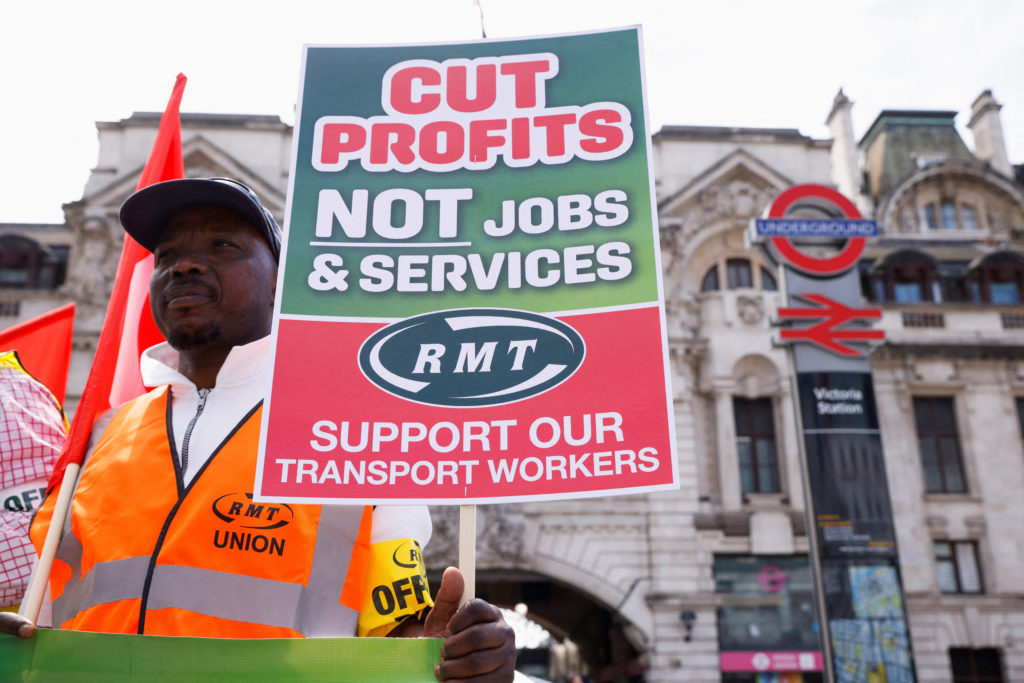
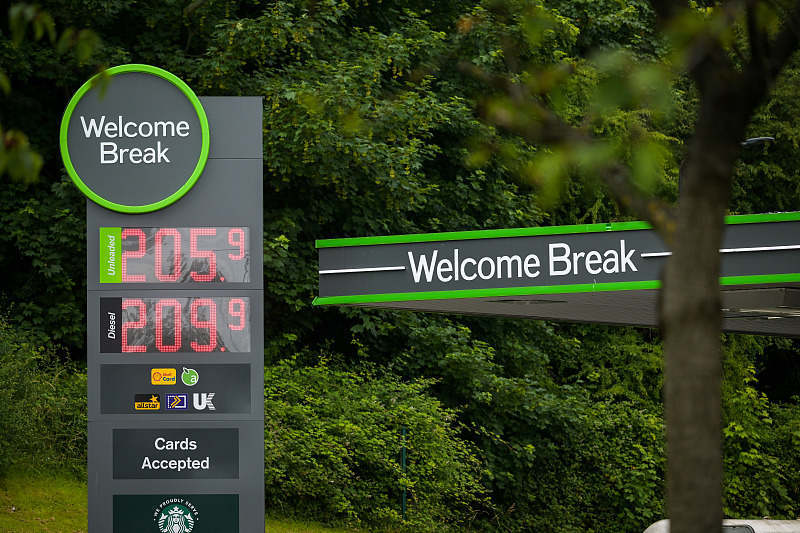
But this “remarkable resilience” lost its shine as the UK economy shrank 0.1 percent and 0.3 percent in March and April of this year. This economic downturn forced the Bank of England to hike interest rates for a fifth consecutive time to stem the trend of persistently high inflation. In May, the consumer price index hit a new 40-year high of 9.1 percent and deepened the cost of living crisis for many Britons who had to skip meals to weather immense inflationary pressures.
London is descending into recession. Last month, the UK central bank governor Andrew Bailey warned Britons to prepare for a more severe bout of inflation than other major economies. Like other advanced nations, the era of low and stable inflation has ended in the UK and it won’t come back soon after a series of economic shocks from COVID-19, the Russia-Ukraine conflict and the breakdown of global supply chains.
There are several other factors such as labor shortages, reverberations of Brexit on trade and declining productivity that has morphed the British economy into crisis. Within the Group of Seven (G7), the UK workforce is seeing the second largest contraction, trade openness continues to dwindle by the largest amount, and productivity and investment lags behind other advanced economies.
Although the economy grew by 0.5 percent in May, inflation is likely to top 11 percent later this year. That’s more than five times the targeted rate of 2 percent, when household disposable income would be curtailed further by the rise of energy prices in autumn. Any political power struggle could make matters worse for the British economy and turn out to be a “poisoned chalice” for the next British prime minister.
In its most recent assessment, the International Monetary Fund (IMF) sketched a bleak picture of the UK’s future economic outlook. Not only did the global financial regulator revise its forecast for the British GDP to 3.7 percent from January’s 4.7 percent for 2022, it almost halved the growth forecast from 2.3 percent to 1.2 percent for 2023, anticipating the UK to sink to the bottom of the G7 league.
It was a significant change from the IMF, which in February had lauded Britain’s economic recovery yet stressed the importance of addressing post-pandemic and post-Brexit structural issues such as making additional investments in transport infrastructure and digital connectivity to tackle regional inequality in the country.
The UK is one of the most regionally unequal countries in the developed world. Much of the economic development and infrastructure spending have been focused on London and the southeast, leaving the rest of the country behind in everything from productivity to transport links. British Prime Minister Boris Johnson vowed to end the “North-South divide” through “leveling up,” but the initiative is still on the drawing board as inflation and cost of living crisis have widened the regional disparity.
Ahead of the G20 Finance Ministers and Central Bank Governors meeting in Bali, the Fund’s head Kristalina Georgieva warned the world was facing a “darkening” economic outlook and signaled to further downgrade the global growth for 2022 and 2023 this month from April’s 3.6 percent. She appeared to downplay the G7, which has been criticized for dividing the world and making symbolic statements without solving problems, and sought “fresh impetus” for a G20-led global cooperation to ease the cost-of-living crisis across the world.
Before COVID-19, more than 14.5 million people, or one in five, including four million children in the UK, were estimated to be living in poverty. As inequality and poverty squeezes economic growth, and as a higher cost of living threatens to push another 1.3 million Britons into absolute poverty, Downing Street should reorientate its international approach and accelerate post-Brexit efforts to strengthen economic, trade and investments with all international economies to overcome the searing domestic challenges.
China, being one of the leading global economies, has the ability to help the embattled UK handle these complex economic crises. Total bilateral trade in goods and services between the two countries, according to the ONS, increased 11.8 percent to £93 billion (about $111 billion) in 2021. Improved economic and trade ties could diversify this relationship to attract greater Chinese investment to help Britain resolve regional disparities.
Last year, Johnson said China is “a gigantic part of our economic life and will be for a long time, for our lifetimes.” After prejudiced about-faces on Huawei and nuclear power under the U.S. influence, the British government earlier this year pushed for closer economic ties with the world’s second largest economy by seeking to resume trade and financial talks that have been suspended since 2018. But some hawkish Conservative MPs, vying for leadership, are trying to put these dialogues in limbo, raising concerns in the business world and looking to take advantage of the to-be world’s largest economy and biggest importer.
This naive approach is unrealistic in a globalized and economically interdependent world where even the U.S. is holding “candid and substantive” trade talks with its “strategic competitor,” China, to ease inflationary pressures on Americans. At a time when fault lines are badly exposed and the country fails to “level up” the poor regions, the UK should waste no time to reestablish a balanced and mature relationship with Beijing and immediately engage China in constructive economic and trade negotiations to benefit the Britons.
Azhar Azam works in a private organization as a market and business analyst, and writes about geopolitical issues and regional conflicts. The article reflects the author’s views and not necessarily those of The Southern African Times.